Personalized Cancer Medicine PLLC, 1735 S Hayworth Ave., Los Angeles, CA, USA.
Cellworks Group, Inc., S. San Francisco, CA, USA.
J Neurooncol. 2021 Jul;153(3):393-402. doi: 10.1007/s11060-021-03780-0. Epub 2021 Jun 8.
A randomized trial in glioblastoma patients with methylated-MGMT (m-MGMT) found an improvement in median survival of 16.7 months for combination therapy with temozolomide (TMZ) and lomustine, however the approach remains controversial and relatively under-utilized. Therefore, we sought to determine whether comprehensive genomic analysis can predict which patients would derive large, intermediate, or negligible benefits from the combination compared to single agent chemotherapy.
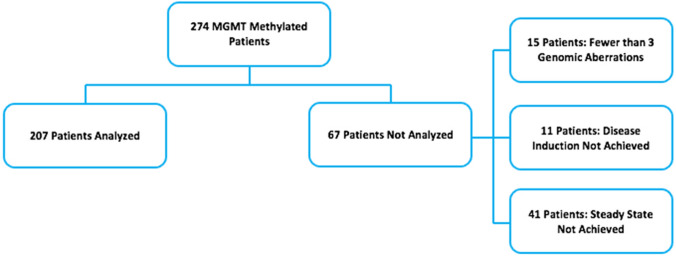
Comprehensive genomic information from 274 newly diagnosed patients with methylated-MGMT glioblastoma (GBM) was downloaded from TCGA. Mutation and copy number changes were input into a computational biologic model to create an avatar of disease behavior and the malignant phenotypes representing hallmark behavior of cancers. In silico responses to TMZ, lomustine, and combination treatment were biosimulated. Efficacy scores representing the effect of treatment for each treatment strategy were generated and compared to each other to ascertain the differential benefit in drug response.
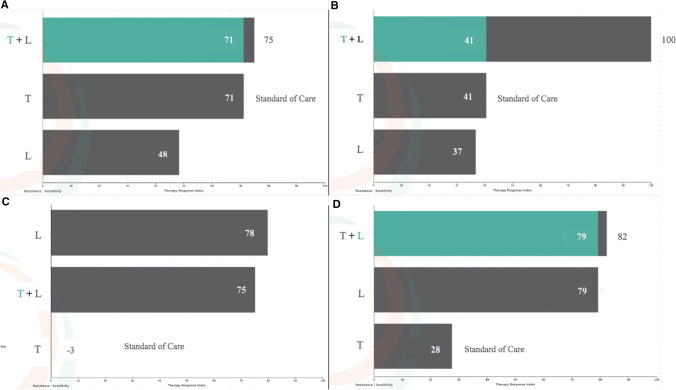
Differential benefits for each drug were identified, including strong, modest-intermediate, negligible, and deleterious (harmful) effects for subgroups of patients. Similarly, the benefits of combination therapy ranged from synergy, little or negligible benefit, and deleterious effects compared to single agent approaches.
The benefit of combination chemotherapy is predicted to vary widely in the population. Biosimulation appears to be a useful tool to address the disease heterogeneity, drug response, and the relevance of particular clinical trials observations to individual patients. Biosimulation has potential to spare some patients the experience of over-treatment while identifying patients uniquely situated to benefit from combination treatment. Validation of this new artificial intelligence tool is needed.
一项针对甲基化-MGMT(m-MGMT)胶质母细胞瘤患者的随机试验发现,替莫唑胺(TMZ)联合洛莫司汀治疗可使中位生存期延长 16.7 个月,但该方法仍存在争议,且应用相对较少。因此,我们试图确定综合基因组分析是否可以预测哪些患者从联合治疗中获益较大、中等或微不足道,与单药化疗相比。
从 TCGA 下载了 274 例新诊断的 m-MGMT 胶质母细胞瘤(GBM)患者的综合基因组信息。将突变和拷贝数改变输入计算生物学模型,以创建疾病行为的虚拟模型和代表癌症标志性行为的恶性表型。对 TMZ、洛莫司汀和联合治疗进行了生物模拟。生成代表每种治疗策略治疗效果的疗效评分,并相互比较,以确定药物反应的差异获益。
确定了每种药物的差异获益,包括对患者亚组具有强烈、适度-中等、微不足道和有害(有害)作用的药物。同样,与单药治疗相比,联合治疗的获益范围从协同作用、获益很小或微不足道,到有害作用不等。
联合化疗的获益在人群中预计会有很大差异。生物模拟似乎是一种有用的工具,可以解决疾病异质性、药物反应以及特定临床试验观察结果与个体患者的相关性。生物模拟有可能避免一些患者过度治疗的经历,同时确定独特受益于联合治疗的患者。需要验证这种新的人工智能工具。