Castro Michael P, Khanlou Negar, Fallah Aria, Pampana Anusha, Alam Aftab, Lala Deepak Anil, Roy Kunal Ghosh Ghosh, Amara Anish Raju R, Prakash Annapoorna, Singh Divya, Behura Liptimayee, Kumar Ansu, Kapoor Shweta
Beverly Hills Cancer Center and Personalized Cancer Medicine, PLLC, Beverly Hills, CA, USA.
Cellworks Group, Inc., S. San Francisco, CA, USA.
Ann Transl Med. 2022 Dec;10(23):1289. doi: 10.21037/atm-2022-62.
Relapsed glioblastoma (GBM) is often an imminently fatal condition with limited therapeutic options. Computation biological modeling, i.e., biosimulation, of comprehensive genomic information affords the opportunity to create a disease avatar that can be interrogated with various drug combinations to identify the most effective therapies.
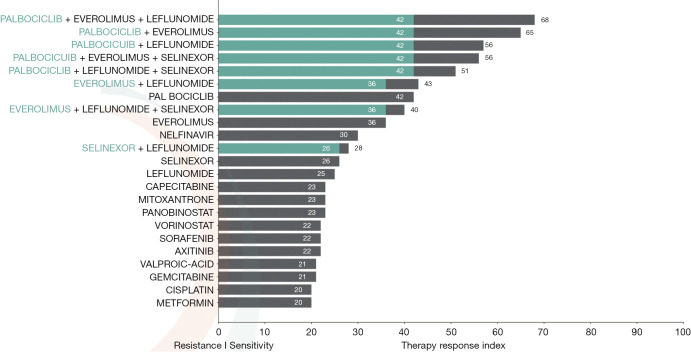
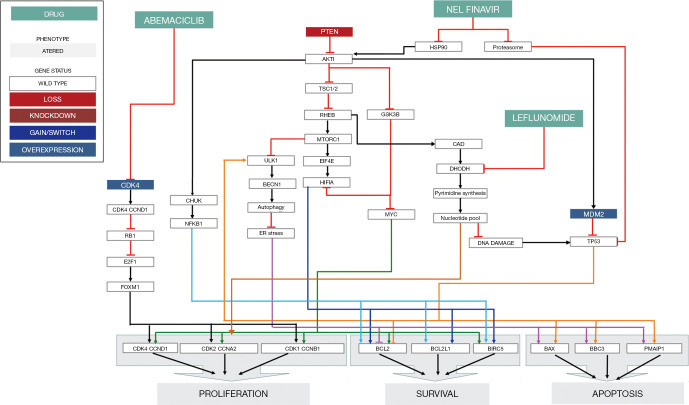
We report the outcome of a GBM patient with chromosome 12q amplification who achieved substantial disease remission from a novel therapy using this approach. Following next generation sequencing (NGS) was performed on the tumor specimen. Mutation and copy number changes were input into a computational biologic model to create an avatar of disease behavior and the malignant phenotype. responses to various drug combinations were biosimulated in the disease network. Efficacy scores representing the computational effect of treatment for each strategy were generated and compared to each other to ascertain the differential benefit in drug response from various regimens. Biosimulation identified CDK4/6 inhibitors, nelfinavir and leflunomide to be effective agents singly and in combination. Upon receiving this treatment, the patient achieved a prompt and clinically meaningful remission lasting 6 months.
Biosimulation has utility to identify active treatment combinations, stratify treatment options and identify investigational agents relevant to patients' comprehensive genomic abnormalities. Additionally, the combination of abemaciclib and nelfinavir appear promising for GBM and potentially other cancers harboring chromosome 12q amplification.
复发性胶质母细胞瘤(GBM)通常是一种预后极差的致命疾病,治疗选择有限。对全面的基因组信息进行计算生物学建模,即生物模拟,有机会创建一个疾病化身,可通过各种药物组合进行研究,以确定最有效的治疗方法。
我们报告了一名12号染色体长臂扩增的GBM患者的治疗结果,该患者通过使用这种方法的新型疗法实现了显著的疾病缓解。对肿瘤标本进行了二代测序(NGS)。将突变和拷贝数变化输入计算生物学模型,以创建疾病行为和恶性表型的化身。在疾病网络中对各种药物组合的反应进行生物模拟。生成代表每种策略治疗计算效果的疗效评分,并相互比较,以确定不同治疗方案在药物反应方面的差异益处。生物模拟确定CDK4/6抑制剂、奈非那韦和来氟米特单独使用或联合使用均为有效药物。接受这种治疗后,患者迅速实现了具有临床意义的缓解,持续了6个月。
生物模拟有助于识别有效的治疗组合、分层治疗选择以及识别与患者全面基因组异常相关的研究药物。此外,阿贝西利和奈非那韦联合使用对GBM以及可能对其他存在12号染色体长臂扩增的癌症似乎有前景。