Dr. M. V. Sullivan and Prof. S. M. Reddy, Department of Chemistry, School of Natural Sciences, University of Central Lancashire, Preston, PR1 2HE, United Kingdom.
Dr. S. R. Dennison and Dr. J. M. Hayes, School of Pharmacy and Biomedical Sciences, University of Central Lancashire, Preston, PR1 2HE, United Kingdom.
Biomed Phys Eng Express. 2021 Jun 18;7(4):045025. doi: 10.1088/2057-1976/ac0991.
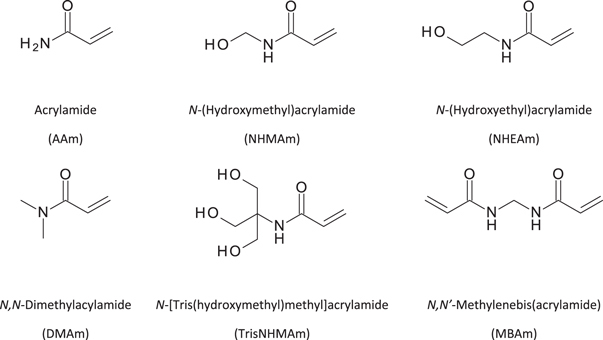
We evaluate a series of thin-sheet hydrogel molecularly imprinted polymers (MIPs), using a family of acrylamide-based monomers, selective for the target protein myoglobin (Mb). The simple production of the thin-sheet MIP offers an alternative biorecognition surface that is robust, stable and uniform, and has the potential to be adapted for biosensor applications. The MIP containing the functional monomer-hydroxymethylacrylamide (NHMAm), produced optimal specific rebinding of the target protein (Mb) with 84.9% (± 0.7) rebinding and imprinting and selectivity factors of 1.41 and 1.55, respectively. The least optimal performing MIP contained the functional monomer-dimethylacrylamide (DMAm) with 67.5% (± 0.7) rebinding and imprinting and selectivity factors of 1.11 and 1.32, respectively. Hydrogen bonding effects, within a protein-MIP complex, were investigated using computational methods and Fourier transform infrared (FTIR) spectroscopy. The quantum mechanical calculations predictions of a red shift of the monomer carbonyl peak is borne-out within FTIR spectra, with three of the MIPs, acrylamide, N-(hydroxymethyl) acrylamide, and-(hydroxyethyl) acrylamide, showing peak downshifts of 4, 11, and 8 cm, respectively.
我们评估了一系列薄片状水凝胶分子印迹聚合物(MIP),使用了一系列丙烯酰胺基单体,对目标蛋白肌红蛋白(Mb)具有选择性。薄片状 MIP 的简单生产提供了一种稳健、稳定且均匀的替代生物识别表面,并且有可能适应生物传感器应用。含有功能单体-羟甲基丙烯酰胺(NHMAm)的 MIP 对目标蛋白(Mb)的特异性再结合最佳,再结合和印迹的特异性因子分别为 1.41 和 1.55。表现最差的 MIP 含有功能单体-二甲基丙烯酰胺(DMAm),再结合和印迹的特异性因子分别为 1.11 和 1.32。使用计算方法和傅里叶变换红外(FTIR)光谱研究了蛋白质-MIP 复合物内氢键的影响。量子力学计算预测单体羰基峰的红移在 FTIR 光谱中得到证实,其中三种 MIP,丙烯酰胺、N-(羟甲基)丙烯酰胺和-(羟乙基)丙烯酰胺,分别显示出 4、11 和 8 cm 的峰位移减小。