Kusuma Paul, Bugbee Bruce
Crop Physiology Laboratory, Utah State University, Logan, UT, United States.
Front Plant Sci. 2021 May 24;12:596943. doi: 10.3389/fpls.2021.596943. eCollection 2021.
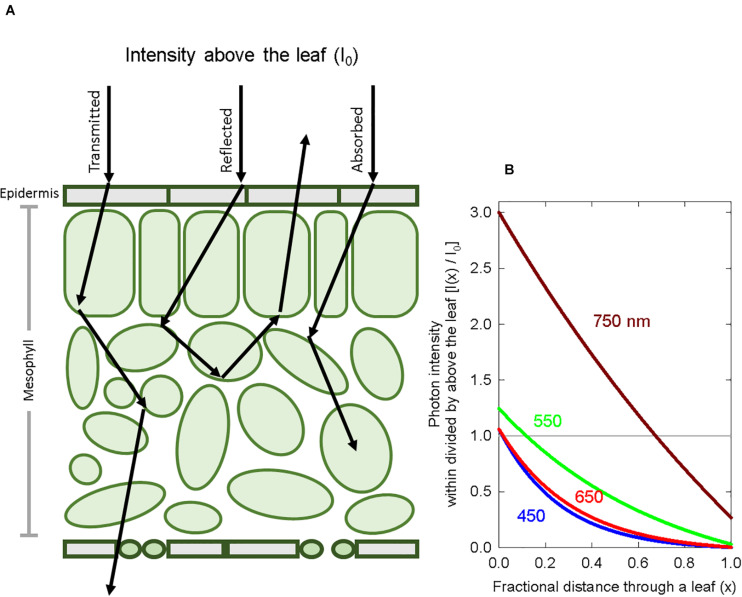
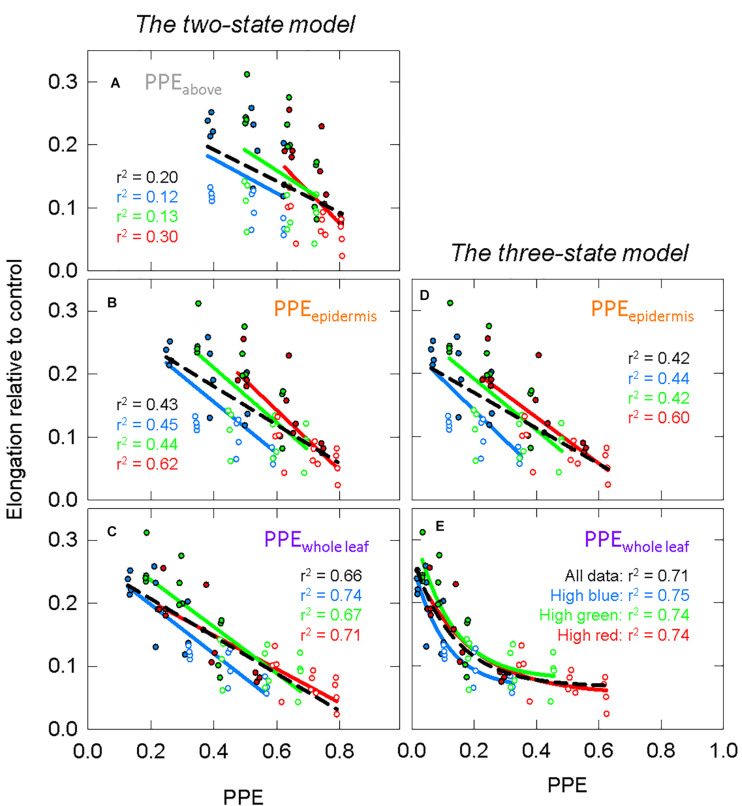
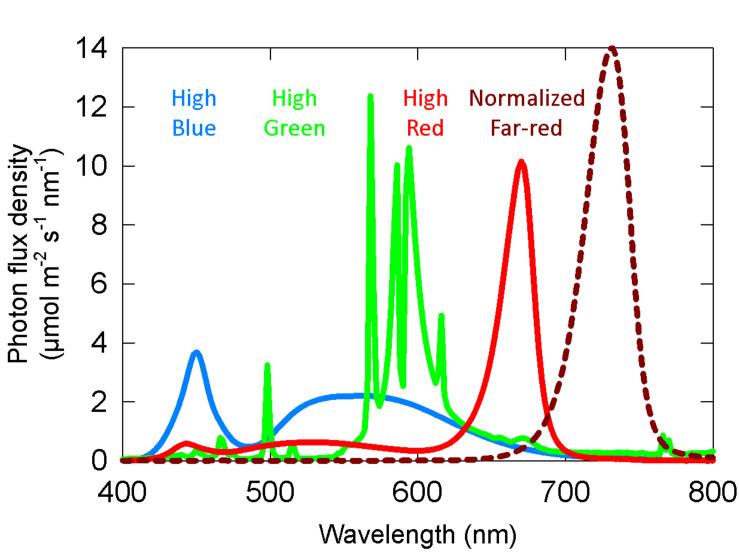
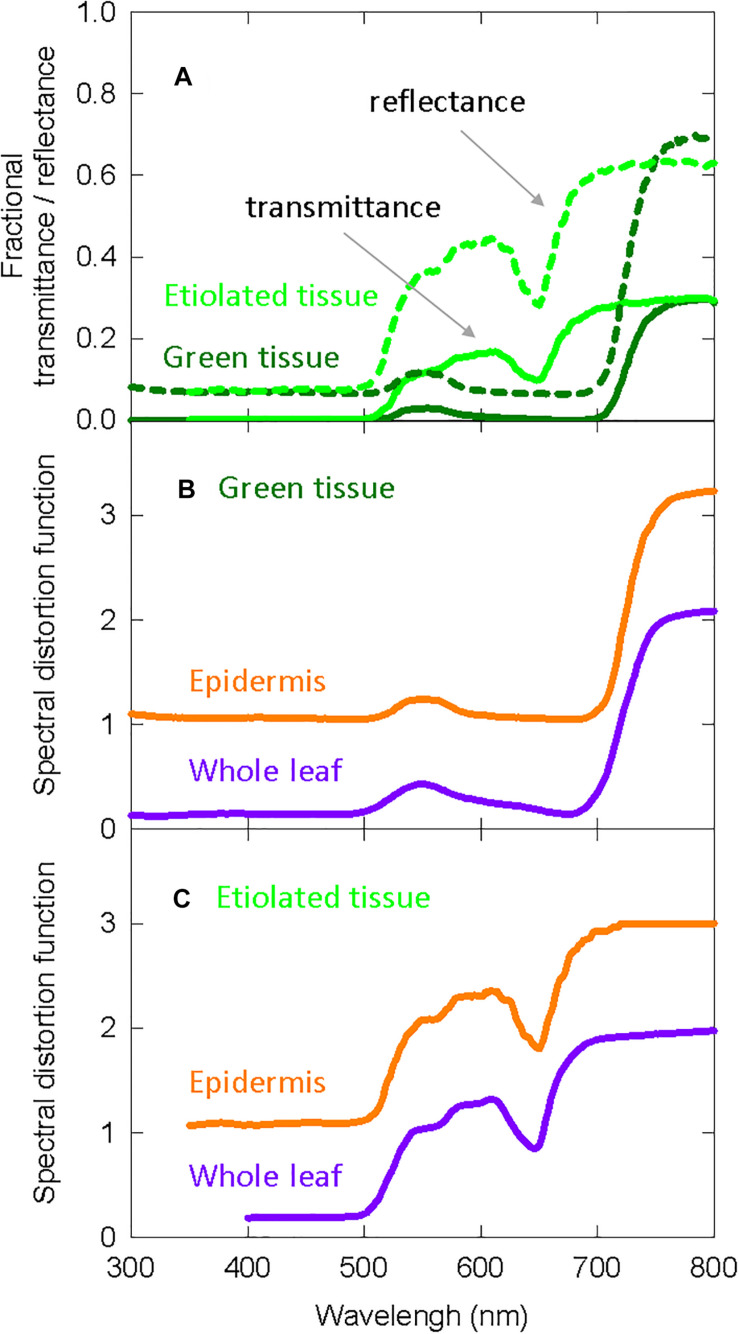
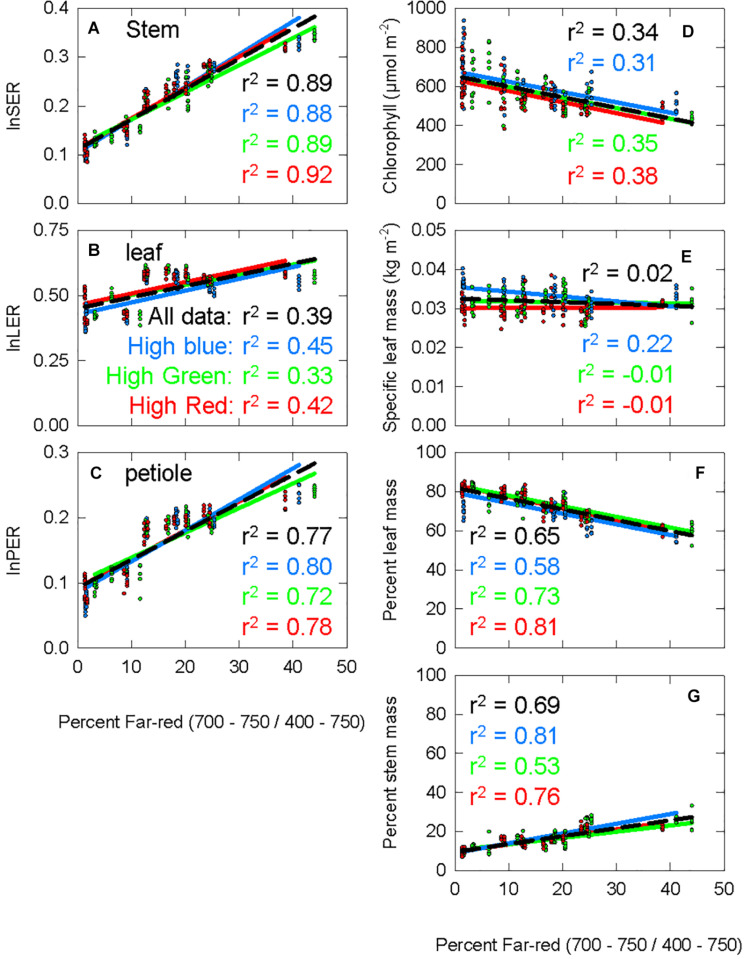
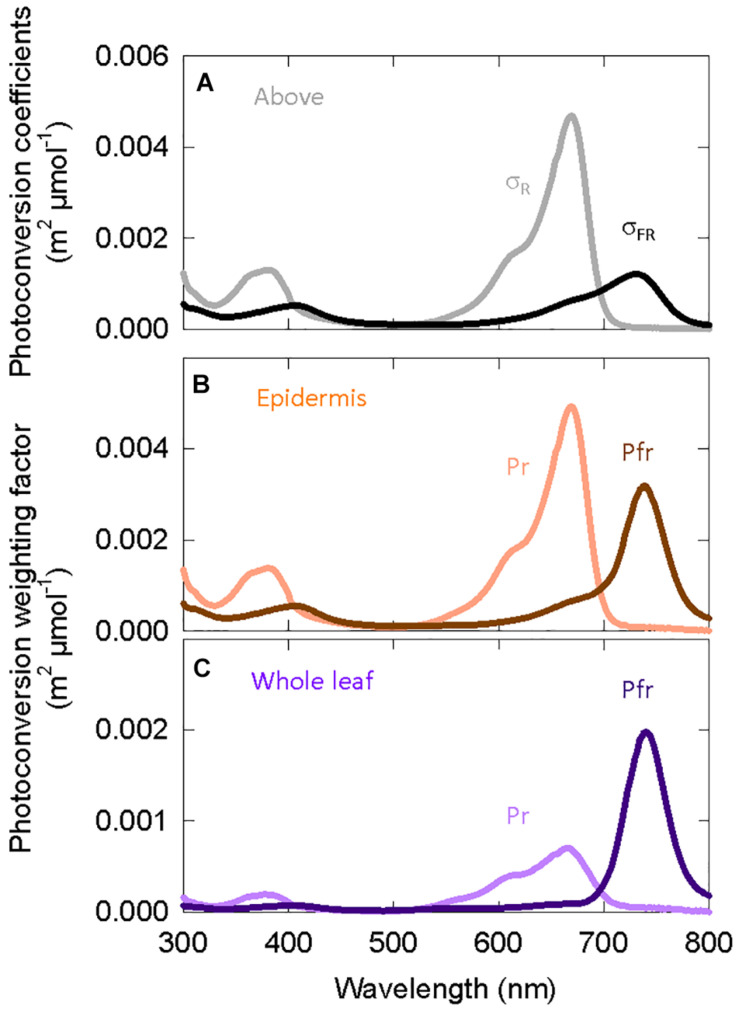
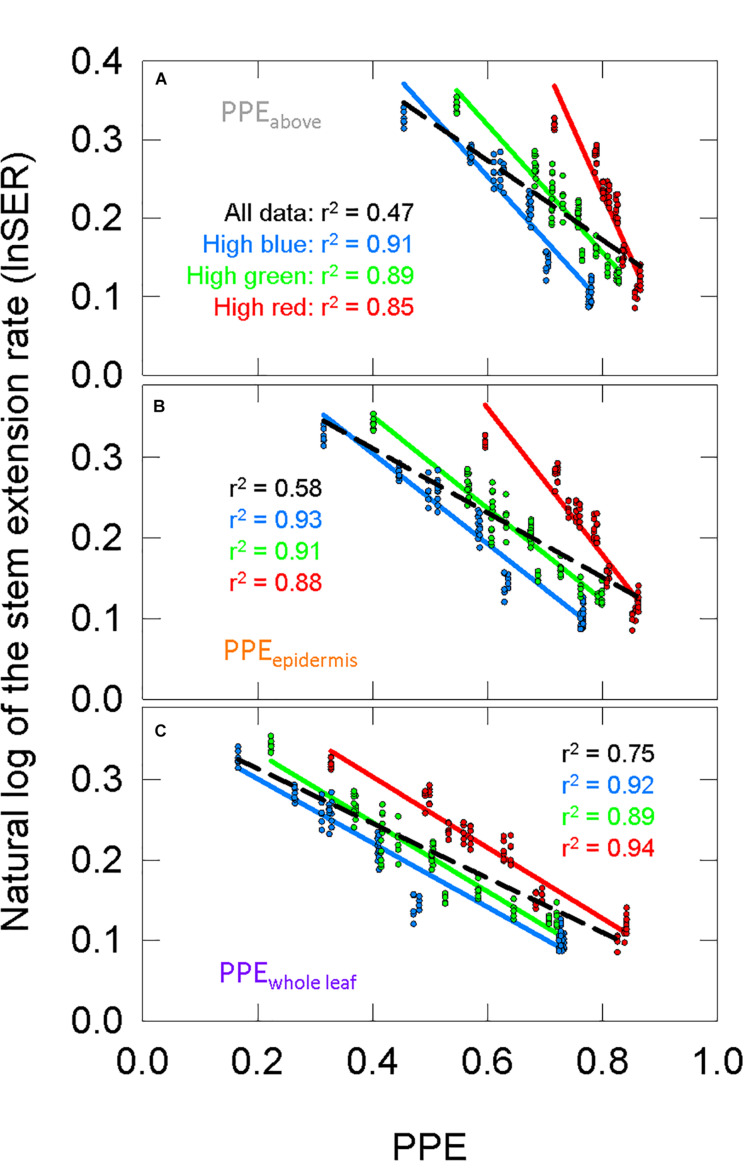
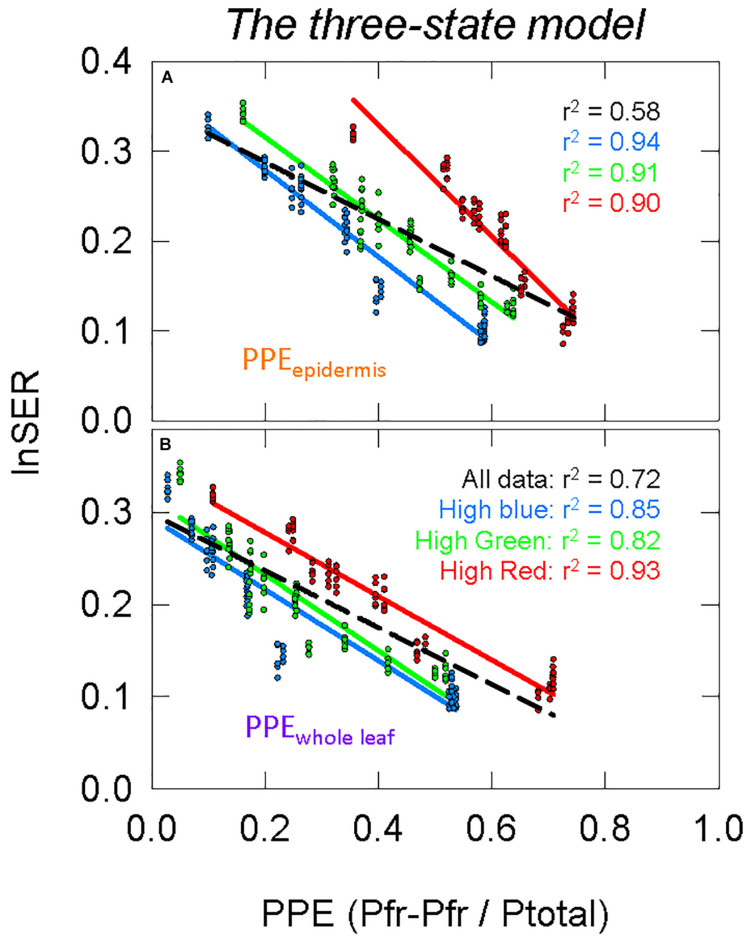
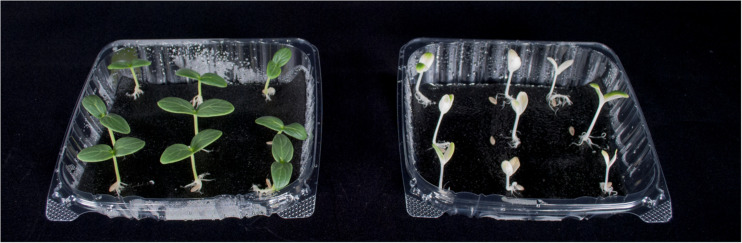
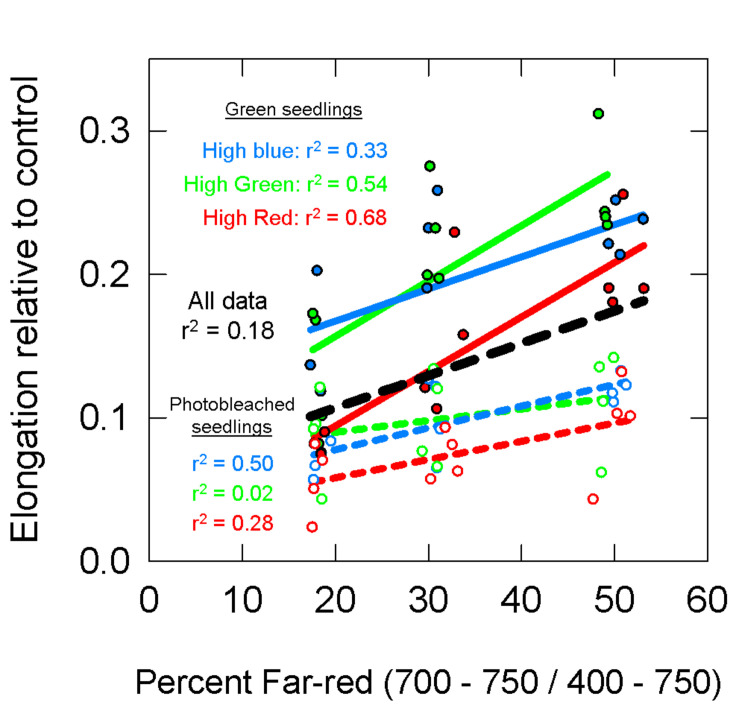
The ratio of active phytochrome (Pfr) to total phytochrome (Pr + Pfr), called phytochrome photo-equilibrium (PPE; also called phytochrome photostationary state, PSS) has been used to explain shade avoidance responses in both natural and controlled environments. PPE is commonly estimated using measurements of the spectral photon distribution (SPD) above the canopy and photoconversion coefficients. This approach has effectively predicted morphological responses when only red and far-red (FR) photon fluxes have varied, but controlled environment research often utilizes unique ratios of wavelengths so a more rigorous evaluation of the predictive ability of PPE on morphology is warranted. Estimations of PPE have rarely incorporated the optical effects of spectral distortion within a leaf caused by pigment absorbance and photon scattering. We studied stem elongation rate in the model plant cucumber under diverse spectral backgrounds over a range of one to 45% FR (total photon flux density, 400-750 nm, of 400 μmol m s) and found that PPE was not predictive when blue and green varied. Preferential absorption of red and blue photons by chlorophyll results in an SPD that is relatively enriched in green and FR at the phytochrome molecule within a cell. This can be described by spectral distortion functions for specific layers of a leaf. Multiplying the photoconversion coefficients by these distortion functions yields photoconversion weighting factors that predict phytochrome conversion at the site of photon perception within leaf tissue. Incorporating spectral distortion improved the predictive value of PPE when phytochrome was assumed to be homogeneously distributed within the whole leaf. In a supporting study, the herbicide norflurazon was used to remove chlorophyll in seedlings. Using distortion functions unique to either green or white cotyledons, we came to the same conclusions as with whole plants in the longer-term study. Leaves of most species have similar spectral absorbance so this approach for predicting PPE should be broadly applicable. We provide a table of the photoconversion weighting factors. Our analysis indicates that the simple, intuitive ratio of FR (700-750 nm) to total photon flux (far-red fraction) is also a reliable predictor of morphological responses like stem length.
活性光敏色素(Pfr)与总光敏色素(Pr + Pfr)的比值,即光敏色素光平衡(PPE;也称为光敏色素光稳定状态,PSS),已被用于解释自然环境和受控环境中的避荫反应。PPE通常通过测量冠层上方的光谱光子分布(SPD)和光转换系数来估算。当只有红光和远红光(FR)光子通量发生变化时,这种方法有效地预测了形态反应,但受控环境研究通常使用独特的波长比,因此有必要对PPE对形态的预测能力进行更严格的评估。PPE的估算很少考虑色素吸收和光子散射引起的叶片内光谱畸变的光学效应。我们研究了模式植物黄瓜在1%至45% FR(总光子通量密度,400 - 750 nm,为400 μmol m⁻² s⁻¹)范围内的不同光谱背景下的茎伸长率,发现当蓝光和绿光变化时,PPE无法进行预测。叶绿素对红光和蓝光光子的优先吸收导致在细胞内光敏色素分子处的SPD相对富含绿光和FR。这可以通过叶片特定层的光谱畸变函数来描述。将光转换系数乘以这些畸变函数可得到光转换加权因子,该因子可预测叶片组织内光子感知位点处的光敏色素转换。当假设光敏色素在整个叶片中均匀分布时,纳入光谱畸变提高了PPE的预测价值。在一项辅助研究中,使用除草剂氟草敏去除幼苗中的叶绿素。使用绿色或白色子叶特有的畸变函数,我们在长期研究中得出了与整株植物相同的结论。大多数物种的叶片具有相似的光谱吸收率,因此这种预测PPE的方法应该具有广泛的适用性。我们提供了光转换加权因子表。我们的分析表明,FR(700 - 750 nm)与总光子通量的简单直观比值(远红分数)也是茎长等形态反应的可靠预测指标。