• 文献检索
  • 文档翻译
  • 深度研究
  • 学术资讯
  • Suppr Zotero 插件Zotero 插件
  • 邀请有礼
  • 套餐&价格
  • 历史记录
应用&插件
Suppr Zotero 插件Zotero 插件浏览器插件Mac 客户端Windows 客户端微信小程序
定价
高级版会员购买积分包购买API积分包
服务
文献检索文档翻译深度研究API 文档MCP 服务
关于我们
关于 Suppr公司介绍联系我们用户协议隐私条款
关注我们

Suppr 超能文献

核心技术专利:CN118964589B侵权必究
粤ICP备2023148730 号-1Suppr @ 2026

文献检索

告别复杂PubMed语法,用中文像聊天一样搜索,搜遍4000万医学文献。AI智能推荐,让科研检索更轻松。

立即免费搜索

文件翻译

保留排版,准确专业,支持PDF/Word/PPT等文件格式,支持 12+语言互译。

免费翻译文档

深度研究

AI帮你快速写综述,25分钟生成高质量综述,智能提取关键信息,辅助科研写作。

立即免费体验

日本的自愿封锁。

Japan's voluntary lockdown.

作者信息

Watanabe Tsutomu, Yabu Tomoyoshi

机构信息

Graduate School of Economics, University of Tokyo, Bunkyo, Tokyo, Japan.

Faculty of Business and Commerce, Keio University, Minato, Tokyo, Japan.

出版信息

PLoS One. 2021 Jun 10;16(6):e0252468. doi: 10.1371/journal.pone.0252468. eCollection 2021.

DOI:10.1371/journal.pone.0252468
PMID:34111163
原文链接:https://pmc.ncbi.nlm.nih.gov/articles/PMC8191912/
Abstract

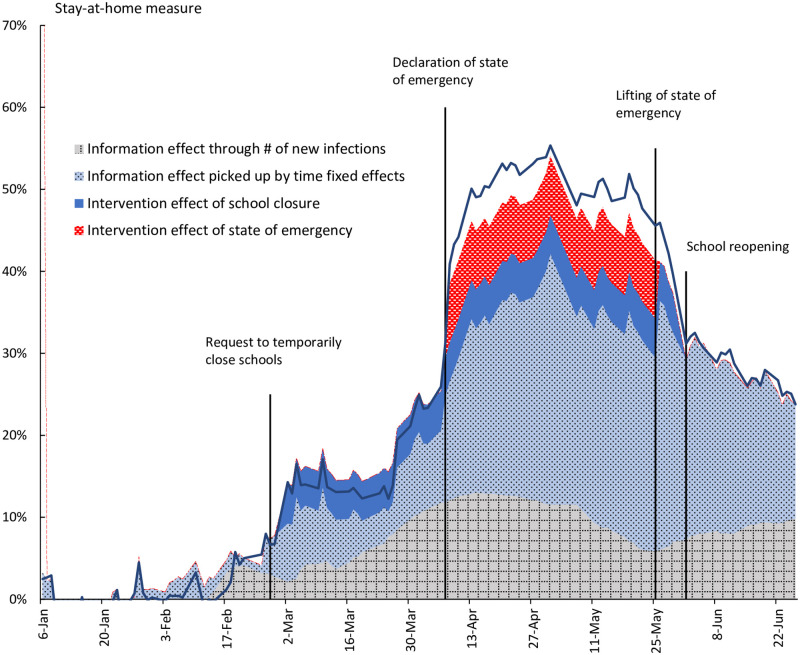
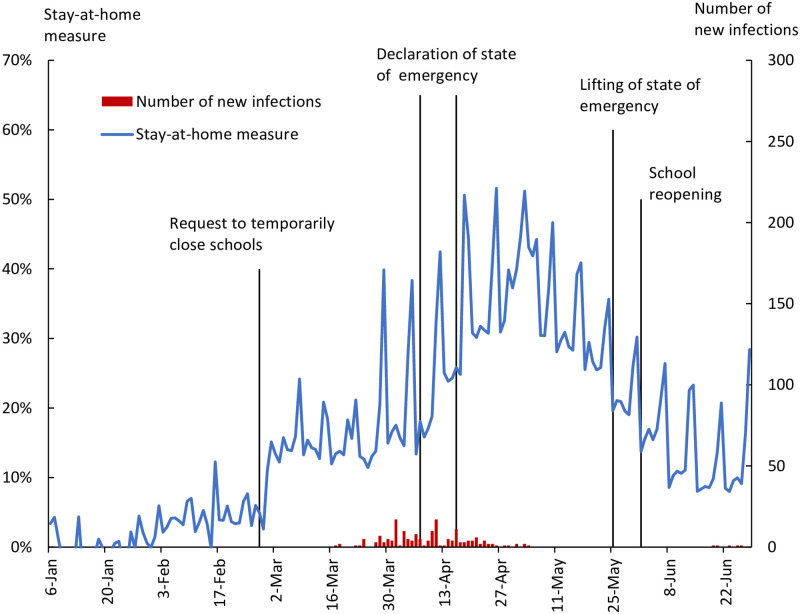
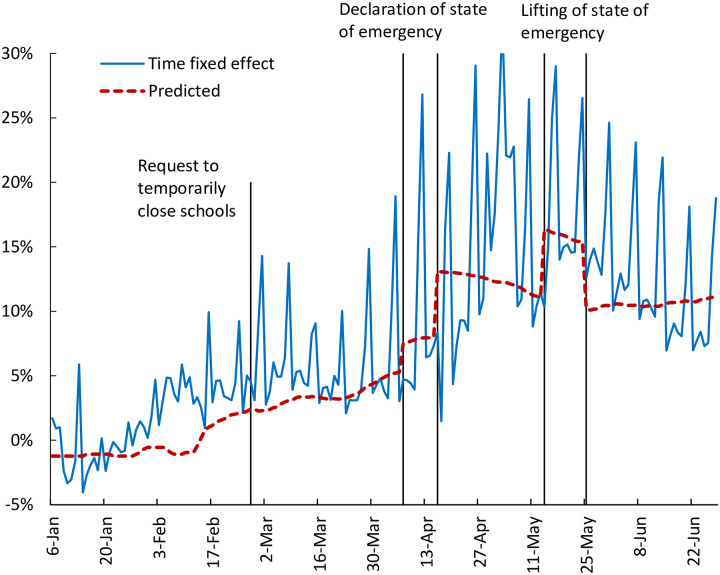
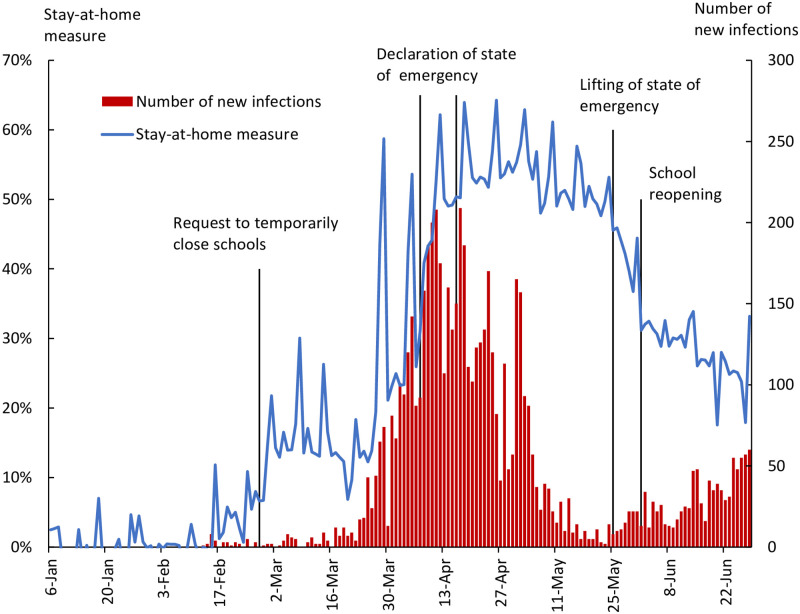
Japan's government has taken a number of measures, including declaring a state of emergency, to combat the spread COVID-19. We examine the mechanisms through which the government's policies have led to changes in people's behavior. Using smartphone location data, we construct a daily prefecture-level stay-at-home measure to identify the following two effects: (1) the effect that citizens refrained from going out in line with the government's request, and (2) the effect that government announcements reinforced awareness with regard to the seriousness of the pandemic and people voluntarily refrained from going out. Our main findings are as follows. First, the declaration of the state of emergency reduced the number of people leaving their homes by 8.5% through the first channel, which is of the same order of magnitude as the estimates obtained for lockdowns in the United States. Second, a 1% increase in new infections in a prefecture reduces people's outings in that prefecture by 0.027%. Third, the government's requests are responsible for about one quarter of the decrease in outings in Tokyo, while the remaining three quarters are the result of citizens obtaining new information through government announcements and the daily release of the number of infections. The findings suggest that what mattered for containing the spread of COVID-19 was not strong, legally binding measures but the provision of appropriate information that encouraged people to change their behavior.

摘要

日本政府已采取了一系列措施,包括宣布进入紧急状态,以抗击新冠疫情的传播。我们研究了政府政策导致人们行为改变的机制。利用智能手机定位数据,我们构建了一个县级每日居家措施,以识别以下两种影响:(1)公民按照政府要求避免外出的影响,以及(2)政府公告增强了人们对疫情严重性的认识,人们自愿避免外出的影响。我们的主要研究结果如下。首先,紧急状态声明通过第一个渠道使离家人数减少了8.5%,这与美国封锁措施的估计幅度相当。其次,一个县的新增感染病例增加1%,会使该县的外出人数减少0.027%。第三,政府的要求导致东京外出人数减少约四分之一,而其余四分之三是公民通过政府公告和每日公布的感染人数获得新信息的结果。研究结果表明,遏制新冠疫情传播的关键不是强有力的、具有法律约束力的措施,而是提供鼓励人们改变行为的适当信息。
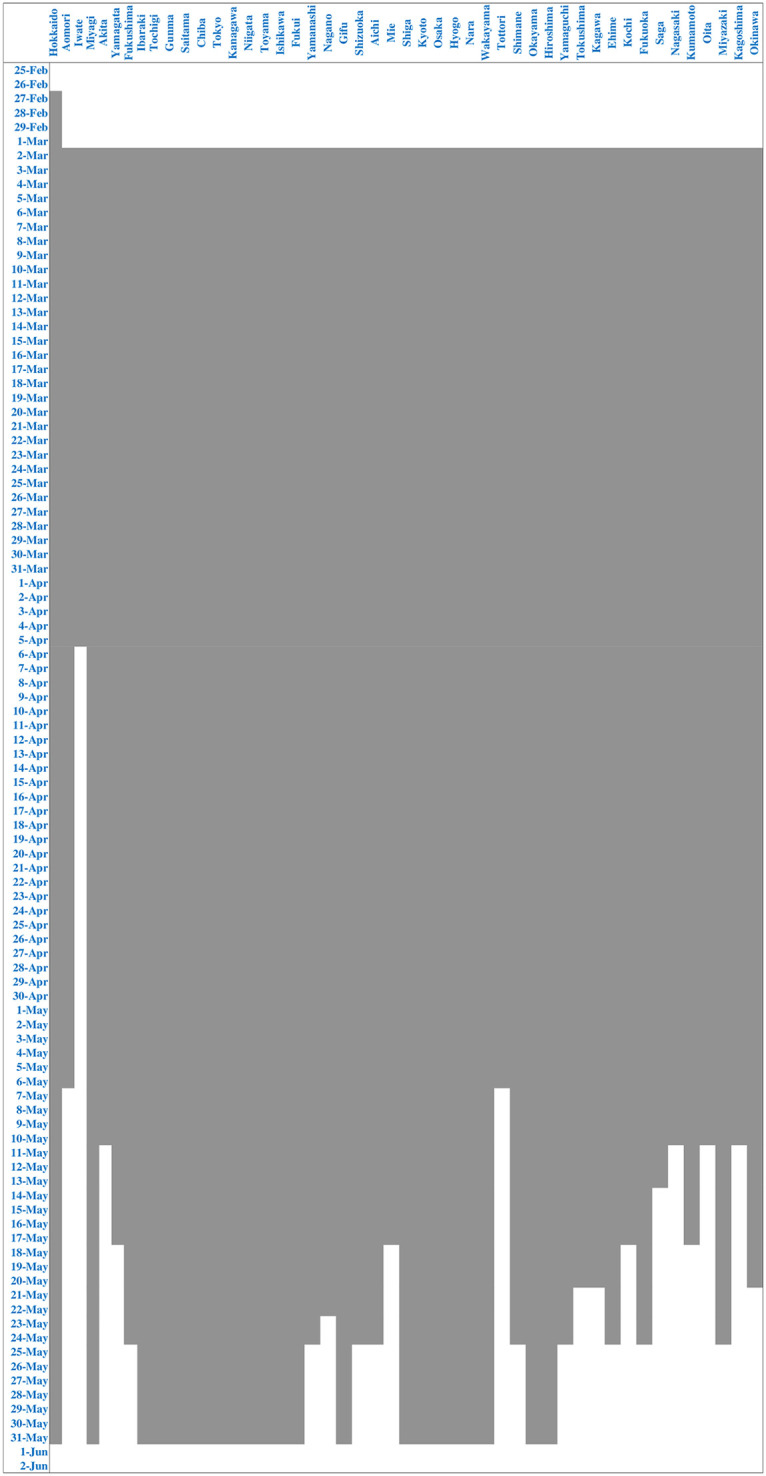
https://cdn.ncbi.nlm.nih.gov/pmc/blobs/2850/8191912/250c42d83482/pone.0252468.g008.jpg
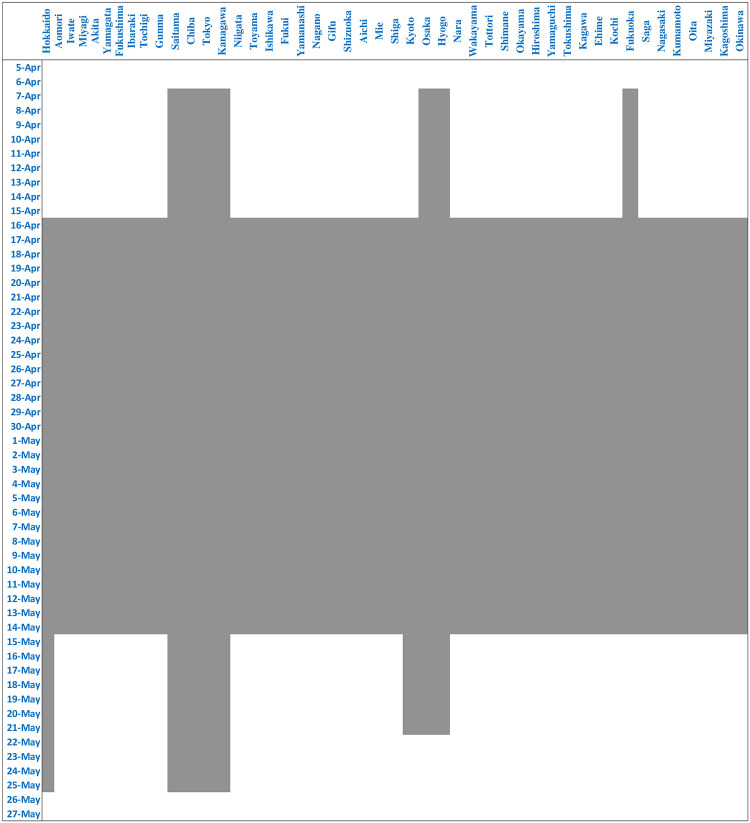
https://cdn.ncbi.nlm.nih.gov/pmc/blobs/2850/8191912/7518658f3522/pone.0252468.g001.jpg
https://cdn.ncbi.nlm.nih.gov/pmc/blobs/2850/8191912/f498c4f425b9/pone.0252468.g002.jpg
https://cdn.ncbi.nlm.nih.gov/pmc/blobs/2850/8191912/86c0f83538fb/pone.0252468.g003.jpg
https://cdn.ncbi.nlm.nih.gov/pmc/blobs/2850/8191912/4b5a4faac3b2/pone.0252468.g004.jpg
https://cdn.ncbi.nlm.nih.gov/pmc/blobs/2850/8191912/148f06e81725/pone.0252468.g005.jpg
https://cdn.ncbi.nlm.nih.gov/pmc/blobs/2850/8191912/7e4c143cae95/pone.0252468.g006.jpg
https://cdn.ncbi.nlm.nih.gov/pmc/blobs/2850/8191912/cbc5e32dca9e/pone.0252468.g007.jpg
https://cdn.ncbi.nlm.nih.gov/pmc/blobs/2850/8191912/250c42d83482/pone.0252468.g008.jpg
https://cdn.ncbi.nlm.nih.gov/pmc/blobs/2850/8191912/7518658f3522/pone.0252468.g001.jpg
https://cdn.ncbi.nlm.nih.gov/pmc/blobs/2850/8191912/f498c4f425b9/pone.0252468.g002.jpg
https://cdn.ncbi.nlm.nih.gov/pmc/blobs/2850/8191912/86c0f83538fb/pone.0252468.g003.jpg
https://cdn.ncbi.nlm.nih.gov/pmc/blobs/2850/8191912/4b5a4faac3b2/pone.0252468.g004.jpg
https://cdn.ncbi.nlm.nih.gov/pmc/blobs/2850/8191912/148f06e81725/pone.0252468.g005.jpg
https://cdn.ncbi.nlm.nih.gov/pmc/blobs/2850/8191912/7e4c143cae95/pone.0252468.g006.jpg
https://cdn.ncbi.nlm.nih.gov/pmc/blobs/2850/8191912/cbc5e32dca9e/pone.0252468.g007.jpg
https://cdn.ncbi.nlm.nih.gov/pmc/blobs/2850/8191912/250c42d83482/pone.0252468.g008.jpg

相似文献

1
Japan's voluntary lockdown.日本的自愿封锁。
PLoS One. 2021 Jun 10;16(6):e0252468. doi: 10.1371/journal.pone.0252468. eCollection 2021.
2
Japan's voluntary lockdown: further evidence based on age-specific mobile location data.日本的自愿性封锁:基于特定年龄移动定位数据的进一步证据
Jpn Econ Rev (Oxf). 2021;72(3):333-370. doi: 10.1007/s42973-021-00077-9. Epub 2021 Jun 21.
3
Human Flow Dataset Reveals Changes in Citizens' Outing Behaviors including Greenspace Visits before and during the First Wave of the COVID-19 Pandemic in Kanazawa, Japan.人类流动数据集揭示了日本金泽市在 COVID-19 大流行第一波前后,市民外出行为(包括访问绿地)的变化。
Int J Environ Res Public Health. 2022 Jul 18;19(14):8728. doi: 10.3390/ijerph19148728.
4
The Transition of Social Isolation and Related Psychological Factors in 2 Mild Lockdown Periods During the COVID-19 Pandemic in Japan: Longitudinal Survey Study.《日本 COVID-19 大流行期间 2 次轻度封锁期间社会隔离及其相关心理因素的转变:纵向调查研究》
JMIR Public Health Surveill. 2022 Mar 8;8(3):e32694. doi: 10.2196/32694.
5
COVID-19, stigma, and habituation: evidence from mobility data.COVID-19、污名化和习惯化:来自流动性数据的证据。
BMC Public Health. 2023 Jan 13;23(1):98. doi: 10.1186/s12889-023-14980-w.
6
Effects of the COVID-19 Emergency and National Lockdown on Italian Citizens' Economic Concerns, Government Trust, and Health Engagement: Evidence From a Two-Wave Panel Study.COVID-19 紧急状态和全国封锁对意大利公民经济担忧、政府信任和健康参与的影响:来自两轮面板研究的证据。
Milbank Q. 2021 Jun;99(2):369-392. doi: 10.1111/1468-0009.12506. Epub 2021 Apr 6.
7
Physical Activity Behavior Before, During, and After COVID-19 Restrictions: Longitudinal Smartphone-Tracking Study of Adults in the United Kingdom.新冠疫情限制前后的身体活动行为:英国成年人的纵向智能手机追踪研究。
J Med Internet Res. 2021 Feb 3;23(2):e23701. doi: 10.2196/23701.
8
Putting equity at the heart of the US government's rollout of covid tests and masks.将公平作为美国政府新冠病毒检测和口罩发放工作的核心。
BMJ. 2022 Feb 8;376:o344. doi: 10.1136/bmj.o344.
9
Citizens' Adherence to COVID-19 Mitigation Recommendations by the Government: A 3-Country Comparative Evaluation Using Web-Based Cross-Sectional Survey Data.公民对政府新冠疫情缓解建议的遵守情况:基于网络横断面调查数据的三国比较评估
J Med Internet Res. 2020 Aug 11;22(8):e20634. doi: 10.2196/20634.
10
How Well the Government of Nepal Is Responding to COVID-19? An Experience From a Resource-Limited Country to Confront Unprecedented Pandemic.尼泊尔政府应对新冠疫情的情况如何?一个资源有限的国家应对前所未有的大流行病的经验。
Front Public Health. 2021 Feb 17;9:597808. doi: 10.3389/fpubh.2021.597808. eCollection 2021.

引用本文的文献

1
Expectations regarding the effectiveness of mask-wearing and pandemic fatigue: The experience in Japan.对佩戴口罩有效性的期望与疫情疲劳:日本的经历
PLoS One. 2025 May 14;20(5):e0321402. doi: 10.1371/journal.pone.0321402. eCollection 2025.
2
Physical Activity Assessment in Patients With Nephrotic Syndrome and the Impact of COVID-19: A Study Using the International Physical Activity Questionnaire and Accelerometry.肾病综合征患者的体力活动评估及新型冠状病毒肺炎的影响:一项使用国际体力活动问卷和加速度计的研究
Cureus. 2025 Apr 12;17(4):e82126. doi: 10.7759/cureus.82126. eCollection 2025 Apr.
3
Unravelling habituation for COVID-19-related information: A panel data study in Japan.

本文引用的文献

1
JUE Insight: Measuring movement and social contact with smartphone data: a real-time application to COVID-19.JUE洞察:利用智能手机数据测量活动和社交接触:COVID-19的实时应用。
J Urban Econ. 2022 Jan;127:103328. doi: 10.1016/j.jue.2021.103328. Epub 2021 Feb 12.
2
COVID-19 doesn't need lockdowns to destroy jobs: The effect of local outbreaks in Korea.新冠疫情无需封锁措施就能导致就业岗位减少:韩国局部疫情的影响。
Labour Econ. 2021 Jun;70:101993. doi: 10.1016/j.labeco.2021.101993. Epub 2021 Apr 30.
3
Human mobility restrictions and the spread of the Novel Coronavirus (2019-nCoV) in China.
解析与新冠病毒相关信息的习惯化现象:日本的面板数据研究。
PLoS One. 2024 Jul 30;19(7):e0306456. doi: 10.1371/journal.pone.0306456. eCollection 2024.
4
Three years of COVID-19-related school restrictions and mental health of children and adolescents in Japan.日本因 COVID-19 相关学校限制措施而导致的儿童和青少年心理健康问题持续了三年。
Sci Rep. 2024 Jul 19;14(1):16707. doi: 10.1038/s41598-024-67138-y.
5
Heterogeneous risk attitudes and waves of infection.异质风险态度与感染浪潮。
PLoS One. 2024 Apr 9;19(4):e0299813. doi: 10.1371/journal.pone.0299813. eCollection 2024.
6
Heterogeneity of the effect of the COVID-19 pandemic on the incidence of Metabolic Syndrome onset at a Japanese campus.COVID-19 大流行对日本校园代谢综合征发病影响的异质性。
PeerJ. 2024 Apr 5;12:e17013. doi: 10.7717/peerj.17013. eCollection 2024.
7
Exploring the Impact of the COVID-19 Pandemic on Twitter in Japan: Qualitative Analysis of Disrupted Plans and Consequences.探讨 COVID-19 大流行对日本 Twitter 的影响:对打乱的计划和后果的定性分析。
JMIR Infodemiology. 2024 Apr 1;4:e49699. doi: 10.2196/49699.
8
Using a Systems Engineering Approach to Build a PCR Testing System at a Medical School During the COVID-19 Pandemic.在新冠疫情期间,采用系统工程方法在一所医学院构建聚合酶链反应检测系统。
Risk Manag Healthc Policy. 2024 Mar 21;17:649-662. doi: 10.2147/RMHP.S441618. eCollection 2024.
9
Treatment interruption in hypertensive patients during the COVID-19 pandemic: An interrupted time series analysis using prescription data in Okayama, Japan.2019冠状病毒病大流行期间高血压患者的治疗中断:一项使用日本冈山县处方数据的中断时间序列分析。
J Gen Fam Med. 2024 Feb 21;25(2):102-109. doi: 10.1002/jgf2.678. eCollection 2024 Mar.
10
Presenteeism and social interaction in the "new normal" in Japan: a longitudinal questionnaire study.日本“新常态”下的出勤主义和社会互动:一项纵向问卷调查研究。
Environ Health Prev Med. 2024;29:3. doi: 10.1265/ehpm.23-00201.
中国的人员流动限制与新型冠状病毒(2019-nCoV)的传播
J Public Econ. 2020 Nov;191:104272. doi: 10.1016/j.jpubeco.2020.104272. Epub 2020 Sep 8.
4
Fear, lockdown, and diversion: Comparing drivers of pandemic economic decline 2020.恐惧、封锁与转移:2020年大流行经济衰退驱动因素比较
J Public Econ. 2021 Jan;193:104311. doi: 10.1016/j.jpubeco.2020.104311. Epub 2020 Nov 25.
5
Labor demand in the time of COVID-19: Evidence from vacancy postings and UI claims.新冠疫情时期的劳动力需求:来自招聘信息和失业保险申请的证据
J Public Econ. 2020 Sep;189:104238. doi: 10.1016/j.jpubeco.2020.104238. Epub 2020 Jul 13.
6
Social distancing laws cause only small losses of economic activity during the COVID-19 pandemic in Scandinavia.社交距离法律在 COVID-19 大流行期间在斯堪的纳维亚只导致了经济活动的少量损失。
Proc Natl Acad Sci U S A. 2020 Aug 25;117(34):20468-20473. doi: 10.1073/pnas.2010068117. Epub 2020 Aug 3.