Department of Psychology, University of Toronto, Toronto, Ontario, Canada.
Rotman Research Institute, Baycrest Hospital, Toronto, Ontario, Canada.
PLoS One. 2021 Jun 10;16(6):e0252807. doi: 10.1371/journal.pone.0252807. eCollection 2021.
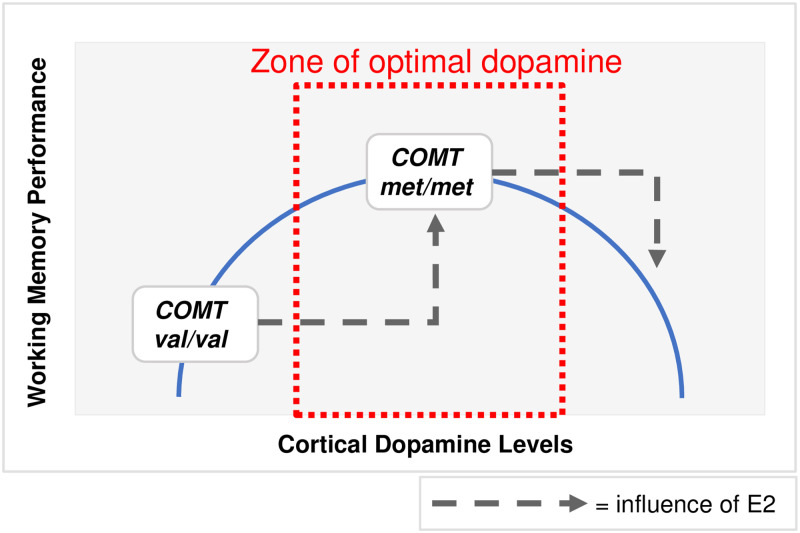
Despite the widespread use of oral contraceptives (OCs), and the well-documented influence of estrogens, notably 17β-estradiol (E2), on cognition, research relating OCs to working memory is limited and mixed. Two factors may contribute to these mixed findings: 1) pharmacokinetics of oral contraceptives, which drive fluctuations in synthetic hormone levels; and 2) genetic polymorphisms related to dopamine degradation and working memory, which interact with E2. This research investigated whether the pharmacokinetics of oral contraceptives, in concert with the single nucleotide polymorphism (Val158Met; rs4680) of the catechol-o-methyltransferase gene (COMT), influence working memory performance.
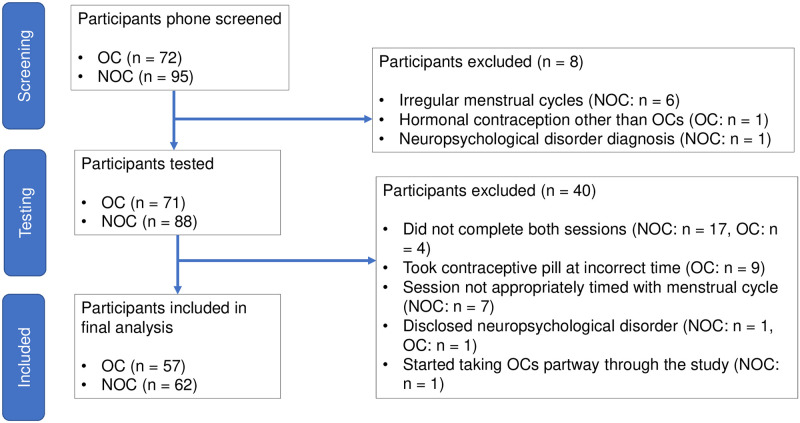
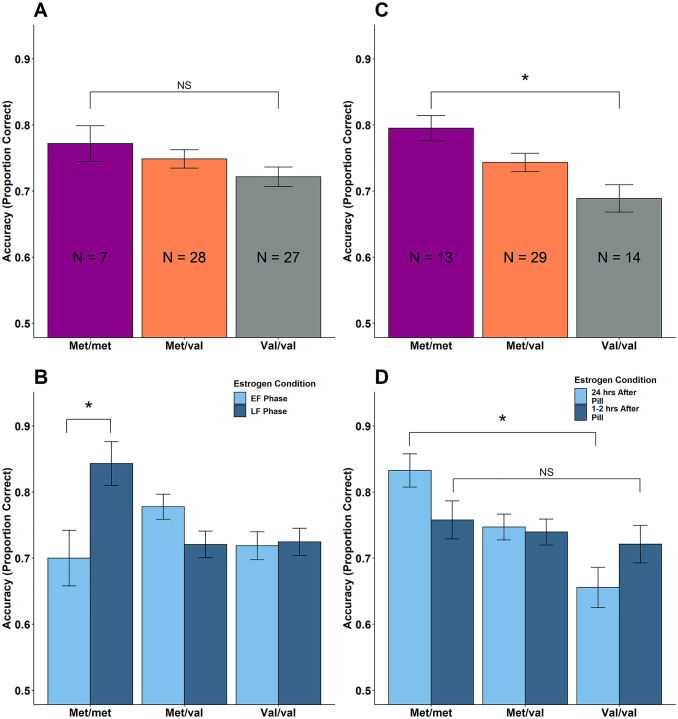
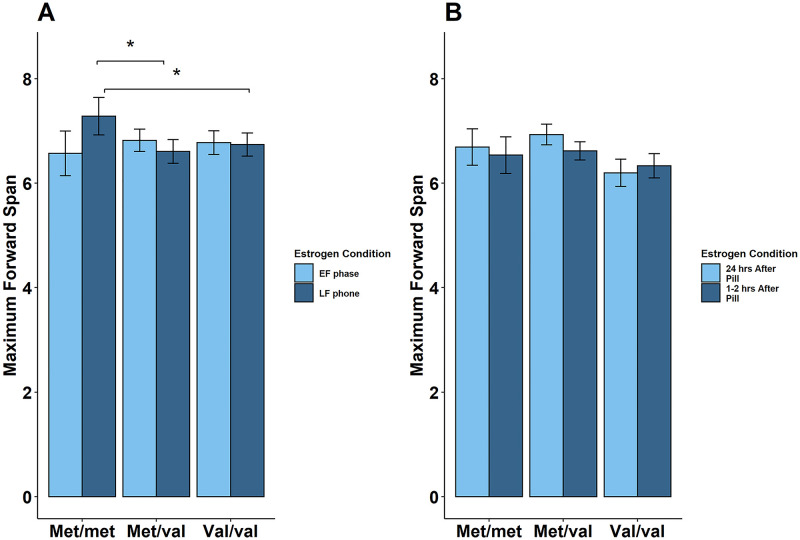
University-age women taking and not taking OCs were tested for working memory and genotyped for COMT. If they were not taking OCs (n = 62), sessions occurred in the early follicular (low E2) and late follicular (high E2) phase. If they were taking OCs (n = 52), sessions occurred 1-2 hours after (high ethinyl estradiol, EE) and ~24 hours after (low EE) pill ingestion. Working memory was tested using the N-back, AX-CPT, Digit Span, and Digit Ordering Tasks. Data were analyzed using multilevel models with estrogen condition, COMT, and group as predictors, controlling for mood and practice effects.
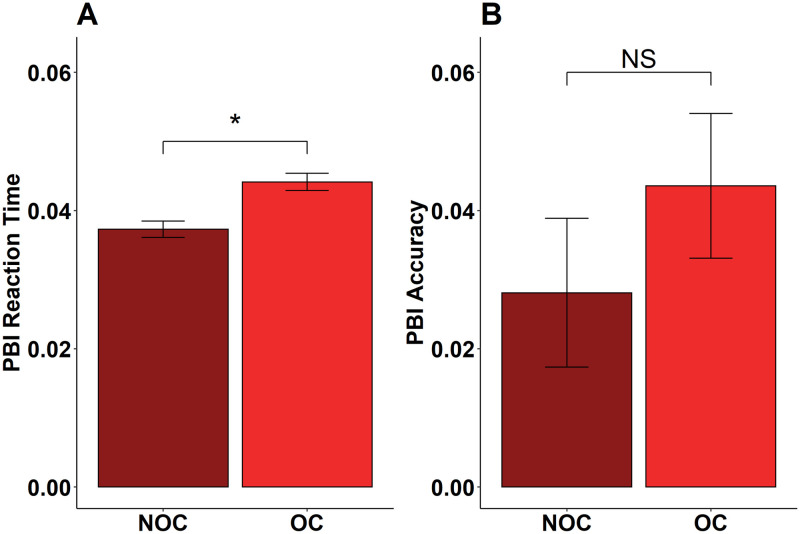
For women taking OCs, time of pill ingestion did not influence performance. However, the subgroup with COMT val/val (low dopamine) were less accurate on 2-back lure trials than those with COMT met/met (high dopamine). For women not taking OCs, cycle phase moderated COMT's influence on lure accuracy. When compared, women taking OCs had higher AX-CPT proactive control indices than those not taking OCs.
These findings suggest that oral contraceptives are not detrimental for young women's working memory and that they may increase proactive control. The more pronounced effects of COMT in women taking OCs suggests that, in women taking OCs, suppressed endogenous E2-not fluctuating EE levels-may be more relevant for working memory. Future studies are needed to differentiate effects of endogenous versus synthetic estrogens on working memory.
尽管口服避孕药(OCs)被广泛使用,并且雌激素(尤其是 17β-雌二醇(E2))对认知的影响已得到充分记录,但与工作记忆相关的 OC 研究仍有限且存在差异。有两个因素可能导致这些混合结果:1)口服避孕药的药代动力学,它会导致合成激素水平波动;2)与多巴胺降解和工作记忆相关的遗传多态性,它们与 E2 相互作用。这项研究调查了口服避孕药的药代动力学是否与儿茶酚-O-甲基转移酶基因(COMT)的单核苷酸多态性(Val158Met;rs4680)共同影响工作记忆表现。
正在服用和未服用 OC 的大学年龄女性接受工作记忆测试并进行 COMT 基因分型。如果她们未服用 OC(n=62),则在早期卵泡(低 E2)和晚期卵泡(高 E2)期进行测试。如果她们正在服用 OC(n=52),则在服药后 1-2 小时(高乙炔雌二醇,EE)和约 24 小时(低 EE)后进行测试。使用 N 回、AX-CPT、数字跨度和数字排序任务测试工作记忆。使用具有雌激素条件、COMT 和组作为预测因子的多层次模型分析数据,同时控制情绪和练习效果。
对于服用 OC 的女性,服药时间并不影响表现。然而,COMT val/val(低多巴胺)亚组在 2 回诱饵试验中的准确性低于 COMT met/met(高多巴胺)亚组。对于未服用 OC 的女性,周期阶段调节了 COMT 对诱饵准确性的影响。与未服用 OC 的女性相比,服用 OC 的女性在 AX-CPT 前摄控制指数上更高。
这些发现表明,口服避孕药对年轻女性的工作记忆没有不利影响,并且可能会增加前摄控制。在服用 OC 的女性中,COMT 的影响更为明显,这表明在服用 OC 的女性中,抑制内源性 E2-而非波动的 EE 水平-可能与工作记忆更相关。未来的研究需要区分内源性和合成雌激素对工作记忆的影响。