Department of Biomedical Engineering, The Chinese University of Hong Kong, Hong Kong, China.
Empa, Swiss Federal Laboratories for Materials Science and Technology, Laboratory for Biomimetic Membranes and Textiles, St. Gallen, Switzerland.
Nat Commun. 2021 Jun 10;12(1):3514. doi: 10.1038/s41467-021-23120-0.
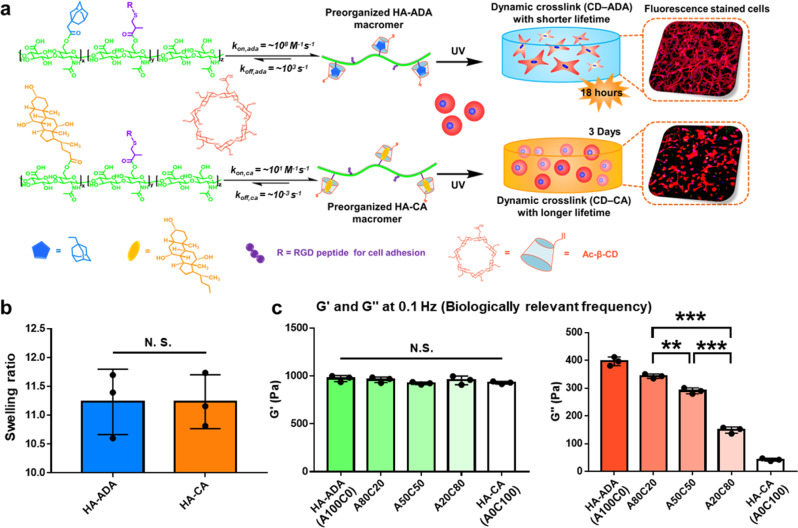
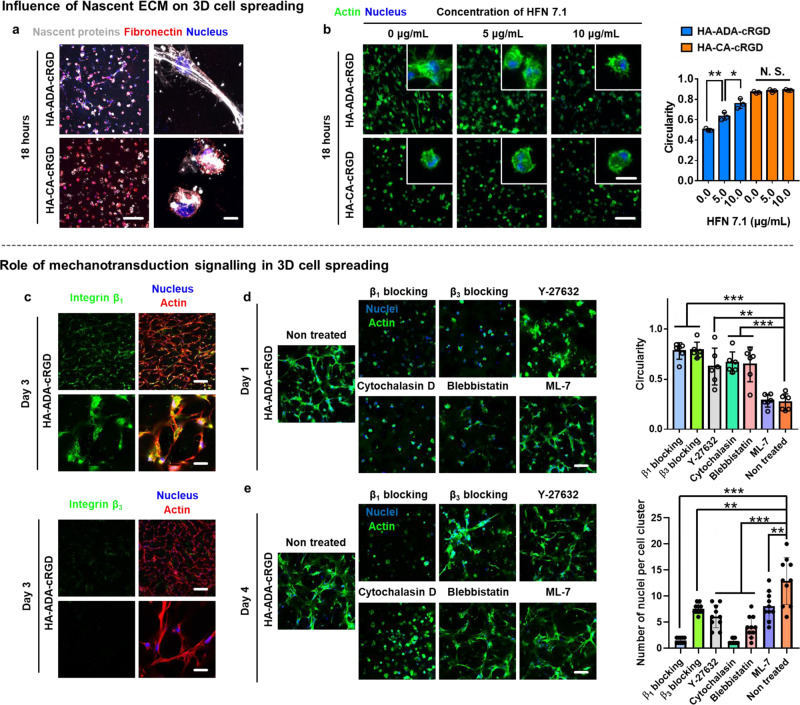
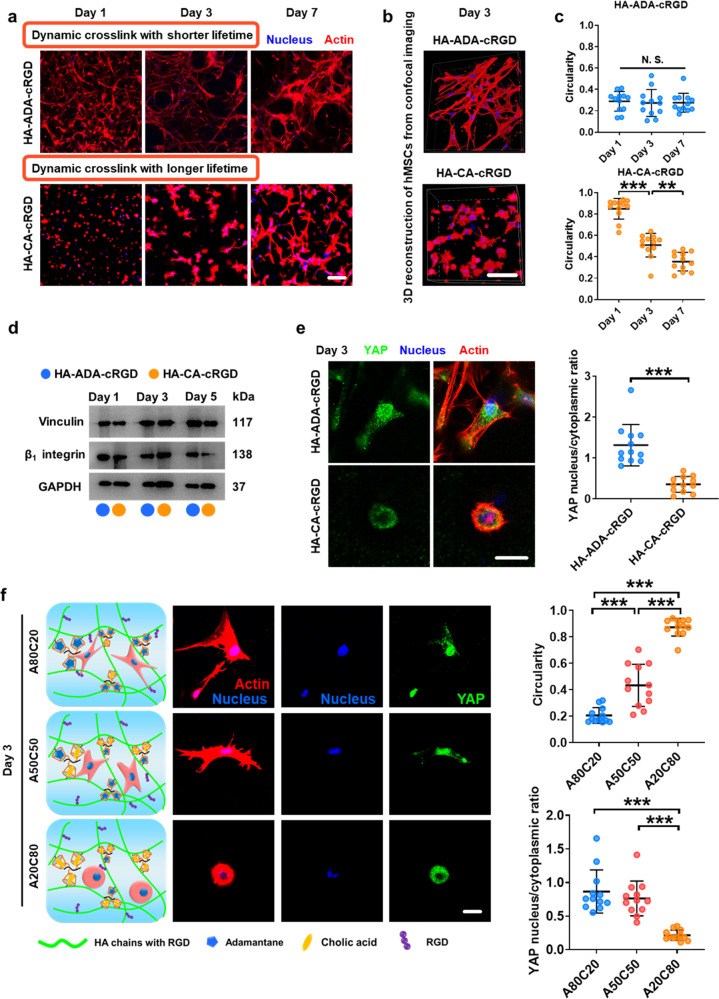
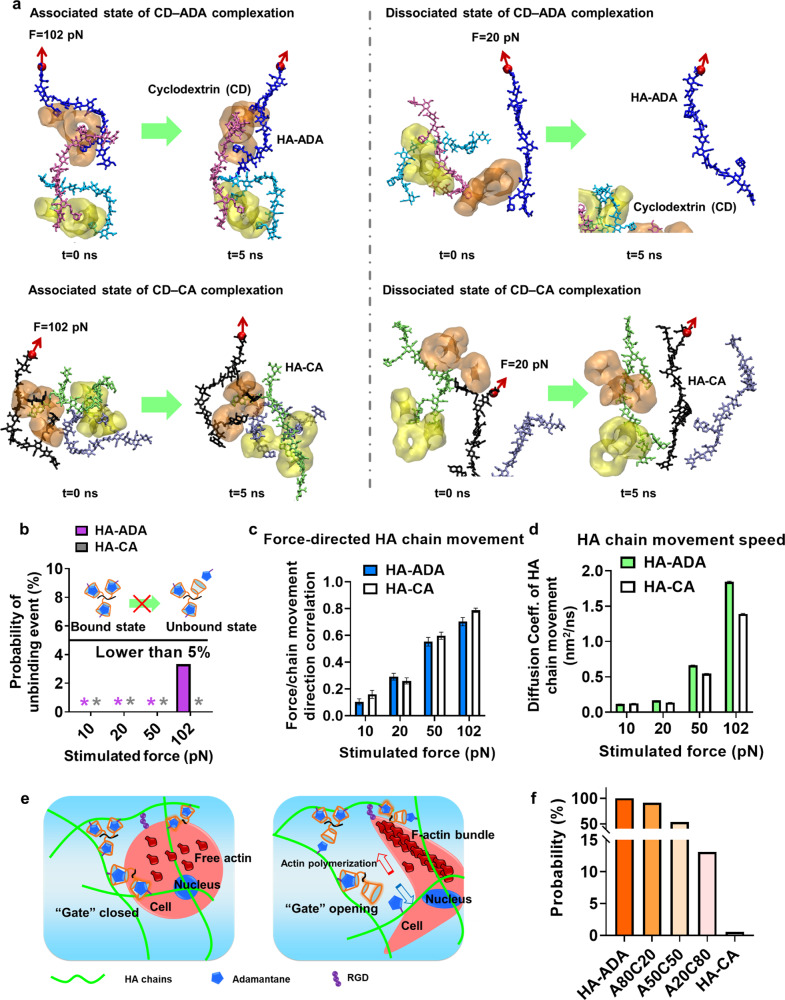
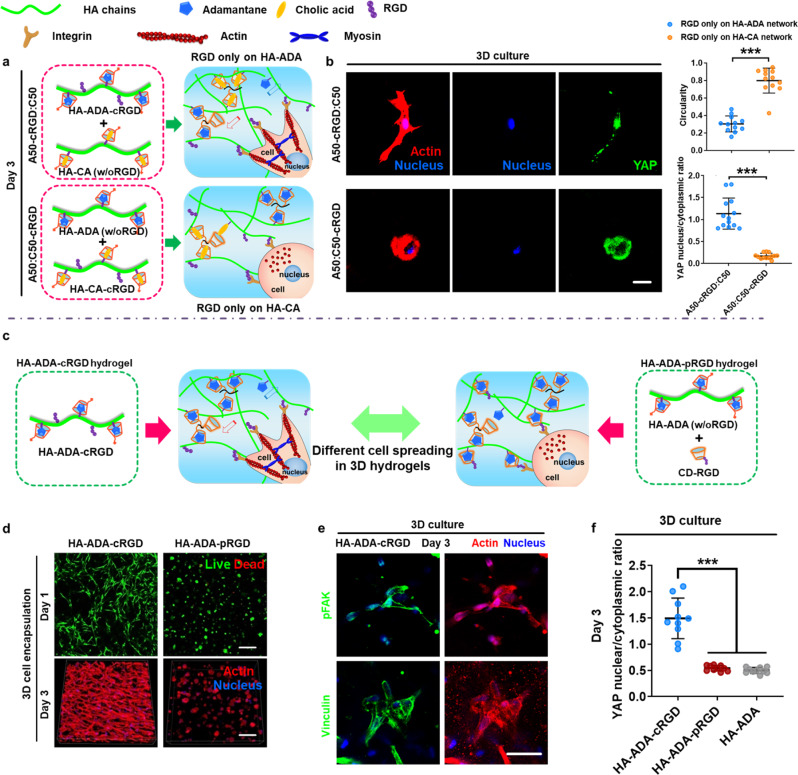
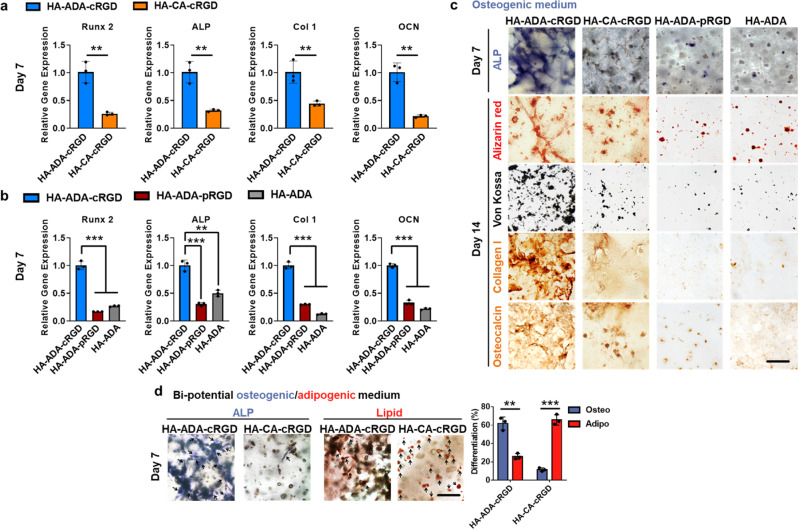
3D culture of cells in designer biomaterial matrices provides a biomimetic cellular microenvironment and can yield critical insights into cellular behaviours not available from conventional 2D cultures. Hydrogels with dynamic properties, achieved by incorporating either degradable structural components or reversible dynamic crosslinks, enable efficient cell adaptation of the matrix and support associated cellular functions. Herein we demonstrate that given similar equilibrium binding constants, hydrogels containing dynamic crosslinks with a large dissociation rate constant enable cell force-induced network reorganization, which results in rapid stellate spreading, assembly, mechanosensing, and differentiation of encapsulated stem cells when compared to similar hydrogels containing dynamic crosslinks with a low dissociation rate constant. Furthermore, the static and precise conjugation of cell adhesive ligands to the hydrogel subnetwork connected by such fast-dissociating crosslinks is also required for ultra-rapid stellate spreading (within 18 h post-encapsulation) and enhanced mechanosensing of stem cells in 3D. This work reveals the correlation between microscopic cell behaviours and the molecular level binding kinetics in hydrogel networks. Our findings provide valuable guidance to the design and evaluation of supramolecular biomaterials with cell-adaptable properties for studying cells in 3D cultures.
细胞在设计生物材料基质中的 3D 培养为细胞提供了仿生的微环境,并能深入了解传统 2D 培养中无法获得的细胞行为。通过引入可降解结构成分或可逆动态交联,可以得到具有动态特性的水凝胶,从而实现基质中细胞的有效适应,并支持相关的细胞功能。本文中我们证明了,在具有相似平衡结合常数的情况下,含有大离解速率常数的动态交联的水凝胶能够诱导细胞力引发的网络重排,从而导致包封干细胞的快速星状展开、组装、机械感知和分化,与含有低离解速率常数的动态交联的类似水凝胶相比。此外,对于超快星状展开(在包封后 18 小时内)和增强 3D 中干细胞的机械感知,还需要通过这种快速解离交联连接的水凝胶亚网络的静态和精确的细胞黏附配体偶联。这项工作揭示了微观细胞行为与水凝胶网络中分子水平结合动力学之间的相关性。我们的发现为设计和评估具有细胞适应性的超分子生物材料提供了有价值的指导,以用于 3D 培养中的细胞研究。