Camaioni Milena, Scarpelli Serena, Gorgoni Maurizio, Alfonsi Valentina, De Gennaro Luigi
Department of Psychology, Sapienza University of Rome, Rome, Italy.
IRCCS Fondazione Santa Lucia, Rome, Italy.
Nat Sci Sleep. 2021 Jun 3;13:713-728. doi: 10.2147/NSS.S306614. eCollection 2021.
Non-rapid eye movement (NREM) parasomnias are defined as abnormal nocturnal behaviors that typically arise from the NREM sleep stage 3 during the first sleep cycle. The polysomnographic studies showed an increase in sleep fragmentation and an atypical slow wave activity (SWA) in participants with NREM parasomnias compared to healthy controls. To date, the pathophysiology of NREM parasomnias is still poorly understood. The recent investigation of the EEG patterns immediately before parasomnia events could shed light on the motor activations' processes. This systematic review aims to summarize empirical evidence about these studies and provide an overview of the methodological issues.
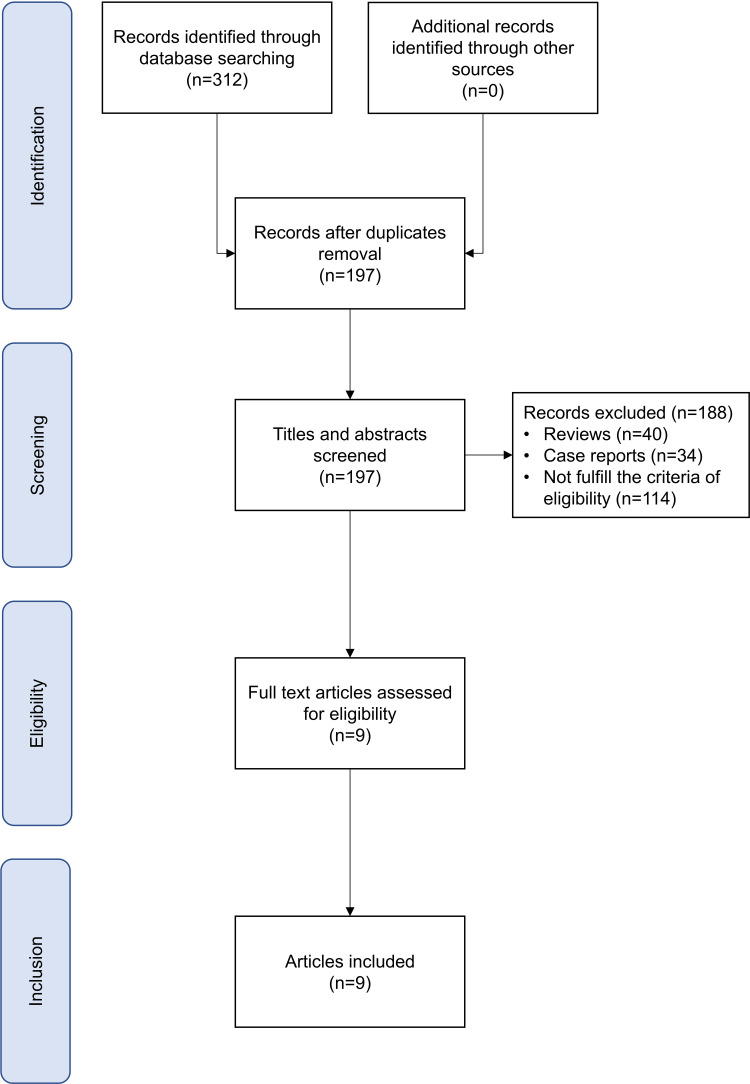
A systematic literature search was carried out in PubMed, Web of Science, and Scopus, following the Preferred Reporting Items for Systematic Reviews and Meta-Analyses (PRISMA). The documents obtained were evaluated using the Newcastle-Ottawa Scale (NOS).
Nine studies were included in the qualitative synthesis. The major evidence revealed an increased slow frequency EEG activity immediately before the motor activations in frontal and central areas and increased beta activity in the anterior cingulate cortices.
The investigation of EEG patterns before parasomniac episodes could provide new insight into the study of NREM parasomnia pathophysiology. The high- and low-frequency EEG increase before the episodes could represent a predictive electrophysiological pattern of the motor activations' onset. Overall, identifying specific sleep markers before parasomnias might also help differentiate between NREM parasomnias and other motor sleep disorders. Different methodological protocols should be integrated for overcoming the lack of consistent empirical findings. Thus, future studies should focus on the topographical examination of canonical EEG frequency bands to better understand spatial and time dynamics before the episodes and identify the networks underlying the onset of activations.
非快速眼动(NREM)异态睡眠被定义为异常的夜间行为,通常出现在第一个睡眠周期的NREM睡眠3期。多导睡眠图研究表明,与健康对照组相比,NREM异态睡眠参与者的睡眠碎片化增加,且存在非典型的慢波活动(SWA)。迄今为止,NREM异态睡眠的病理生理学仍知之甚少。对异态睡眠事件发生前的脑电图模式进行的最新研究可能有助于揭示运动激活的过程。本系统评价旨在总结这些研究的实证证据,并概述方法学问题。
按照系统评价和Meta分析的首选报告项目(PRISMA),在PubMed、科学网和Scopus中进行了系统的文献检索。使用纽卡斯尔-渥太华量表(NOS)对获得的文献进行评估。
九项研究纳入了定性综合分析。主要证据显示,在额叶和中央区域运动激活前,低频脑电图活动增加,前扣带回皮质的β活动增加。
对异态睡眠发作前脑电图模式的研究可能为NREM异态睡眠病理生理学的研究提供新的见解。发作前高频和低频脑电图的增加可能代表运动激活开始的预测性电生理模式。总体而言,识别异态睡眠前的特定睡眠标志物也可能有助于区分NREM异态睡眠和其他运动性睡眠障碍。应整合不同的方法学方案,以克服实证结果缺乏一致性的问题。因此,未来的研究应专注于对标准脑电图频段的地形学检查,以更好地理解发作前的空间和时间动态,并确定激活开始的潜在网络。