Division of Infectious Diseases and Global Medicine, Department of Medicine, University of Florida, Gainesville, Florida, United States of America.
Department of Pharmaceutical Outcomes & Policy, College of Pharmacy, University of Florida, Gainesville, Florida, United States of America.
PLoS One. 2021 Jun 11;16(6):e0253259. doi: 10.1371/journal.pone.0253259. eCollection 2021.
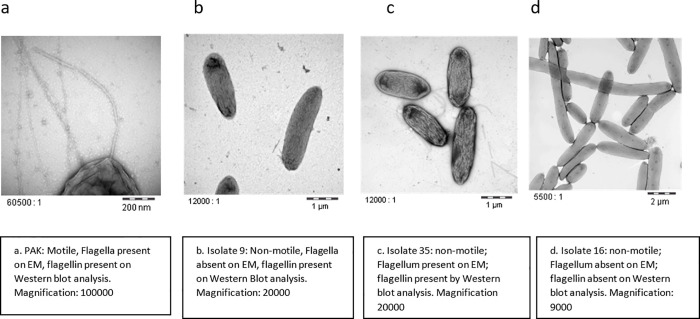
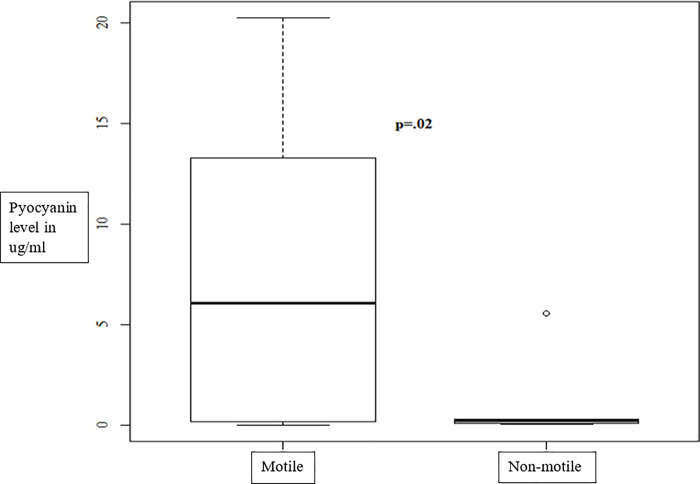
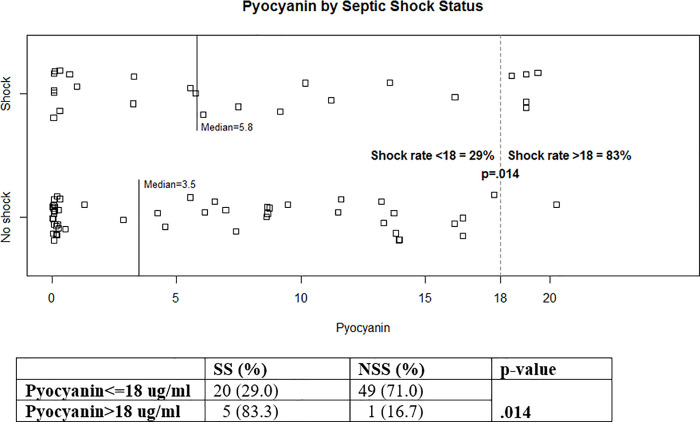
Studies of the outcome of Pseudomonas aeruginosa bacteremia (Pab) have focused mainly on antibiotic appropriateness. However, P. aeruginosa possesses many virulence factors whose roles in outcomes have not been examined in humans, except for the type III secretion system (T3SS) toxins. The purpose of this study was to examine the role of virulence factors other than the T3SS toxins. Bacterial isolates were collected from 75 patients who suffered from Pa blood stream infections. Host factors such as neutropenia, immunosuppression, comorbidities, time to effective antibiotics, source of bacteremia, and presence of multidrug resistant (MDR) isolate were studied. The isolates were analyzed for the presence of toxin genes, proteolytic activity, swimming and twitching motility, and pyocyanin production. The data were analyzed to ascertain which virulence factors correlated with poor outcomes defined as septic shock or death (SS) within 7 days. Septic shock or death occurred in 25/75 patients. Univariate analysis identified age as a host factor that exerted a significant effect on these outcomes. Ineffective antibiotics administered during the first 24 hours of treatment or MDR P. aeruginosa did not influence the frequency of SS, nor did the presence of lasB, exoA, exoS exoU, plcH genes and proteolytic activity. However, 6/8 patients infected with non-motile isolates, developed SS, p = 0.014 and 5/6 isolates that produced large amounts of pyocyanin (>18ug/ml), were associated with SS, p = 0.014. Multivariate analysis indicated that the odds ratio (OR) for development of SS with a non-motile isolate was 6.8, with a 95% confidence interval (CI) (1.37, 51.5), p = 0.030 and with high pyocyanin producing isolates, an OR of 16.9, 95% CI = (2.27, 360), p = .017. This study evaluating the role of microbial factors that significantly effect outcomes following Pa bloodstream infection suggests that P. aeruginosa strains showing high pyocyanin production and the lack of motility independently increase the risk of SS.
本研究旨在探讨除 III 型分泌系统(T3SS)毒素以外的其他毒力因子在细菌感染结局中的作用。从 75 例患有铜绿假单胞菌血流感染的患者中收集细菌分离株。研究了宿主因素,如中性粒细胞减少症、免疫抑制、合并症、使用有效抗生素的时间、菌血症的来源以及是否存在多药耐药(MDR)分离株。分析了分离株是否存在毒素基因、蛋白水解活性、泳动和翻滚运动以及绿脓菌素的产生。分析数据以确定与不良结局(7 天内发生感染性休克或死亡)相关的毒力因子。75 例患者中有 25 例发生感染性休克或死亡。单因素分析确定年龄是对这些结局产生显著影响的宿主因素。在治疗的头 24 小时内使用无效的抗生素或 MDR 铜绿假单胞菌并不影响感染性休克的频率,lasB、exoA、exoS、exoU、plcH 基因和蛋白水解活性的存在也没有影响。然而,6/8 例感染非运动分离株的患者发生感染性休克,p = 0.014,5/6 例产生大量绿脓菌素(>18ug/ml)的分离株与感染性休克相关,p = 0.014。多因素分析表明,非运动分离株发生感染性休克的优势比(OR)为 6.8,95%置信区间(CI)为(1.37,51.5),p = 0.030,高绿脓菌素产生分离株的 OR 为 16.9,95%CI =(2.27,360),p = 0.017。本研究评估了对铜绿假单胞菌血流感染后结局有显著影响的微生物因素的作用,表明高绿脓菌素产生和缺乏运动的铜绿假单胞菌株独立增加感染性休克的风险。