Liu Qi, Chen Liyang, Liang Xuchun, Cao Yuqing, Zhu Xinyue, Wang Siqi, Li Jin, Gao Juan, Xiao Junjie
Cardiac Regeneration and Ageing Lab, Institute of Cardiovascular Sciences, School of Life Science, Shanghai University, Shanghai 200444, China.
Shanghai Engineering Research Center of Organ Repair, School of Medicine, Shanghai University, Shanghai 200444, China.
J Sport Health Sci. 2022 Nov;11(6):696-707. doi: 10.1016/j.jshs.2021.06.002. Epub 2021 Jun 8.
Exercise is beneficial for muscle atrophy. Peroxisome proliferator-activated receptor gamma (PPARγ) and microRNA-29b (miR-29b) have been reported to be responsible for angiotensinⅡ (AngⅡ)-induced muscle atrophy. However, it is unclear whether exercise can protect AngⅡ-induced muscle atrophy by targeting PPARγ/miR-29b.
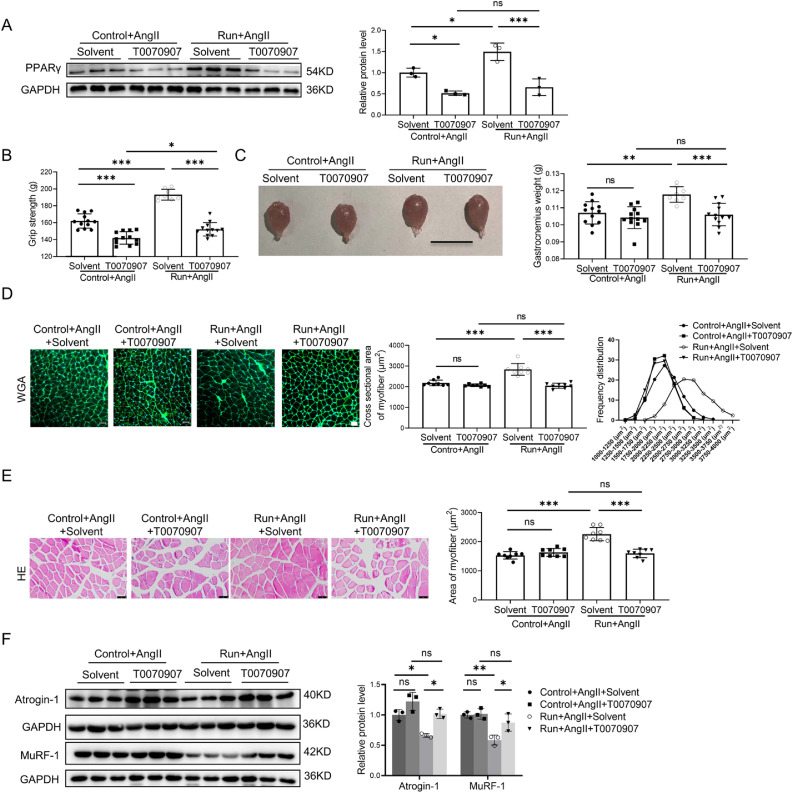
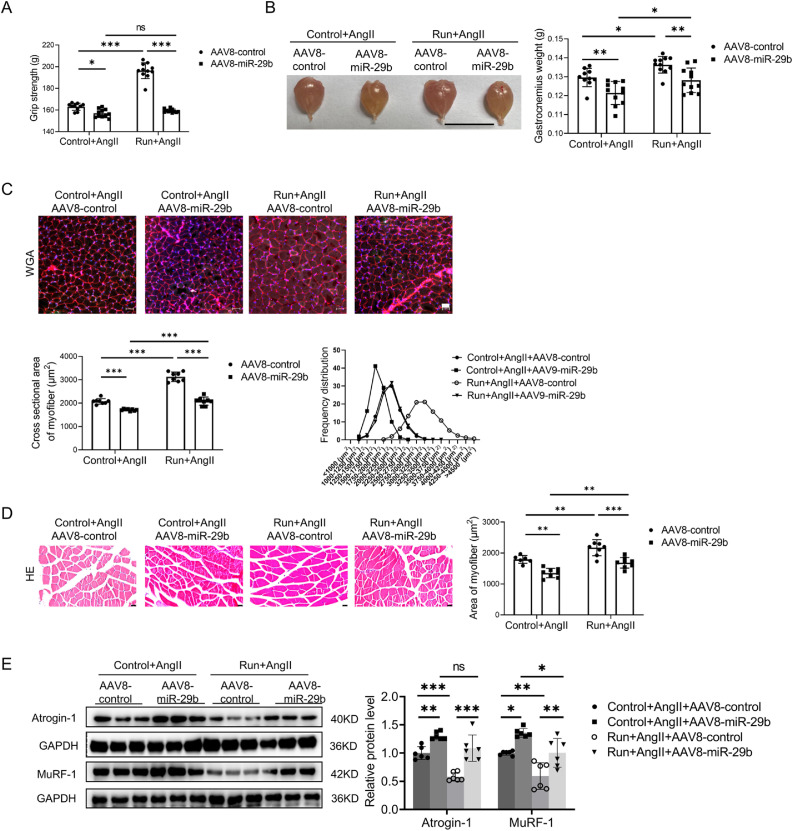
Skeletal muscle atrophy in both the control group and the run group was established by AngⅡ infusion; after 1 week of exercise training, the mice were sacrificed, and muscle weight was determined. Myofiber size was measured by hematoxylin-eosin and wheat-germ agglutinin staining. Apoptosis was evaluated by terminal deoxynucleotidyl transferase dUTP nick end labeling staining. The expression level of muscle atrogenes, including F-box only protein 32 (FBXO32, also called Atrogin-1) and muscle-specific RING-finger 1 (MuRF-1), the phosphorylation level of protein kinase B (PKB, also called AKT)/forkhead box O3A (FOXO3A)/mammalian target of rapamycin (mTOR) pathway proteins, the expression level of PPARγ and apoptosis-related proteins, including B-cell lymphoma-2 (Bcl-2), Bcl-2-associated X (Bax), cysteine-aspartic acid protease 3 (caspase-3), and cleaved-caspase-3, were determined by western blot. The expression level of miR-29b was checked by reverse-transcription quantitative polymerase chain reaction. A PPARγ inhibitor (T0070907) or adeno-associated virus serotype-8 (AAV8)-mediated miR-29b overexpression was used to demonstrate whether PPARγ activation or miR-29b inhibition mediates the beneficial effects of exercise in AngⅡ-induced muscle atrophy.
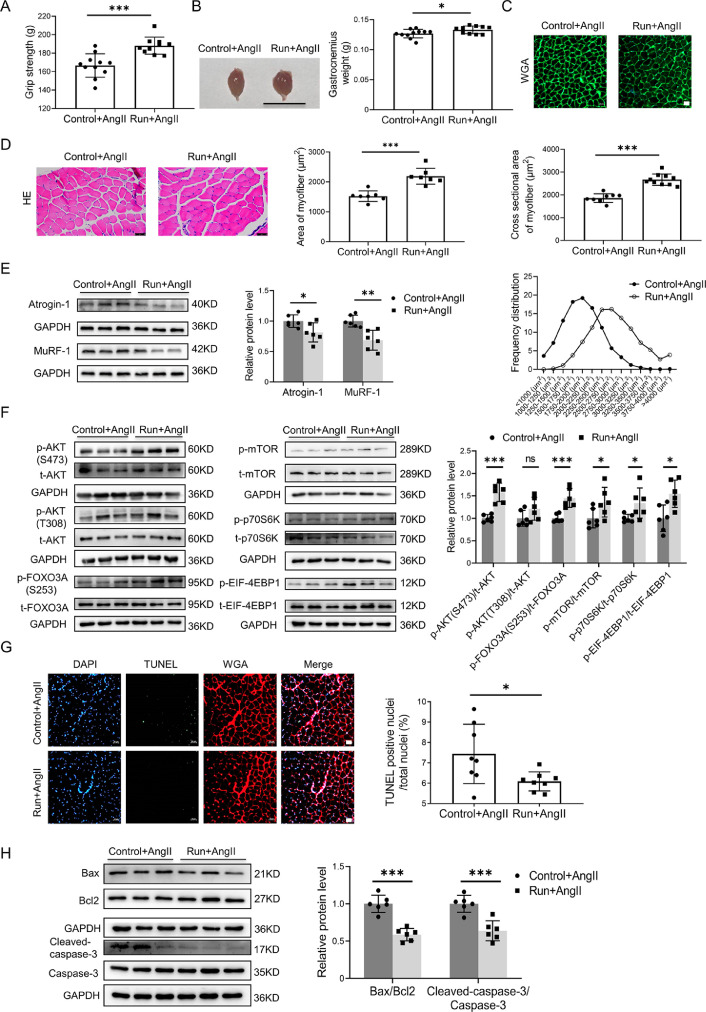
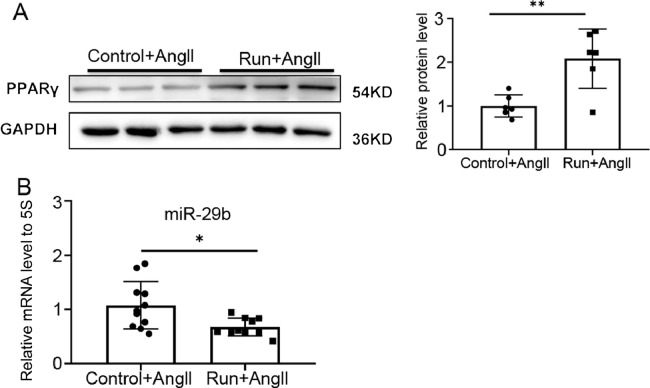
Exercise can significantly attenuate AngⅡ-induced muscle atrophy, which is demonstrated by increased skeletal muscle weight, cross-sectional area of myofiber, and activation of AKT/mTOR signaling and by decreased atrogenes expressions and apoptosis. In AngⅡ-induced muscle atrophy mice models, PPARγ was elevated whereas miR-29b was decreased by exercise. The protective effects of exercise in AngⅡ-induced muscle atrophy were inhibited by a PPARγ inhibitor (T0070907) or adeno-associated virus serotype-8 (AAV8)-mediated miR-29b overexpression.
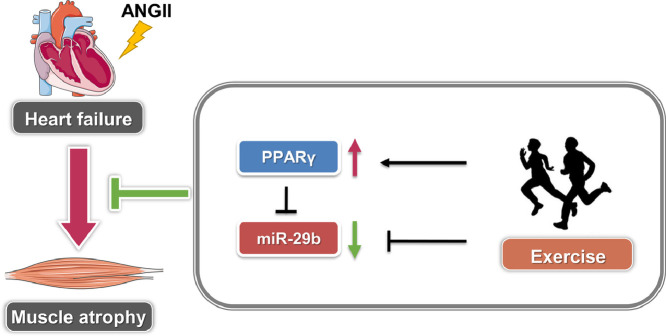
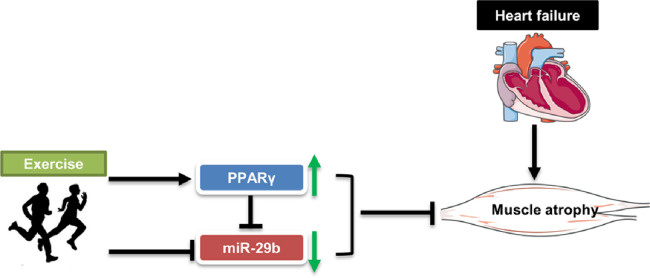
Exercise attenuates AngⅡ-induced muscle atrophy by activation of PPARγ and suppression of miR-29b.
运动对肌肉萎缩有益。据报道,过氧化物酶体增殖物激活受体γ(PPARγ)和微小RNA-29b(miR-29b)与血管紧张素Ⅱ(AngⅡ)诱导的肌肉萎缩有关。然而,运动是否能通过靶向PPARγ/miR-29b来保护AngⅡ诱导的肌肉萎缩尚不清楚。
通过输注AngⅡ建立对照组和跑步组的骨骼肌萎缩模型;运动训练1周后,处死小鼠并测定肌肉重量。通过苏木精-伊红染色和麦胚凝集素染色测量肌纤维大小。通过末端脱氧核苷酸转移酶dUTP缺口末端标记染色评估细胞凋亡。通过蛋白质印迹法测定肌肉萎缩相关基因的表达水平,包括仅含F盒蛋白32(FBXO32,也称为Atrogin-1)和肌肉特异性环状指蛋白1(MuRF-1),蛋白激酶B(PKB,也称为AKT)/叉头框O3A(FOXO3A)/雷帕霉素哺乳动物靶蛋白(mTOR)信号通路蛋白的磷酸化水平,PPARγ的表达水平以及凋亡相关蛋白的表达水平,包括B细胞淋巴瘤-2(Bcl-2)、Bcl-2相关X蛋白(Bax)、半胱氨酸天冬氨酸蛋白酶3(caspase-3)和裂解的caspase-3。通过逆转录定量聚合酶链反应检测miR-29b的表达水平。使用PPARγ抑制剂(T0070907)或腺相关病毒8型(AAV8)介导的miR-29b过表达来证明PPARγ激活或miR-29b抑制是否介导运动对AngⅡ诱导的肌肉萎缩的有益作用。
运动可显著减轻AngⅡ诱导的肌肉萎缩,表现为骨骼肌重量增加、肌纤维横截面积增大、AKT/mTOR信号通路激活,以及肌肉萎缩相关基因表达和细胞凋亡减少。在AngⅡ诱导的肌肉萎缩小鼠模型中,运动使PPARγ升高而miR-29b降低。PPARγ抑制剂(T0070907)或腺相关病毒8型(AAV8)介导的miR-29b过表达抑制了运动对AngⅡ诱导的肌肉萎缩的保护作用。
运动通过激活PPARγ和抑制miR-29b减轻AngⅡ诱导的肌肉萎缩。