• 文献检索
  • 文档翻译
  • 深度研究
  • 学术资讯
  • Suppr Zotero 插件Zotero 插件
  • 邀请有礼
  • 套餐&价格
  • 历史记录
应用&插件
Suppr Zotero 插件Zotero 插件浏览器插件Mac 客户端Windows 客户端微信小程序
定价
高级版会员购买积分包购买API积分包
服务
文献检索文档翻译深度研究API 文档MCP 服务
关于我们
关于 Suppr公司介绍联系我们用户协议隐私条款
关注我们

Suppr 超能文献

核心技术专利:CN118964589B侵权必究
粤ICP备2023148730 号-1Suppr @ 2026

文献检索

告别复杂PubMed语法,用中文像聊天一样搜索,搜遍4000万医学文献。AI智能推荐,让科研检索更轻松。

立即免费搜索

文件翻译

保留排版,准确专业,支持PDF/Word/PPT等文件格式,支持 12+语言互译。

免费翻译文档

深度研究

AI帮你快速写综述,25分钟生成高质量综述,智能提取关键信息,辅助科研写作。

立即免费体验

基于脑形态学的可解释深度学习用于个性化年龄预测

Explainable Deep Learning for Personalized Age Prediction With Brain Morphology.

作者信息

Lombardi Angela, Diacono Domenico, Amoroso Nicola, Monaco Alfonso, Tavares João Manuel R S, Bellotti Roberto, Tangaro Sabina

机构信息

Dipartimento di Fisica, Universitá degli Studi di Bari Aldo Moro, Bari, Italy.

Istituto Nazionale di Fisica Nucleare, Sezione di Bari, Bari, Italy.

出版信息

Front Neurosci. 2021 May 28;15:674055. doi: 10.3389/fnins.2021.674055. eCollection 2021.

DOI:10.3389/fnins.2021.674055
PMID:34122000
原文链接:https://pmc.ncbi.nlm.nih.gov/articles/PMC8192966/
Abstract

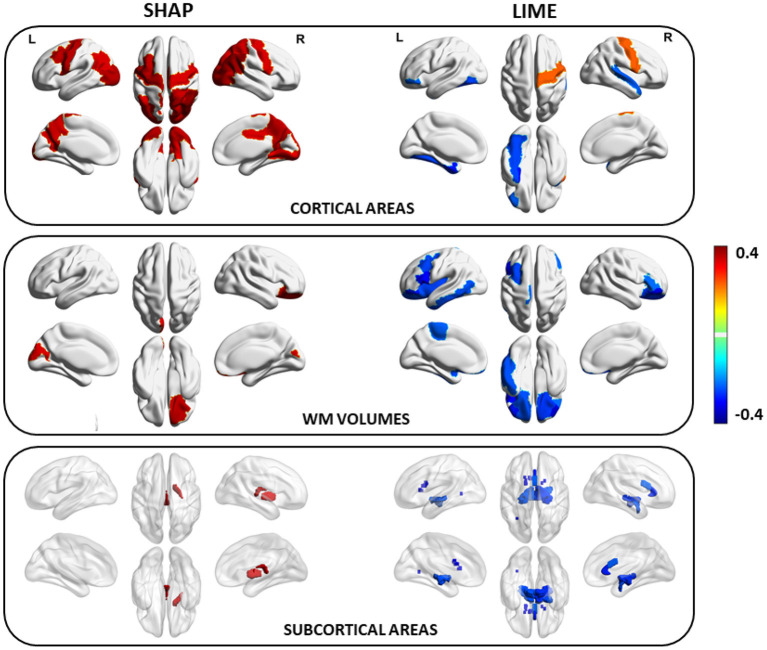
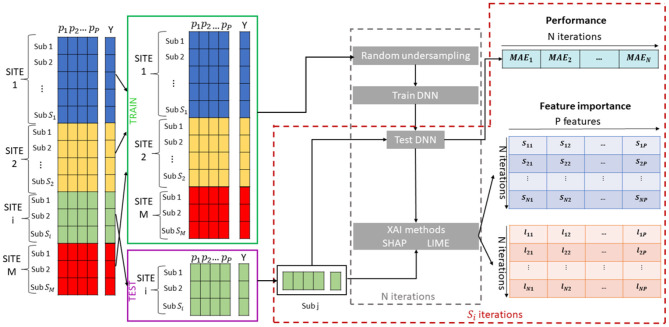
Predicting brain age has become one of the most attractive challenges in computational neuroscience due to the role of the predicted age as an effective biomarker for different brain diseases and conditions. A great variety of machine learning (ML) approaches and deep learning (DL) techniques have been proposed to predict age from brain magnetic resonance imaging scans. If on one hand, DL models could improve performance and reduce model bias compared to other less complex ML methods, on the other hand, they are typically black boxes as do not provide an in-depth understanding of the underlying mechanisms. Explainable Artificial Intelligence (XAI) methods have been recently introduced to provide interpretable decisions of ML and DL algorithms both at local and global level. In this work, we present an explainable DL framework to predict the age of a healthy cohort of subjects from ABIDE I database by using the morphological features extracted from their MRI scans. We embed the two local XAI methods SHAP and LIME to explain the outcomes of the DL models, determine the contribution of each brain morphological descriptor to the final predicted age of each subject and investigate the reliability of the two methods. Our findings indicate that the SHAP method can provide more reliable explanations for the morphological aging mechanisms and be exploited to identify personalized age-related imaging biomarker.

摘要

由于预测年龄作为不同脑部疾病和状况的有效生物标志物所起的作用,预测脑龄已成为计算神经科学中最具吸引力的挑战之一。已经提出了各种各样的机器学习(ML)方法和深度学习(DL)技术来从脑磁共振成像扫描中预测年龄。一方面,与其他不太复杂的ML方法相比,DL模型可以提高性能并减少模型偏差;另一方面,它们通常是黑箱模型,无法深入理解潜在机制。最近引入了可解释人工智能(XAI)方法,以在局部和全局层面提供对ML和DL算法的可解释决策。在这项工作中,我们提出了一个可解释的DL框架,通过使用从ABIDE I数据库中健康受试者队列的MRI扫描中提取的形态特征来预测他们的年龄。我们嵌入了两种局部XAI方法SHAP和LIME来解释DL模型的结果,确定每个脑形态学描述符对每个受试者最终预测年龄的贡献,并研究这两种方法的可靠性。我们的研究结果表明,SHAP方法可以为形态学衰老机制提供更可靠的解释,并可用于识别个性化的年龄相关成像生物标志物。
https://cdn.ncbi.nlm.nih.gov/pmc/blobs/6b70/8192966/8d3c4af3c300/fnins-15-674055-g0009.jpg
https://cdn.ncbi.nlm.nih.gov/pmc/blobs/6b70/8192966/358976cae107/fnins-15-674055-g0001.jpg
https://cdn.ncbi.nlm.nih.gov/pmc/blobs/6b70/8192966/db4082adecd5/fnins-15-674055-g0002.jpg
https://cdn.ncbi.nlm.nih.gov/pmc/blobs/6b70/8192966/93004beded16/fnins-15-674055-g0003.jpg
https://cdn.ncbi.nlm.nih.gov/pmc/blobs/6b70/8192966/37ee3a5107d5/fnins-15-674055-g0004.jpg
https://cdn.ncbi.nlm.nih.gov/pmc/blobs/6b70/8192966/86cd434d5316/fnins-15-674055-g0005.jpg
https://cdn.ncbi.nlm.nih.gov/pmc/blobs/6b70/8192966/20c5943f921d/fnins-15-674055-g0006.jpg
https://cdn.ncbi.nlm.nih.gov/pmc/blobs/6b70/8192966/04f055bbc4da/fnins-15-674055-g0007.jpg
https://cdn.ncbi.nlm.nih.gov/pmc/blobs/6b70/8192966/e2e3f5879a9f/fnins-15-674055-g0008.jpg
https://cdn.ncbi.nlm.nih.gov/pmc/blobs/6b70/8192966/8d3c4af3c300/fnins-15-674055-g0009.jpg
https://cdn.ncbi.nlm.nih.gov/pmc/blobs/6b70/8192966/358976cae107/fnins-15-674055-g0001.jpg
https://cdn.ncbi.nlm.nih.gov/pmc/blobs/6b70/8192966/db4082adecd5/fnins-15-674055-g0002.jpg
https://cdn.ncbi.nlm.nih.gov/pmc/blobs/6b70/8192966/93004beded16/fnins-15-674055-g0003.jpg
https://cdn.ncbi.nlm.nih.gov/pmc/blobs/6b70/8192966/37ee3a5107d5/fnins-15-674055-g0004.jpg
https://cdn.ncbi.nlm.nih.gov/pmc/blobs/6b70/8192966/86cd434d5316/fnins-15-674055-g0005.jpg
https://cdn.ncbi.nlm.nih.gov/pmc/blobs/6b70/8192966/20c5943f921d/fnins-15-674055-g0006.jpg
https://cdn.ncbi.nlm.nih.gov/pmc/blobs/6b70/8192966/04f055bbc4da/fnins-15-674055-g0007.jpg
https://cdn.ncbi.nlm.nih.gov/pmc/blobs/6b70/8192966/e2e3f5879a9f/fnins-15-674055-g0008.jpg
https://cdn.ncbi.nlm.nih.gov/pmc/blobs/6b70/8192966/8d3c4af3c300/fnins-15-674055-g0009.jpg

相似文献

1
Explainable Deep Learning for Personalized Age Prediction With Brain Morphology.基于脑形态学的可解释深度学习用于个性化年龄预测
Front Neurosci. 2021 May 28;15:674055. doi: 10.3389/fnins.2021.674055. eCollection 2021.
2
Explainability and white box in drug discovery.药物发现中的可解释性和白盒。
Chem Biol Drug Des. 2023 Jul;102(1):217-233. doi: 10.1111/cbdd.14262. Epub 2023 Apr 27.
3
Explaining reaction coordinates of alanine dipeptide isomerization obtained from deep neural networks using Explainable Artificial Intelligence (XAI).使用可解释人工智能(XAI)解释从深度神经网络获得的丙氨酸二肽异构化反应坐标。
J Chem Phys. 2022 Apr 21;156(15):154108. doi: 10.1063/5.0087310.
4
Explainable artificial intelligence (XAI) for predicting the need for intubation in methanol-poisoned patients: a study comparing deep and machine learning models.可解释人工智能 (XAI) 在预测甲醇中毒患者需要插管中的应用:比较深度学习和机器学习模型的研究。
Sci Rep. 2024 Jul 8;14(1):15751. doi: 10.1038/s41598-024-66481-4.
5
DeepXplainer: An interpretable deep learning based approach for lung cancer detection using explainable artificial intelligence.深演析:一种基于可解释人工智能的用于肺癌检测的可解释深度学习方法。
Comput Methods Programs Biomed. 2024 Jan;243:107879. doi: 10.1016/j.cmpb.2023.107879. Epub 2023 Oct 24.
6
Explainable artificial intelligence for pharmacovigilance: What features are important when predicting adverse outcomes?可解释人工智能在药物警戒中的应用:在预测不良结局时,哪些特征是重要的?
Comput Methods Programs Biomed. 2021 Nov;212:106415. doi: 10.1016/j.cmpb.2021.106415. Epub 2021 Sep 26.
7
Recent Advances in Explainable Artificial Intelligence for Magnetic Resonance Imaging.用于磁共振成像的可解释人工智能的最新进展
Diagnostics (Basel). 2023 Apr 27;13(9):1571. doi: 10.3390/diagnostics13091571.
8
Interpreting artificial intelligence models: a systematic review on the application of LIME and SHAP in Alzheimer's disease detection.解读人工智能模型:关于局部可解释模型无关性解释(LIME)和SHapley值解释(SHAP)在阿尔茨海默病检测中应用的系统综述
Brain Inform. 2024 Apr 5;11(1):10. doi: 10.1186/s40708-024-00222-1.
9
Model-agnostic explainable artificial intelligence tools for severity prediction and symptom analysis on Indian COVID-19 data.用于印度新冠疫情数据严重程度预测和症状分析的模型无关可解释人工智能工具。
Front Artif Intell. 2023 Dec 4;6:1272506. doi: 10.3389/frai.2023.1272506. eCollection 2023.
10
An Explainable Artificial Intelligence Framework for the Deterioration Risk Prediction of Hepatitis Patients.用于预测肝炎患者恶化风险的可解释人工智能框架。
J Med Syst. 2021 Apr 13;45(5):61. doi: 10.1007/s10916-021-01736-5.

引用本文的文献

1
A predictive model of Parkinsonian brain aging based on brain imaging features.基于脑成像特征的帕金森病脑老化预测模型。
Front Neurol. 2025 Jul 7;16:1584226. doi: 10.3389/fneur.2025.1584226. eCollection 2025.
2
Brain Age Prediction: Deep Models Need a Hand to Generalize.脑龄预测:深度模型需要助力以实现泛化。
Hum Brain Mapp. 2025 Aug 1;46(11):e70254. doi: 10.1002/hbm.70254.
3
Assessment of Performance, Interpretability, and Explainability in Artificial Intelligence-Based Health Technologies: What Healthcare Stakeholders Need to Know.

本文引用的文献

1
Explainable AI in Fintech Risk Management.金融科技风险管理中的可解释人工智能
Front Artif Intell. 2020 Apr 24;3:26. doi: 10.3389/frai.2020.00026. eCollection 2020.
2
Brain Age Prediction With Morphological Features Using Deep Neural Networks: Results From Predictive Analytic Competition 2019.使用深度神经网络通过形态学特征进行脑龄预测:2019年预测分析竞赛的结果
Front Psychiatry. 2021 Jan 20;11:619629. doi: 10.3389/fpsyt.2020.619629. eCollection 2020.
3
Ensemble Learning of Convolutional Neural Network, Support Vector Machine, and Best Linear Unbiased Predictor for Brain Age Prediction: ARAMIS Contribution to the Predictive Analytics Competition 2019 Challenge.
基于人工智能的健康技术的性能、可解释性和可说明性评估:医疗保健利益相关者需要了解的内容。
Mayo Clin Proc Digit Health. 2023 Apr 21;1(2):120-138. doi: 10.1016/j.mcpdig.2023.02.004. eCollection 2023 Jun.
4
Explainable AI in Diagnostic Radiology for Neurological Disorders: A Systematic Review, and What Doctors Think About It.用于神经系统疾病诊断放射学的可解释人工智能:系统评价及医生对此的看法。
Diagnostics (Basel). 2025 Jan 13;15(2):168. doi: 10.3390/diagnostics15020168.
5
Automated approach for fetal and maternal health management using light gradient boosting model with SHAP explainable AI.使用具有SHAP可解释人工智能的轻梯度提升模型进行胎儿和孕产妇健康管理的自动化方法。
Front Public Health. 2024 Dec 20;12:1462693. doi: 10.3389/fpubh.2024.1462693. eCollection 2024.
6
Explainable brain age prediction: a comparative evaluation of morphometric and deep learning pipelines.可解释的脑龄预测:形态测量和深度学习流程的比较评估
Brain Inform. 2024 Dec 18;11(1):33. doi: 10.1186/s40708-024-00244-9.
7
A novel explainable machine learning-based healthy ageing scale.一种新颖的基于可解释机器学习的健康老龄化量表。
BMC Med Inform Decis Mak. 2024 Oct 29;24(1):317. doi: 10.1186/s12911-024-02714-w.
8
Exploring the correlation between DNA methylation and biological age using an interpretable machine learning framework.利用可解释的机器学习框架探索 DNA 甲基化与生物年龄之间的相关性。
Sci Rep. 2024 Oct 15;14(1):24208. doi: 10.1038/s41598-024-75586-9.
9
Personalized identification of autism-related bacteria in the gut microbiome using explainable artificial intelligence.利用可解释人工智能对肠道微生物群中与自闭症相关的细菌进行个性化识别。
iScience. 2024 Aug 13;27(9):110709. doi: 10.1016/j.isci.2024.110709. eCollection 2024 Sep 20.
10
Air pollution and mortality for cancer of the respiratory system in Italy: an explainable artificial intelligence approach.空气污染与意大利呼吸系统癌症死亡率:一种可解释的人工智能方法。
Front Public Health. 2024 May 7;12:1344865. doi: 10.3389/fpubh.2024.1344865. eCollection 2024.
用于脑龄预测的卷积神经网络、支持向量机和最佳线性无偏预测器的集成学习:ARAMIS对2019年预测分析竞赛挑战的贡献。
Front Psychiatry. 2020 Dec 15;11:593336. doi: 10.3389/fpsyt.2020.593336. eCollection 2020.
4
Brain-Age Prediction Using Shallow Machine Learning: Predictive Analytics Competition 2019.使用浅层机器学习进行脑龄预测:2019年预测分析竞赛
Front Psychiatry. 2020 Dec 2;11:604478. doi: 10.3389/fpsyt.2020.604478. eCollection 2020.
5
Association between Structural Connectivity and Generalized Cognitive Spectrum in Alzheimer's Disease.阿尔茨海默病中结构连接性与广义认知谱之间的关联
Brain Sci. 2020 Nov 20;10(11):879. doi: 10.3390/brainsci10110879.
6
Accurate brain age prediction with lightweight deep neural networks.使用轻量级深度神经网络进行准确的脑龄预测。
Med Image Anal. 2021 Feb;68:101871. doi: 10.1016/j.media.2020.101871. Epub 2020 Oct 19.
7
Predicting brain age with complex networks: From adolescence to adulthood.用复杂网络预测脑龄:从青春期到成年期。
Neuroimage. 2021 Jan 15;225:117458. doi: 10.1016/j.neuroimage.2020.117458. Epub 2020 Oct 21.
8
Predicting intelligence from brain gray matter volume.从脑灰质体积预测智力。
Brain Struct Funct. 2020 Sep;225(7):2111-2129. doi: 10.1007/s00429-020-02113-7. Epub 2020 Jul 21.
9
Extensive Evaluation of Morphological Statistical Harmonization for Brain Age Prediction.用于脑龄预测的形态学统计协调的广泛评估。
Brain Sci. 2020 Jun 11;10(6):364. doi: 10.3390/brainsci10060364.
10
Subcortical Brain Volume, Regional Cortical Thickness, and Cortical Surface Area Across Disorders: Findings From the ENIGMA ADHD, ASD, and OCD Working Groups.跨疾病的皮质下脑容量、皮质区域厚度和皮质表面积:来自 ENIGMA ADHD、ASD 和 OCD 工作组的研究结果。
Am J Psychiatry. 2020 Sep 1;177(9):834-843. doi: 10.1176/appi.ajp.2020.19030331. Epub 2020 Jun 16.