Smith Daniel A, Simpson Kate, Lo Cicero Matteo, Newbury Lucy J, Nicholas Philip, Fraser Donald J, Caiger Nigel, Redman James E, Bowen Timothy
Wales Kidney Research Unit, Division of Infection & Immunity, School of Medicine, College of Biomedical and Life Sciences, Cardiff University Heath Park Cardiff CF14 4XN UK
Cardiff Institute of Tissue Engineering and Repair Museum Place Cardiff CF10 3BG UK.
RSC Adv. 2021 May 25;11(31):18832-18839. doi: 10.1039/d0ra09874d.
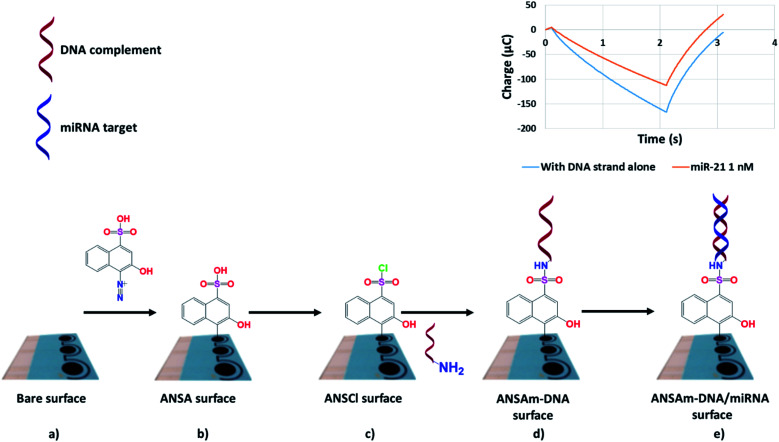
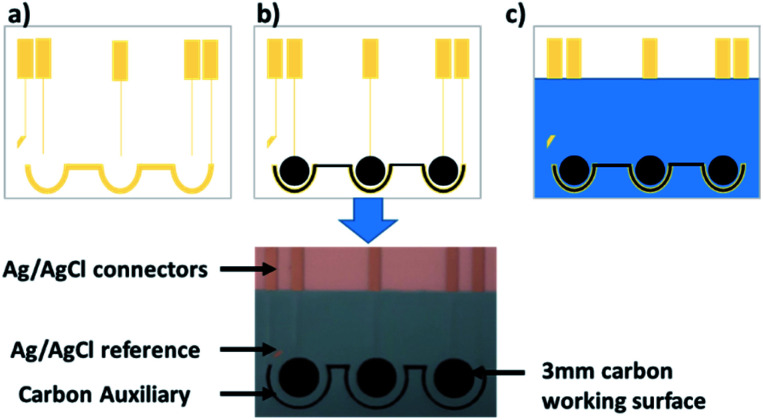
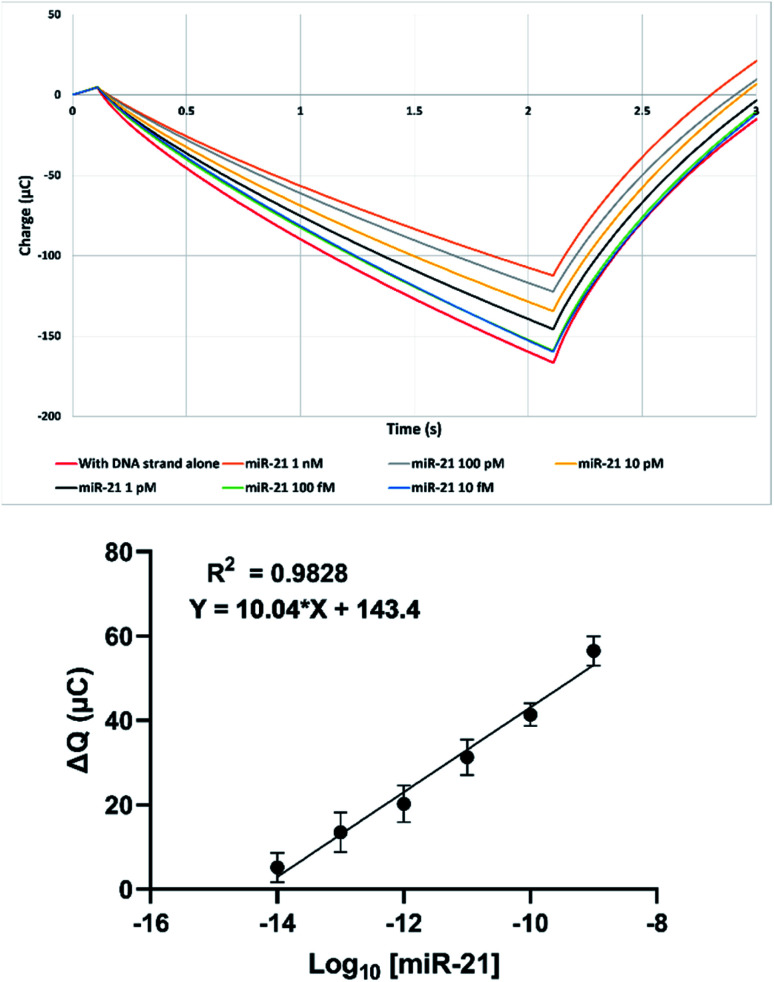
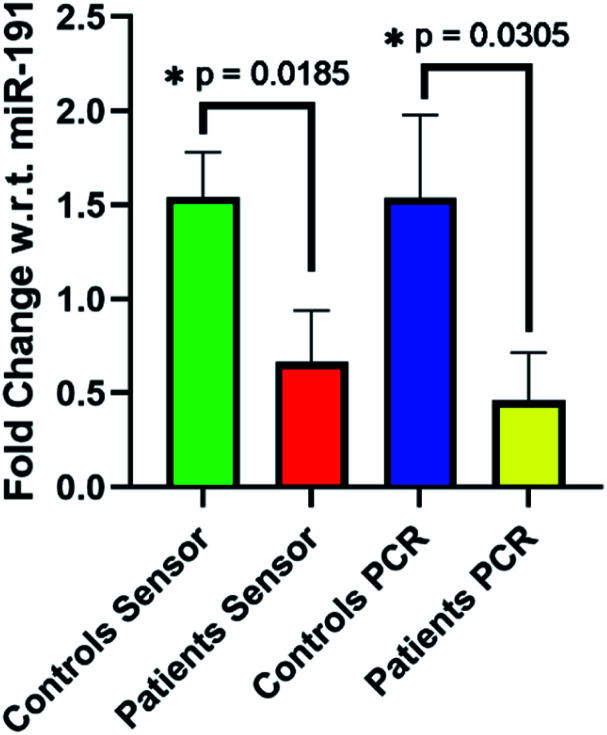
This paper describes a straightforward electrochemical method for rapid and robust urinary microRNA (miRNA) quantification using disposable biosensors that can discriminate between urine from diabetic kidney disease (DKD) patients and control subjects. Aberrant miRNA expression has been observed in several major human disorders, and we have identified a urinary miRNA signature for DKD. MiRNAs therefore have considerable promise as disease biomarkers, and techniques to quantify these transcripts from clinical samples have significant clinical and commercial potential. Current RT-qPCR-based methods require technical expertise, and more straightforward methods such as electrochemical detection offer attractive alternatives. We describe a method to detect urinary miRNAs using diazo sulfonamide-modified screen printed carbon electrode-based biosensors that is amenable to parallel analysis. These sensors showed a linear response to buffered miR-21, with a 17 fM limit of detection, and successfully discriminated between urine samples ( = 6) from DKD patients and unaffected control subjects ( = 6) by differential miR-192 detection. Our technique for quantitative miRNA detection in liquid biopsies has potential for development as a platform for non-invasive high-throughput screening and/or to complement existing diagnostic procedures in disorders such as DKD.
本文描述了一种直接的电化学方法,该方法使用一次性生物传感器对尿液中的微小RNA(miRNA)进行快速且可靠的定量分析,这种生物传感器能够区分糖尿病肾病(DKD)患者和对照受试者的尿液。在几种主要的人类疾病中均观察到了异常的miRNA表达,并且我们已经确定了DKD的尿液miRNA特征。因此,miRNA作为疾病生物标志物具有很大的前景,从临床样本中定量这些转录本的技术具有重大的临床和商业潜力。当前基于逆转录定量聚合酶链反应(RT-qPCR)的方法需要专业技术知识,而诸如电化学检测等更直接的方法则提供了有吸引力的替代方案。我们描述了一种使用基于重氮磺胺修饰的丝网印刷碳电极的生物传感器来检测尿液miRNA的方法,该方法适用于平行分析。这些传感器对缓冲的miR-21呈现线性响应,检测限为17飞摩尔(fM),并且通过差异检测miR-192成功区分了DKD患者(n = 6)和未受影响的对照受试者(n = 6)的尿液样本。我们在液体活检中进行定量miRNA检测的技术有潜力发展成为一种用于非侵入性高通量筛查的平台和/或补充诸如DKD等疾病中现有的诊断程序。