Zhou Lin, Lu Ruohan, Huang Caihua, Lin Donghai
Key Laboratory for Chemical Biology of Fujian Province, MOE Key Laboratory of Spectrochemical Analysis and Instrumentation, College of Chemistry and Chemical Engineering, Xiamen University, Xiamen, China.
Research and Communication Center of Exercise and Health, Xiamen University of Technology, Xiamen, China.
Front Mol Biosci. 2021 May 26;8:685362. doi: 10.3389/fmolb.2021.685362. eCollection 2021.
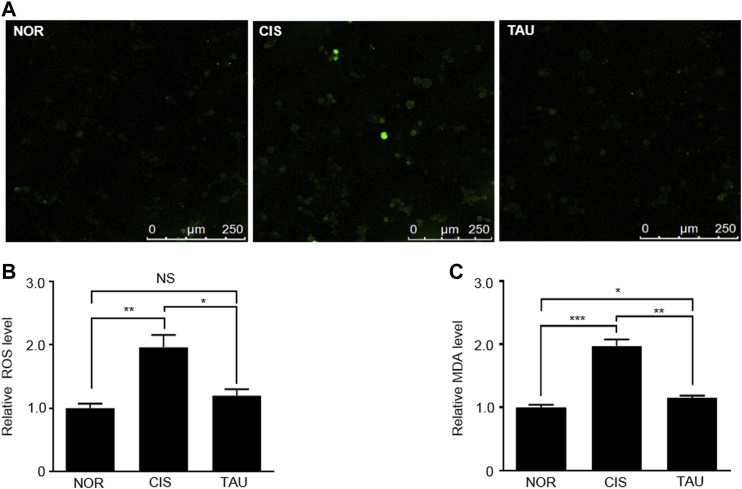
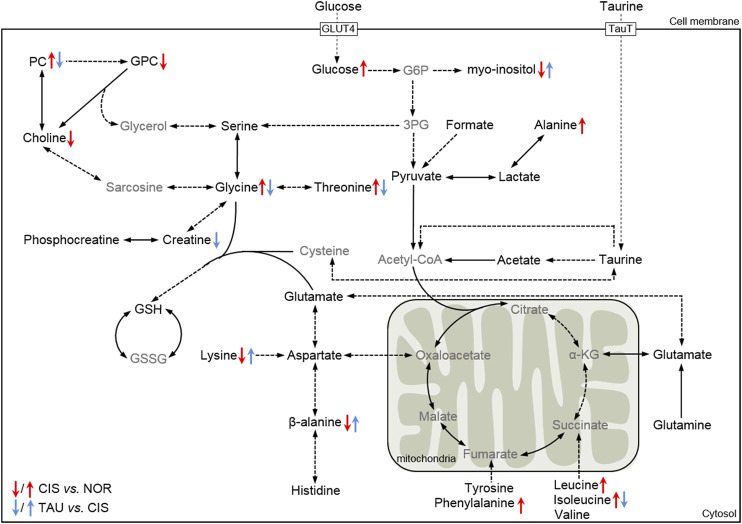
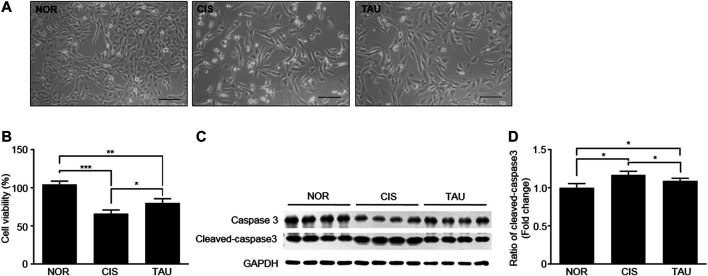
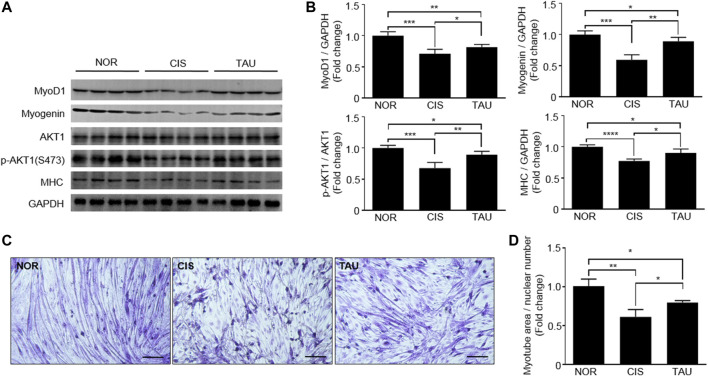
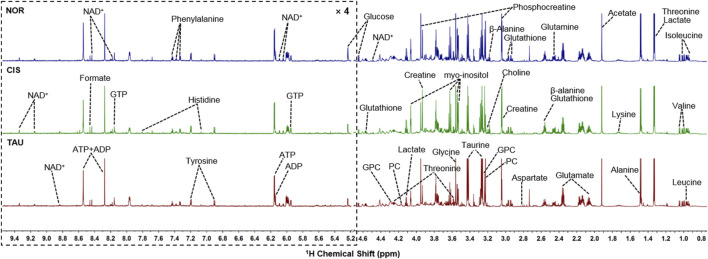
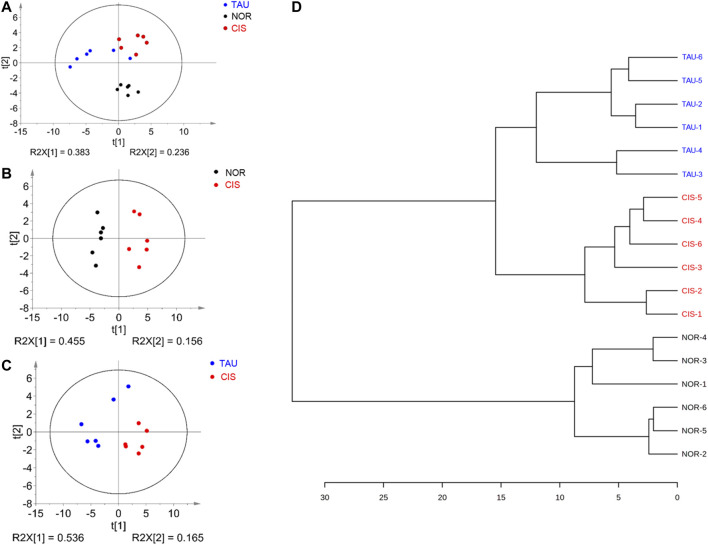
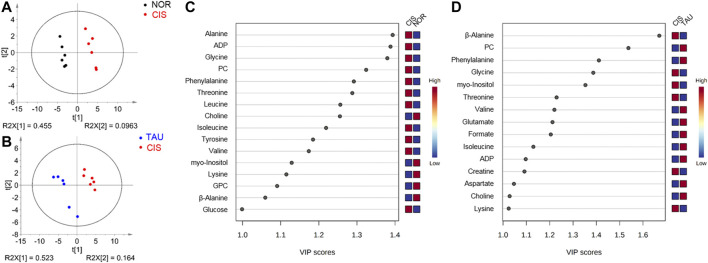
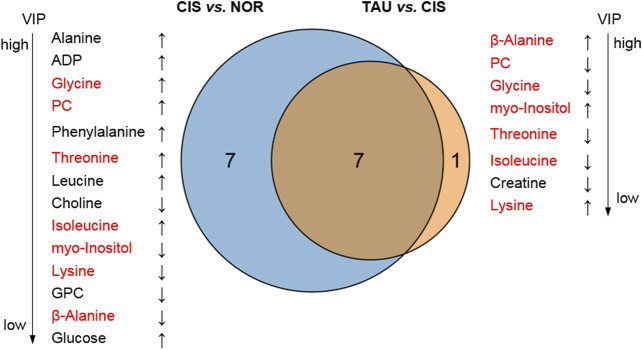
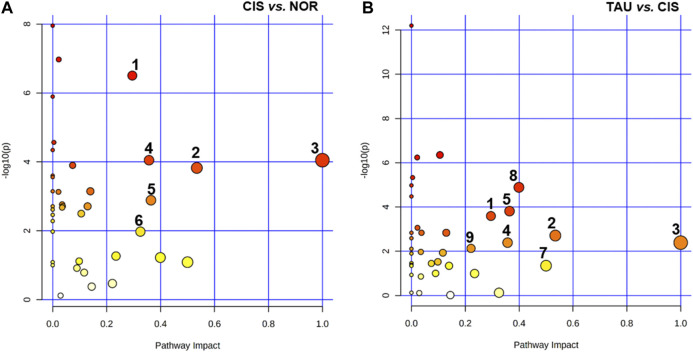
In cancer patients, chemotherapeutic medication induces aberrant ROS (reactive oxygen species) accumulation in skeletal muscles, resulting in myofiber degradation, muscle weakness, and even cachexia, which further leads to poor therapeutic outcomes. Acting as an antioxidant, taurine is extensively used to accelerate postexercise muscle recovery in athletes. The antioxidant effects of taurine have been shown in mature myotubes and myofibers but not yet in myoblasts, the myotube precursor. The proliferation and differentiation ability of myoblasts play a very important role in myofiber repair and regeneration, which is usually impaired during chemotherapeutics in cancer patients as well. Here, we explored the effects of taurine supplementation on C2C12 myoblasts exposed to cisplatin-induced ROS. We found that cisplatin treatment led to dramatically decreased cell viability; accumulated ROS level; down-regulated expressions of MyoD1 (myoblast determination protein 1), myogenin, and MHC (myosin heavy chain); and impaired myotube differentiation in myoblasts. Significantly, taurine supplementation protected myoblasts against cisplatin-induced cell viability decrease, promoted cellular ROS clearance, and, most importantly, preserved the expressions of MyoD1, myogenin, and MHC as well as myotube differentiation ability. We further conducted NMR-based metabolomic analysis to clarify the underlying molecular mechanisms. We identified 14 characteristic metabolites primarily responsible for the discrimination of metabolic profiles between cisplatin-treated cells and normal counterparts, including increased levels of BCAAs (branched-chain amino acids: leucine and isoleucine), alanine, glycine, threonine, glucose, ADP (adenosine diphosphate), phenylalanine, and PC (O-phosphocholine), and decreased levels of lysine, β-alanine, choline, GPC (sn-glycero-3-phosphocholine), and myo-inositol. Evidently, taurine supplementation partially reversed the changing trends of several metabolites (isoleucine, threonine, glycine, PC, β-alanine, lysine, and myo-inositol). Furthermore, taurine supplementation promoted the proliferation and myotube differentiation of myoblasts by alleviating cellular catabolism, facilitating GSH (reduced glutathione) biosynthesis, improving glucose utilization and TCA (tricarboxylic acid) cycle anaplerosis, and stabilizing cellular membranes. Our results demonstrated the protective effects of taurine on cisplatin-impaired myoblasts and elucidated the mechanistic rationale for the use of taurine to ameliorate muscle toxicity in clinical chemotherapy cancer patients.
在癌症患者中,化疗药物会导致骨骼肌中活性氧(ROS)异常积累,从而引起肌纤维退化、肌肉无力,甚至恶病质,进而导致治疗效果不佳。牛磺酸作为一种抗氧化剂,被广泛用于促进运动员运动后肌肉恢复。牛磺酸的抗氧化作用已在成熟的肌管和肌纤维中得到证实,但在肌管前体细胞成肌细胞中尚未得到证实。成肌细胞的增殖和分化能力在肌纤维修复和再生中起着非常重要的作用,而在癌症患者接受化疗期间,这种能力通常也会受损。在此,我们探讨了补充牛磺酸对顺铂诱导的ROS作用下的C2C12成肌细胞的影响。我们发现,顺铂处理导致细胞活力显著下降;ROS水平积累;成肌决定蛋白1(MyoD1)、肌细胞生成素和肌球蛋白重链(MHC)的表达下调;以及成肌细胞中肌管分化受损。值得注意的是,补充牛磺酸可保护成肌细胞免受顺铂诱导的细胞活力下降,促进细胞内ROS清除,最重要的是,维持MyoD1、肌细胞生成素和MHC的表达以及肌管分化能力。我们进一步进行了基于核磁共振的代谢组学分析,以阐明潜在的分子机制。我们鉴定出14种特征性代谢物,它们主要负责区分顺铂处理细胞和正常细胞的代谢谱,包括支链氨基酸(亮氨酸和异亮氨酸)、丙氨酸、甘氨酸、苏氨酸、葡萄糖、二磷酸腺苷(ADP)、苯丙氨酸和O-磷酸胆碱(PC)水平升高,以及赖氨酸、β-丙氨酸、胆碱、甘油磷酸胆碱(GPC)和肌醇水平降低。显然,补充牛磺酸部分逆转了几种代谢物(异亮氨酸、苏氨酸、甘氨酸、PC、β-丙氨酸、赖氨酸和肌醇)的变化趋势。此外,补充牛磺酸通过减轻细胞分解代谢、促进还原型谷胱甘肽(GSH)生物合成、改善葡萄糖利用和三羧酸(TCA)循环回补反应以及稳定细胞膜,促进了成肌细胞的增殖和肌管分化。我们的结果证明了牛磺酸对顺铂损伤的成肌细胞的保护作用,并阐明了在临床化疗癌症患者中使用牛磺酸改善肌肉毒性的机制原理。