Kim SunKyoung, Hirokawa Masakazu, Matsuda Soichiro, Funahashi Atsushi, Suzuki Kenji
Faculty of Engineering, Information and Systems, University of Tsukuba, Tsukuba, Japan.
Faculty of Human Sciences, University of Tsukuba, Tsukuba, Japan.
Front Robot AI. 2021 May 26;8:599755. doi: 10.3389/frobt.2021.599755. eCollection 2021.
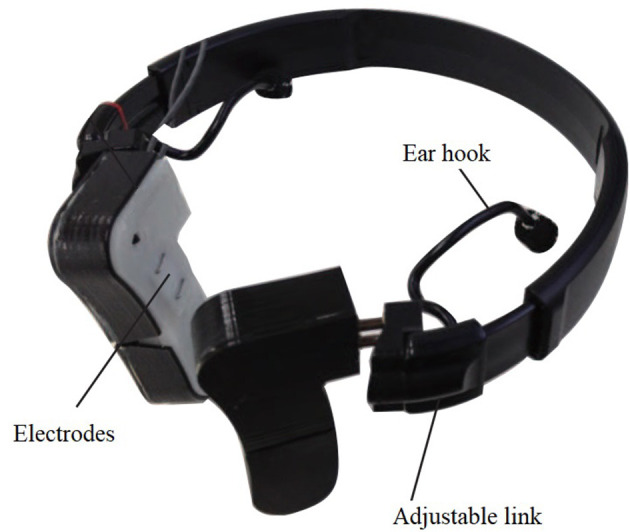
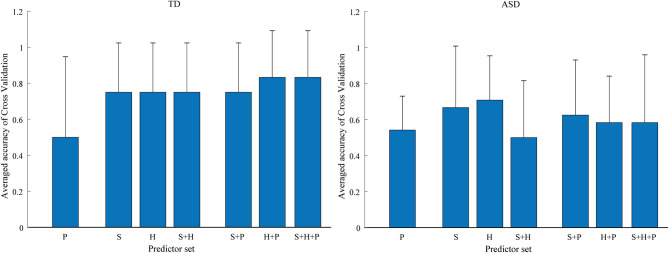
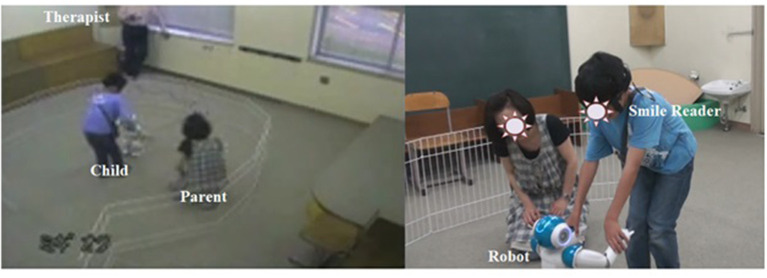
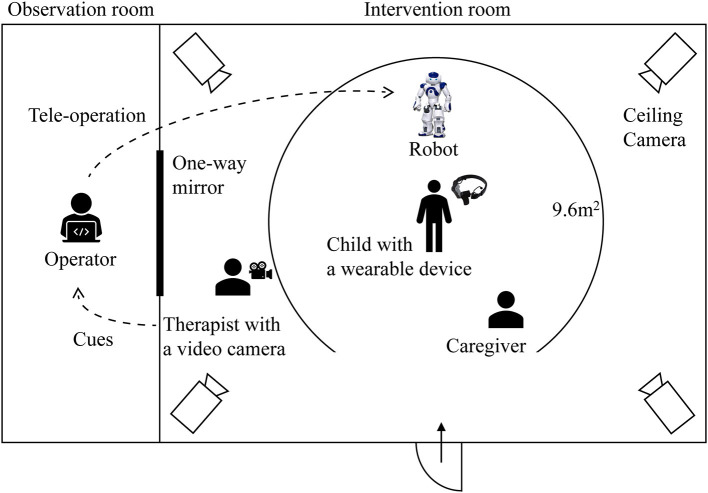
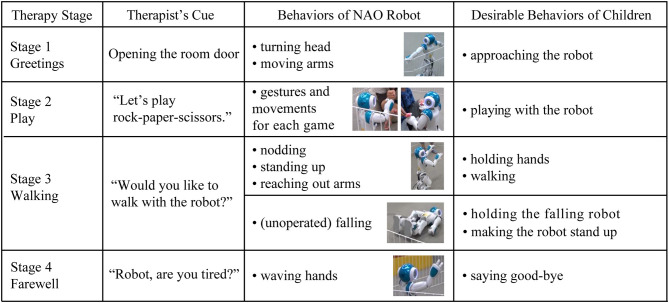
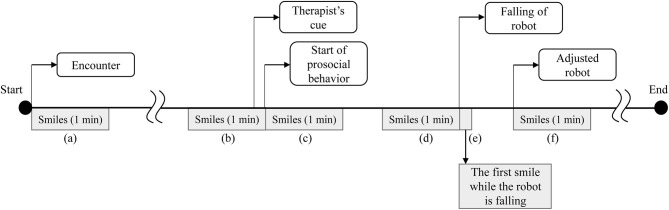
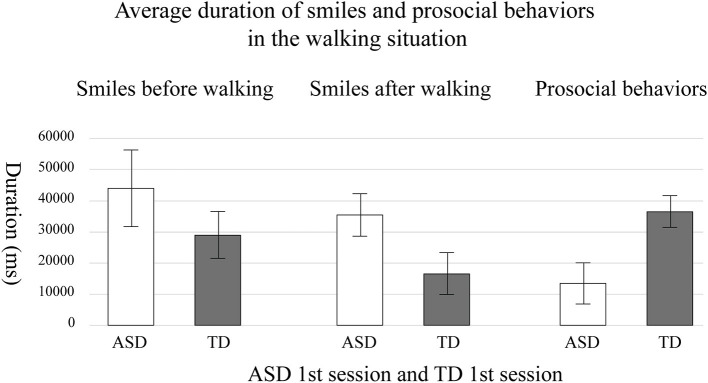
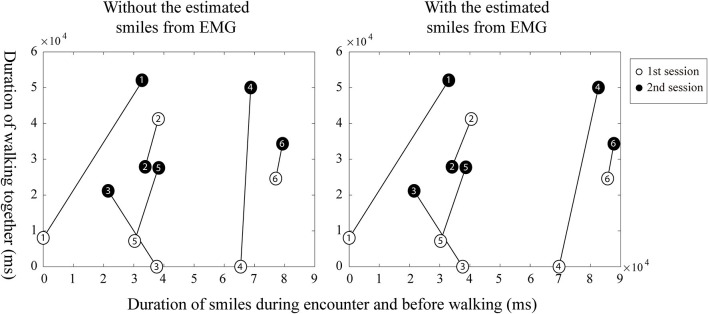
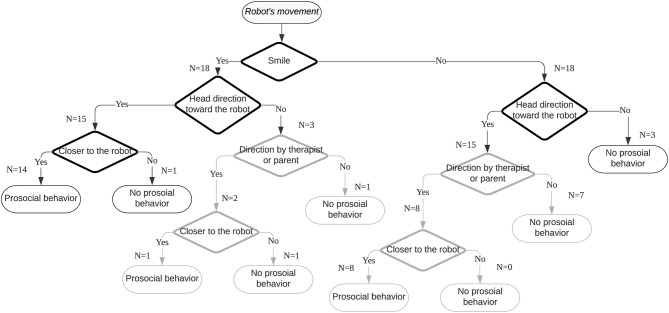
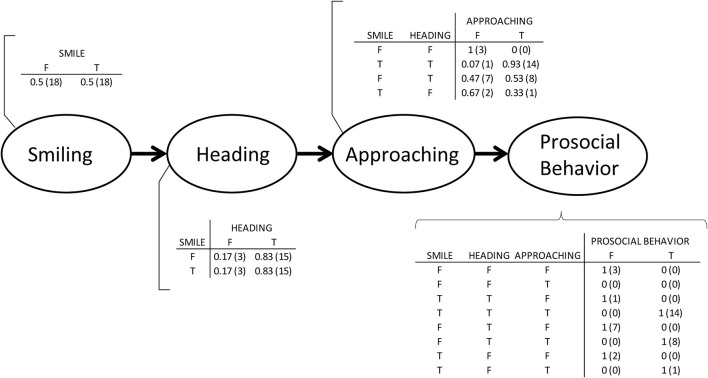
We explored how robot-assisted therapy based on smile analysis may facilitate the prosocial behaviors of children with autism spectrum disorder. Prosocial behaviors, which are actions for the benefit of others, are required to belong to society and increase the quality of life. As smiling is a candidate for predicting prosocial behaviors in robot-assisted therapy, we measured smiles by annotating behaviors that were recorded with video cameras and by classifying facial muscle activities recorded with a wearable device. While interacting with a robot, the participants experienced two situations where participants' prosocial behaviors are expected, which were supporting the robot to walk and helping the robot from falling. We first explored the overall smiles at specific timings and prosocial behaviors. Then, we explored the smiles triggered by a robot and behavior changes before engaging in prosocial behaviors. The results show that the specific timing of smiles and prosocial behaviors increased in the second session of children with autism spectrum disorder. Additionally, a smile was followed by a series of behaviors before prosocial behavior. With a proposed Bayesian model, smiling, or heading predicted prosocial behaviors with higher accuracy compared to other variables. Particularly, voluntary prosocial behaviors were observed after smiling. The findings of this exploratory study imply that smiles might be a signal of prosocial behaviors. We also suggest a probabilistic model for predicting prosocial behaviors based on smile analysis, which could be applied to personalized robot-assisted therapy by controlling a robot's movements to arouse smiles and increase the probability that a child with autism spectrum disorder will engage in prosocial behaviors.
我们探究了基于微笑分析的机器人辅助治疗如何促进自闭症谱系障碍儿童的亲社会行为。亲社会行为是指为他人谋福利的行为,是融入社会和提高生活质量所必需的。由于微笑是机器人辅助治疗中预测亲社会行为的一个指标,我们通过标注摄像机记录的行为以及对可穿戴设备记录的面部肌肉活动进行分类来测量微笑。在与机器人互动时,参与者经历了两种预期会出现亲社会行为的情境,即帮助机器人行走和防止机器人摔倒。我们首先探究了特定时间点的整体微笑和亲社会行为。然后,我们探究了由机器人触发的微笑以及亲社会行为之前的行为变化。结果表明,自闭症谱系障碍儿童在第二阶段中微笑和亲社会行为的特定时间点有所增加。此外,在亲社会行为之前,微笑之后会出现一系列行为。通过所提出的贝叶斯模型,与其他变量相比,微笑或头部动作能更准确地预测亲社会行为。特别是,微笑后观察到了自发的亲社会行为。这项探索性研究的结果表明,微笑可能是亲社会行为的一个信号。我们还提出了一个基于微笑分析预测亲社会行为的概率模型,该模型可通过控制机器人的动作以引发微笑并增加自闭症谱系障碍儿童参与亲社会行为的可能性,应用于个性化的机器人辅助治疗。