Al-Nafjan Abeer, Alhakbani Noura, Alabdulkareem Amal
Computer Science Department, College of Computer and Information Sciences, Imam Mohammad Ibn Saud Islamic University (IMSIU), Riyadh 11432, Saudi Arabia.
Information Technology Department, College of Computer and Information Sciences, King Saud University, Riyadh 11543, Saudi Arabia.
Behav Sci (Basel). 2023 Jul 25;13(8):618. doi: 10.3390/bs13080618.
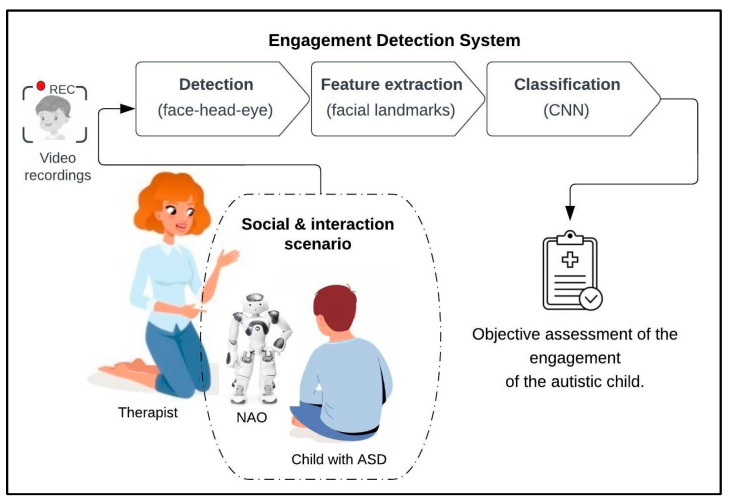
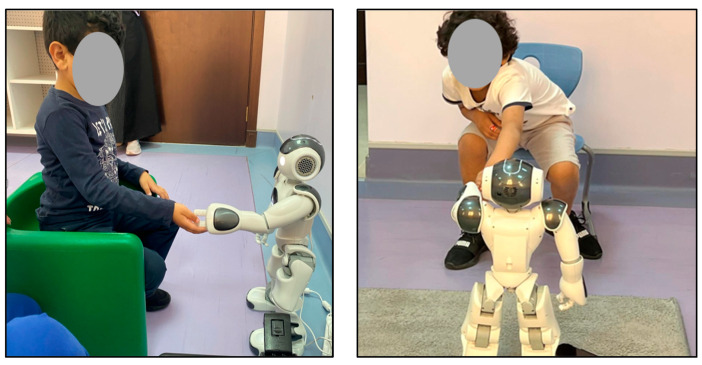
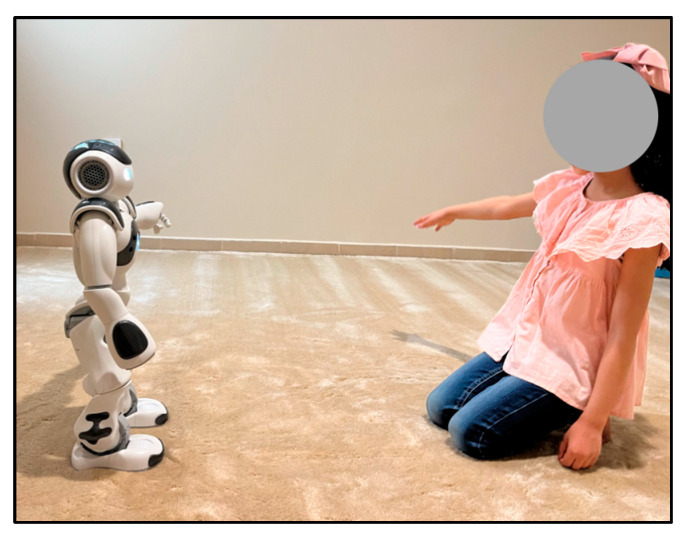
Children with autism face a range of challenges when it comes to verbal and nonverbal communication. It is essential that children participate in a variety of social, educational, and therapeutic activities to acquire knowledge that is essential for cognitive and social development. Recent studies have shown that children with autism may be interested in playing with an interactive robot. The robot can engage these children in ways that demonstrate and train essential aspects of human interaction, guiding them in therapeutic sessions to practice more complex forms of interaction found in social human-to-human interactions. This study sets out to investigate Robot-Assisted Autism Therapy (RAAT) and the use of artificial intelligence (AI) approaches for measuring the engagement of children during therapy sessions. The study population consisted of five native Arabic-speaking autistic children aged between 4 and 11 years old. The child-robot interaction was recorded by the robot camera and later used for analysis to detect engagement. The results show that the proposed system offers some accuracy in measuring the engagement of children with ASD. Our findings revealed that robot-assisted therapy is a promising field of application for intelligent social robots, especially to support autistic children in achieving their therapeutic and educational objectives.
自闭症儿童在言语和非言语交流方面面临一系列挑战。儿童参与各种社交、教育和治疗活动以获取对认知和社交发展至关重要的知识,这一点至关重要。最近的研究表明,自闭症儿童可能对与交互式机器人玩耍感兴趣。机器人能够以展示和训练人际互动基本方面的方式与这些儿童互动,在治疗过程中引导他们练习在人类人际社交互动中发现的更复杂的互动形式。本研究旨在调查机器人辅助自闭症治疗(RAAT)以及使用人工智能(AI)方法来测量儿童在治疗过程中的参与度。研究对象包括五名年龄在4至11岁之间、以阿拉伯语为母语的自闭症儿童。儿童与机器人的互动由机器人摄像头记录,随后用于分析以检测参与度。结果表明,所提出的系统在测量自闭症谱系障碍儿童的参与度方面具有一定的准确性。我们的研究结果显示,机器人辅助治疗是智能社交机器人一个很有前景的应用领域,特别是在支持自闭症儿童实现其治疗和教育目标方面。