University of Basel, Basel, Switzerland.
University Women's Hospital Basel, Basel, Switzerland.
Pediatr Nephrol. 2021 Dec;36(12):3885-3897. doi: 10.1007/s00467-021-05139-z. Epub 2021 Jun 14.
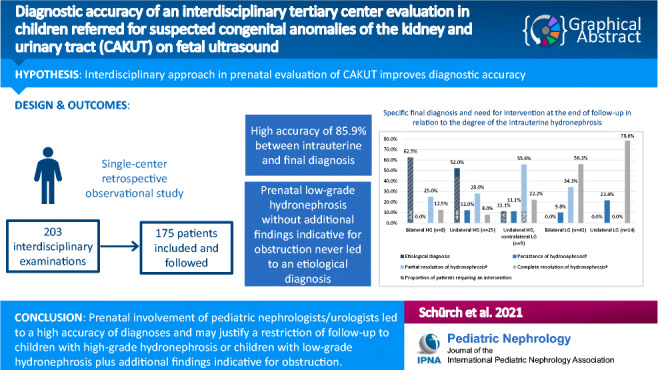
Fetal ultrasound organ screening has become a standard of care in most high-income countries. This has resulted in increased detection of congenital abnormalities, which may lead to major uncertainty and anxiety in expectant parents, even though many of them are of minor relevance. In order to optimize prenatal counselling, we introduced an interdisciplinary approach for all pregnant women referred to our center by private obstetricians for a co-assessment of suspected relevant fetal abnormalities of the kidney or urinary tract, involving both experienced prenatal ultrasound specialists and a pediatric nephrologist or urologist.
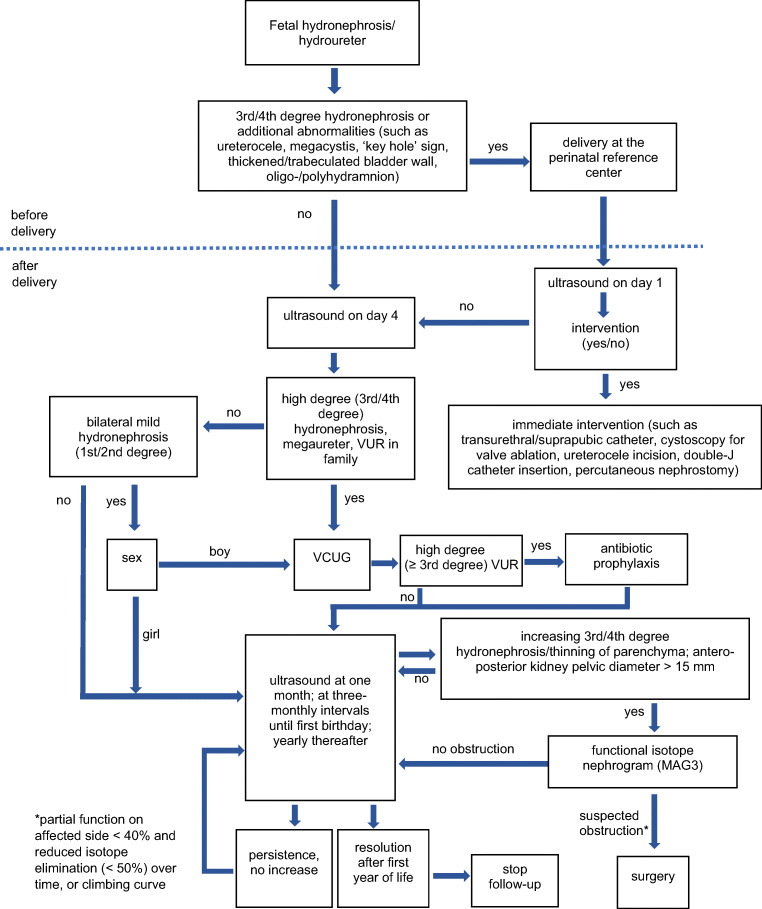
In a retrospective analysis, we evaluated reports of intrauterine evaluation and postnatal follow-up in order to assess accuracy of explicit intrauterine diagnoses and outcome of hydronephroses according to their severity in this setting.
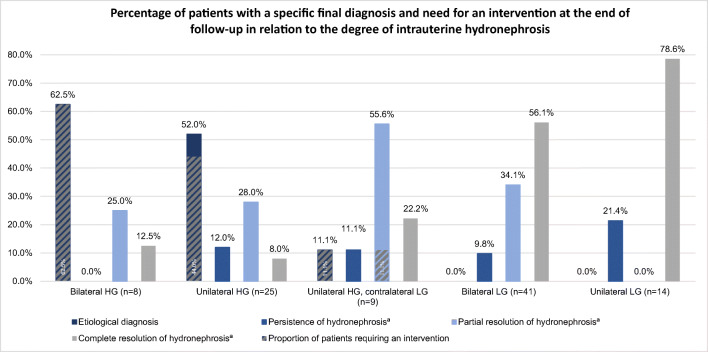
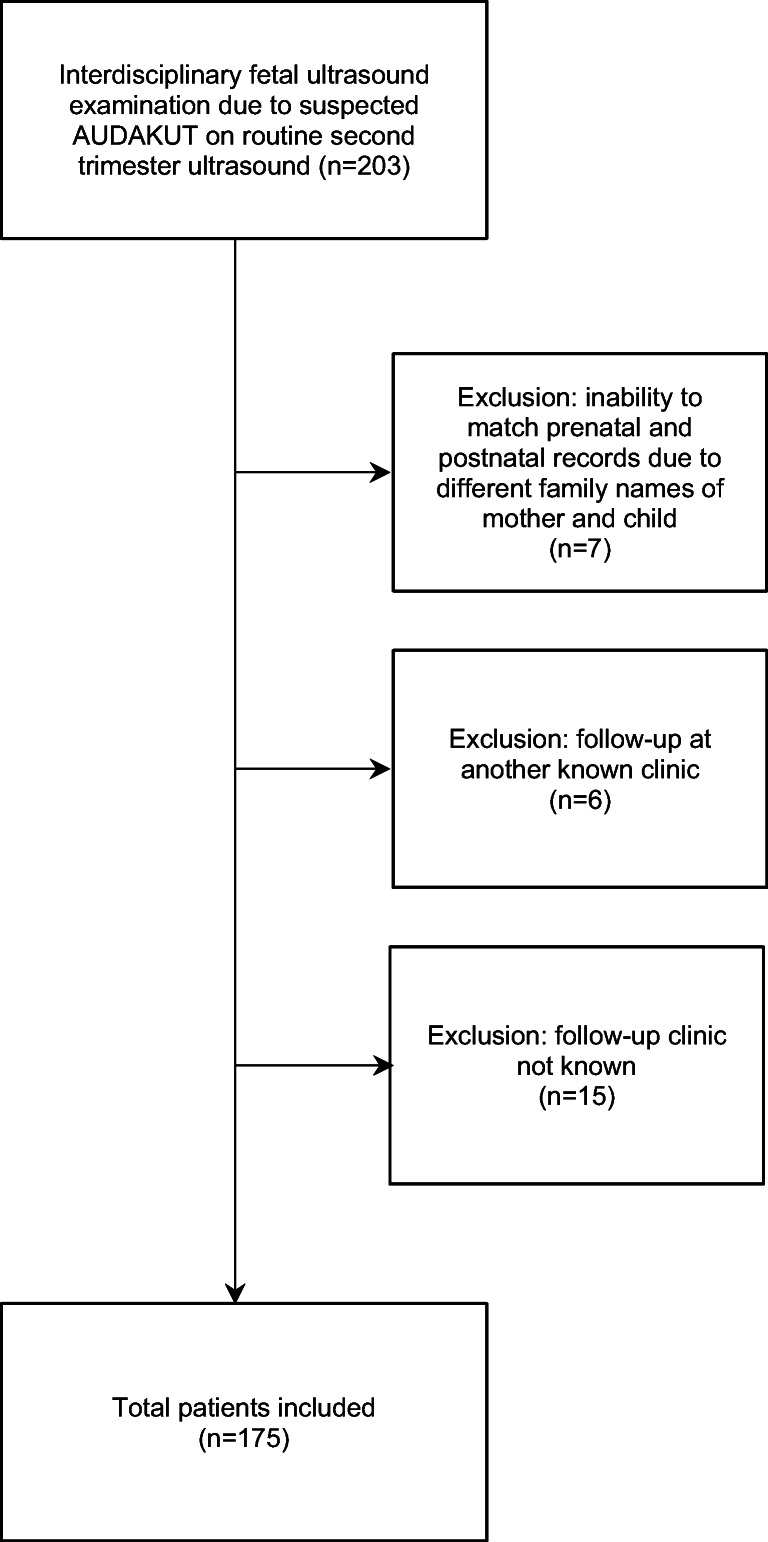
A total of 175 fetuses were examined between 2012 and 2019 and followed postnatally at our Pediatric Nephrology or Urology Department. There was a high concordance (85.9%) between explicit intrauterine and final diagnoses. Resolution rate of hydronephrosis was higher in patients with intrauterine low-grade than high-grade hydronephrosis (61.8% versus 11.9%). An etiological diagnosis was found in 62.5%, 52.0%, and 11.1% of patients with intrauterine bilateral high-grade, unilateral high-grade, and unilateral high-grade with contralateral low-grade hydronephrosis, respectively, but in none of the patients with intrauterine low-grade hydronephrosis.
The results of our study demonstrate that, through interdisciplinary teamwork, intrauterine assessment of the fetal kidneys and urinary tract is highly accurate and allows a good discrimination between relevant and transient/physiological hydronephroses. A higher resolution version of the Graphical abstract is available as Supplementary information.
胎儿超声器官筛查已成为大多数高收入国家的标准护理。这导致了先天性异常的检出率增加,这可能会给准父母带来重大的不确定性和焦虑,尽管其中许多异常的相关性较小。为了优化产前咨询,我们为私人妇产科医生转诊到我们中心的所有孕妇引入了一种跨学科的方法,对疑似相关胎儿肾脏或泌尿道异常进行联合评估,涉及有经验的产前超声专家以及儿科肾病学家或泌尿科医生。
在回顾性分析中,我们评估了宫内评估和产后随访的报告,以评估在这种情况下,明确的宫内诊断的准确性和肾积水的结局,根据其严重程度进行分类。
2012 年至 2019 年间,共检查了 175 例胎儿,并在我们的儿科肾脏病或泌尿科进行了产后随访。明确的宫内诊断与最终诊断之间具有高度一致性(85.9%)。在宫内低级别和高级别肾积水患者中,肾积水的缓解率分别为 61.8%和 11.9%。在宫内双侧高级别、单侧高级别和单侧高级别合并对侧低级别的肾积水患者中,分别有 62.5%、52.0%和 11.1%发现病因诊断,但在宫内低级别的肾积水患者中没有发现病因诊断。
我们的研究结果表明,通过跨学科团队合作,对胎儿肾脏和泌尿道进行宫内评估具有高度的准确性,可以很好地区分相关的和短暂/生理性肾积水。可提供图形摘要的更高分辨率版本作为补充信息。