School of Computer Science and Engineering, University of Electronic Science and Technology of China, Chengdu, China.
Center of Infectious Diseases, West China Hospital of Sichuan University, Chengdu, China.
PLoS One. 2021 Jun 15;16(6):e0253329. doi: 10.1371/journal.pone.0253329. eCollection 2021.
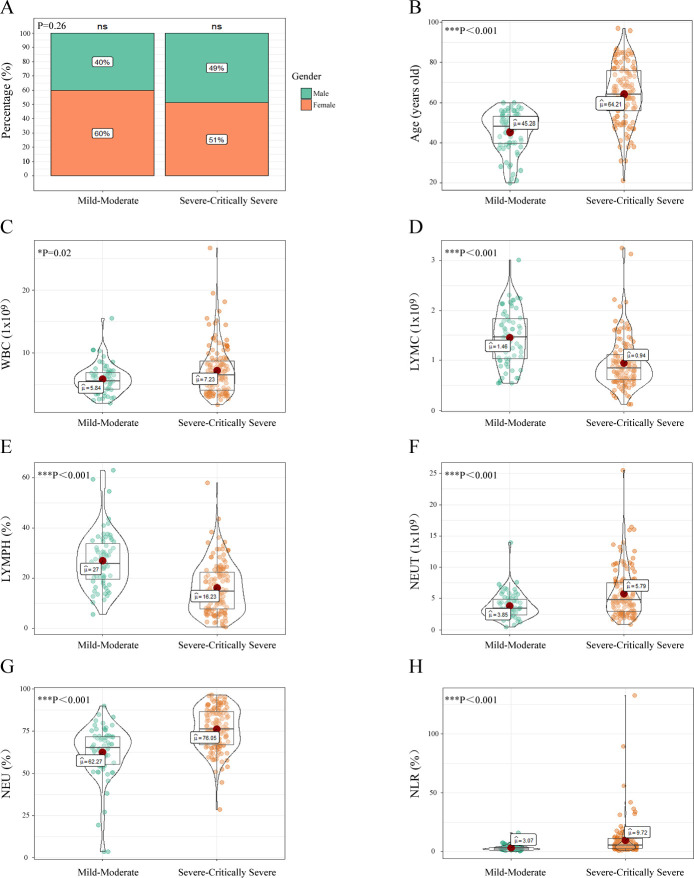
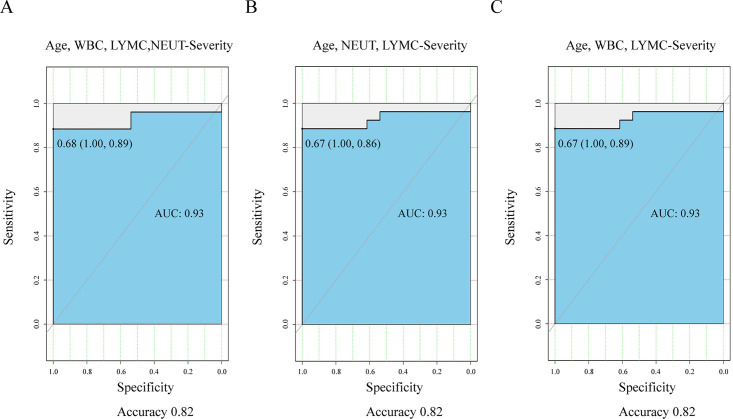
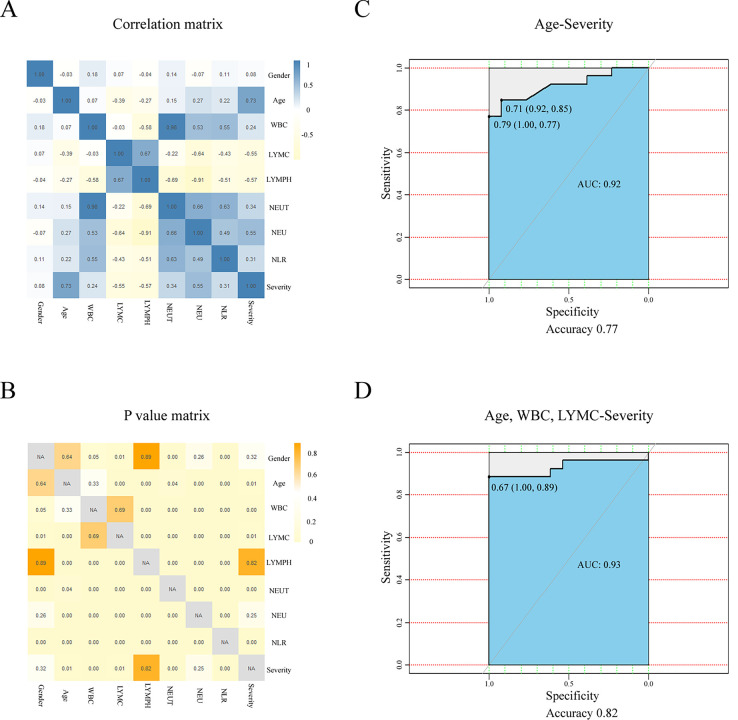
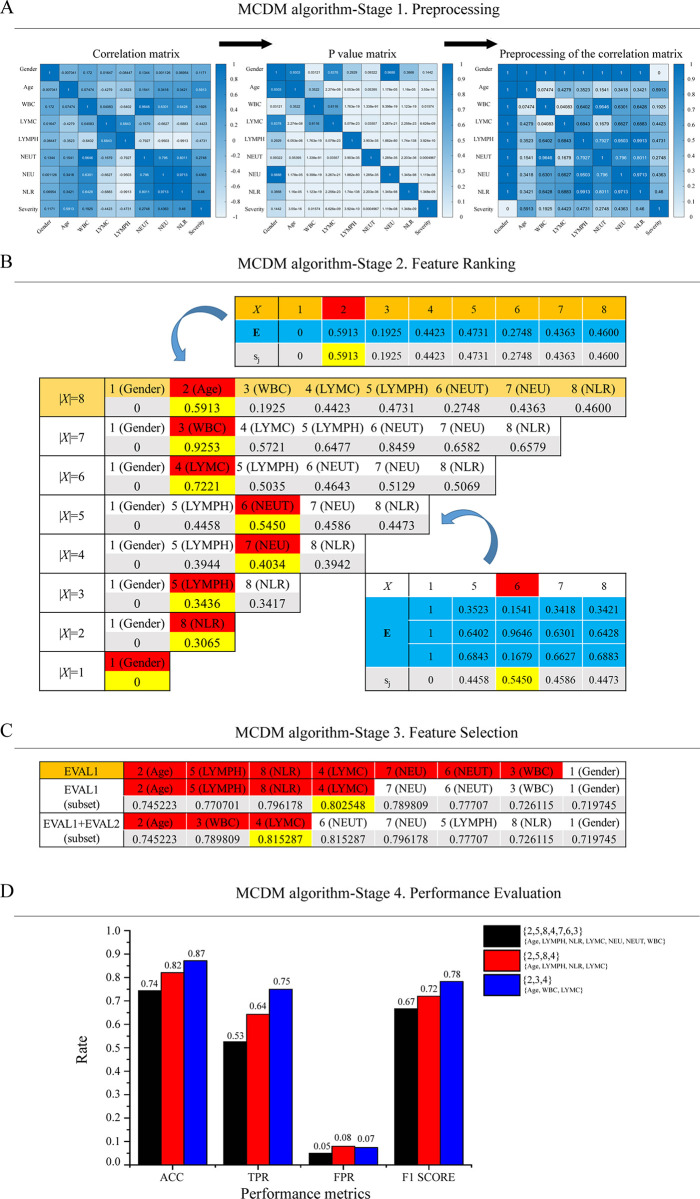
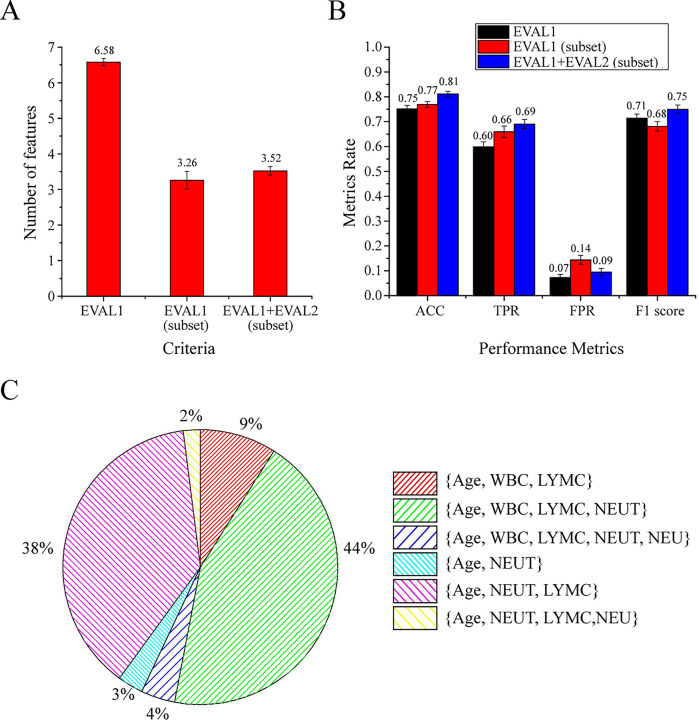
The global pandemic of COVID-19 poses a huge threat to the health and lives of people all over the world, and brings unprecedented pressure to the medical system. We need to establish a practical method to improve the efficiency of treatment and optimize the allocation of medical resources. Due to the influx of a large number of patients into the hospital and the running of medical resources, blood routine test became the only possible check while COVID-19 patients first go to a fever clinic in a community hospital. This study aims to establish an efficient method to identify key indicators from initial blood routine test results for COVID-19 severity prediction. We determined that age is a key indicator for severity predicting of COVID-19, with an accuracy of 0.77 and an AUC of 0.92. In order to improve the accuracy of prediction, we proposed a Multi Criteria Decision Making (MCDM) algorithm, which combines the Technique for Order of Preference by Similarity to Ideal Solution (TOPSIS) and Naïve Bayes (NB) classifier, to further select effective indicators from patients' initial blood test results. The MCDM algorithm selected 3 dominant feature subsets: {Age, WBC, LYMC, NEUT} with a selection rate of 44%, {Age, NEUT, LYMC} with a selection rate of 38%, and {Age, WBC, LYMC} with a selection rate of 9%. Using these feature subsets, the optimized prediction model could achieve an accuracy of 0.82 and an AUC of 0.93. These results indicated that Age, WBC, LYMC, NEUT were the key factors for COVID-19 severity prediction. Using age and the indicators selected by the MCDM algorithm from initial blood routine test results can effectively predict the severity of COVID-19. Our research could not only help medical workers identify patients with severe COVID-19 at an early stage, but also help doctors understand the pathogenesis of COVID-19 through key indicators.
新冠疫情的全球大流行对全球人民的健康和生命构成了巨大威胁,给医疗系统带来了前所未有的压力。我们需要建立一种切实可行的方法来提高治疗效率,优化医疗资源配置。由于大量患者涌入医院,医疗资源运转,血常规检查成为新冠病毒患者首次前往社区医院发热门诊时唯一可能的检查。本研究旨在建立一种从初始血常规检查结果中识别新冠病毒严重程度的关键指标的有效方法。我们确定年龄是新冠病毒严重程度预测的关键指标,其准确性为 0.77,AUC 为 0.92。为了提高预测的准确性,我们提出了一种多准则决策(MCDM)算法,该算法结合了理想解逼近排序技术(TOPSIS)和朴素贝叶斯(NB)分类器,从患者的初始血液测试结果中进一步选择有效的指标。MCDM 算法选择了 3 个主要特征子集:{年龄、WBC、LYMC、NEUT},选择率为 44%;{年龄、NEUT、LYMC},选择率为 38%;{年龄、WBC、LYMC},选择率为 9%。使用这些特征子集,优化后的预测模型可以达到 0.82 的准确率和 0.93 的 AUC。结果表明,年龄、WBC、LYMC、NEUT 是新冠病毒严重程度预测的关键因素。使用年龄和 MCDM 算法从初始血常规检查结果中选择的指标可以有效预测新冠病毒的严重程度。我们的研究不仅可以帮助医务人员早期识别新冠病毒重症患者,还可以帮助医生通过关键指标了解新冠病毒的发病机制。