Department of Community Health, 118985Jomo Kenyatta University of Agriculture and Technology, Nairobi, Kenya.
Department of Global Health, University of Washington, Seattle, WA, USA.
J Empir Res Hum Res Ethics. 2021 Jul;16(3):225-237. doi: 10.1177/15562646211012296. Epub 2021 Jun 16.
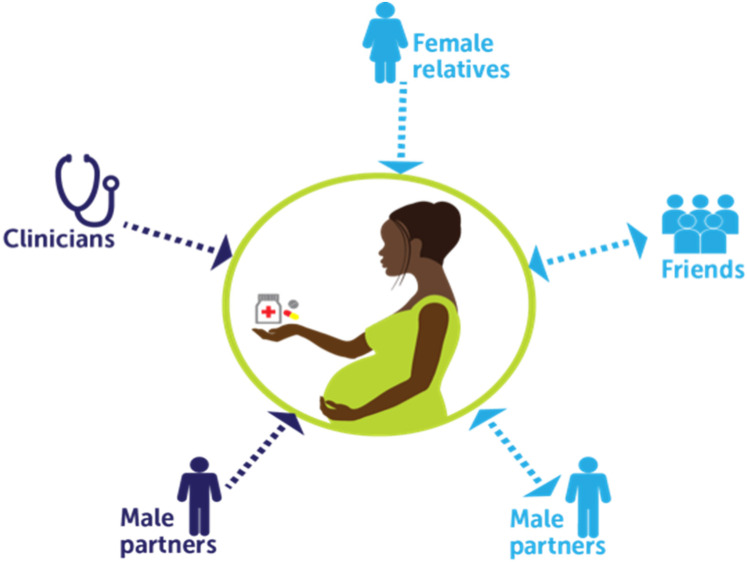
Implementation research ethics can be particularly challenging when pregnant women have been excluded from earlier clinical stages of research given greater uncertainty about safety and efficacy in pregnancy. The evaluation of human immunodeficiency virus (HIV) preexposure prophylaxis (PrEP) during pregnancy offered an opportunity to understand important ethical considerations and social influences shaping women's decisions to participate in the evaluation of PrEP and investigational drugs during pregnancy. We conducted interviews with women ( = 51), focus groups with male partners (five focus group discussions [FGDs]), interviews with health providers ( = 45), four FGDs with pregnant/postpartum adolescents and four FGDs with young women. Data were analyzed using thematic content analysis, including ethical aspects of the data. Our study reveals that women navigate a complex network of social influences, expectations, support, and gender roles, not only with male partners, but also with clinicians, family, and friends when making decisions about PrEP or other drugs that lack complete safety data during pregnancy.
当孕妇在研究的早期阶段被排除在外,因为在怀孕期间对安全性和疗效的不确定性更大时,实施研究伦理可能特别具有挑战性。在怀孕期间评估人类免疫缺陷病毒 (HIV) 暴露前预防 (PrEP) 提供了一个机会,可以了解重要的伦理考虑因素和影响女性决定参与评估 PrEP 和怀孕期间研究药物的社会影响。我们对 51 名妇女进行了访谈,对男性伴侣进行了五次焦点小组讨论 (FGD),对卫生保健提供者进行了 45 次访谈,对怀孕/产后青少年进行了四次 FGD,对年轻妇女进行了四次 FGD。使用主题内容分析对数据进行了分析,包括数据的伦理方面。我们的研究表明,女性在做出有关 PrEP 或其他在怀孕期间缺乏完整安全数据的药物的决定时,不仅要与男性伴侣,还要与临床医生、家人和朋友一起,在一个复杂的社会影响、期望、支持和性别角色网络中进行导航。