Guangdong-Hong Kong-Macao Joint Laboratory of Human-Machine Intelligence-Synergy Systems, Shenzhen Institute of Advanced Technology, Chinese Academy of Sciences, Shenzhen, China.
AnLan AI, Shenzhen, China.
Osteoporos Int. 2021 Dec;32(12):2493-2503. doi: 10.1007/s00198-021-06024-z. Epub 2021 Jun 17.
In this study, we integrated large-scale GWAS summary data and used the predicted transcriptome-wide association study method to discover novel genes associated with osteoporosis. We identified 204 candidate genes, which provide novel clues for understanding the genetic mechanism of osteoporosis and indicate potential therapeutic targets.
Osteoporosis is a highly polygenetic disease characterized by low bone mass and deterioration of the bone microarchitecture. Our objective was to discover novel candidate genes associated with osteoporosis.
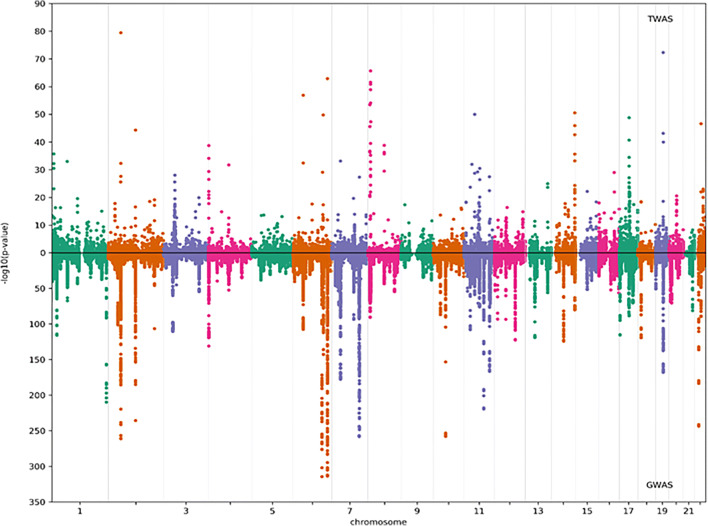
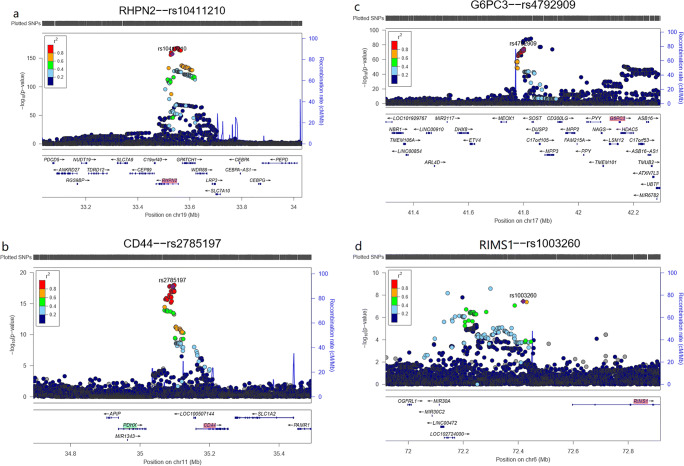
To identify potential causal genes of the associated loci, we investigated trait-gene expression associations using the transcriptome-wide association study (TWAS) method. This method directly imputes gene expression effects from genome-wide association study (GWAS) data using a statistical prediction model trained on GTEx reference transcriptome data. We then performed a colocalization analysis to evaluate the posterior probability of biological patterns: associations characterized by a single causal variant or multiple distinct causal variants. Finally, a functional enrichment analysis of gene sets was performed using the VarElect and CluePedia tools, which assess the causal relationships between genes and a disease and search for potential gene's functional pathways. The osteoporosis-associated genes were further confirmed based on the differentially expressed genes profiled from mRNA expression data of bone tissue.
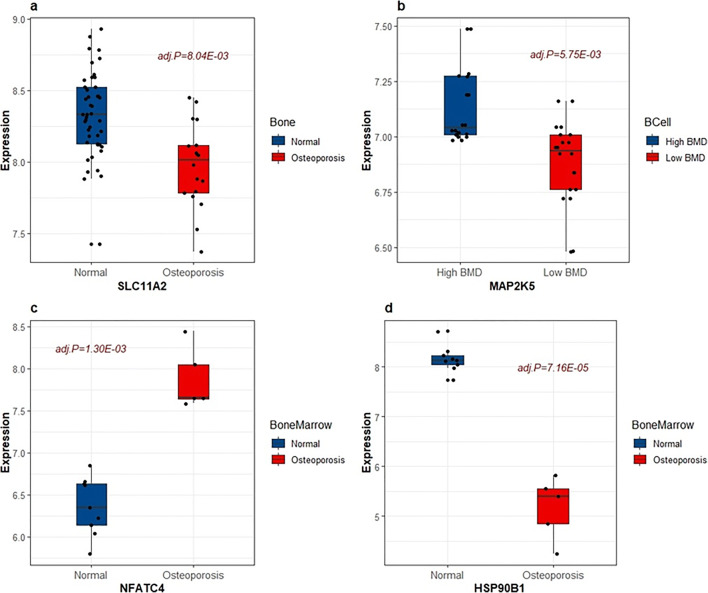
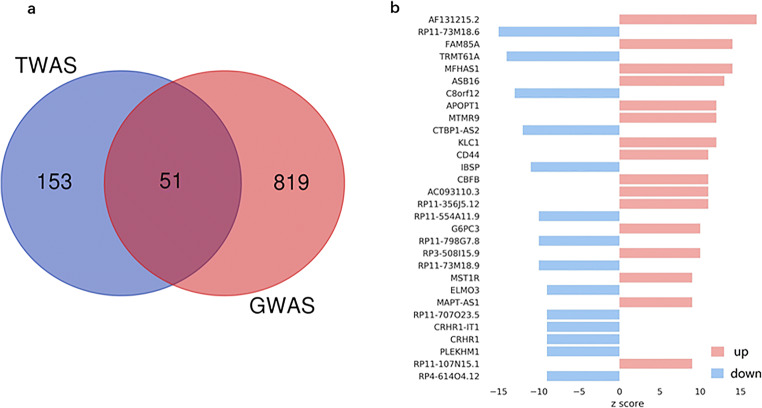
Our analysis identified 204 candidate genes, including 154 genes that have been previously associated with osteoporosis, 50 genes that have not been previously discovered. A biological function analysis found that 20 of the candidate genes were directly associated with osteoporosis. Further analysis of multiple gene expression profiles showed that 15 genes were differentially expressed in patients with osteoporosis. Among these, SLC11A2, MAP2K5, NFATC4, and HSP90B1 were enriched in four pathways, namely, mineral absorption pathway, MAPK signaling pathway, Wnt signaling pathway, and PI3K-Akt signaling pathway, which indicates a causal relationship with the occurrence of osteoporosis.
We demonstrated that transcriptome fine-mapping identifies more osteoporosis-related genes and provides key insight into the development of novel targeted therapeutics for the treatment of osteoporosis.
本研究整合了大规模 GWAS 汇总数据,并采用预测转录组关联研究方法,发现与骨质疏松症相关的新基因。我们鉴定了 204 个候选基因,为理解骨质疏松症的遗传机制提供了新线索,并提示了潜在的治疗靶点。
为了发现与相关位点相关的新候选基因,我们使用转录组关联研究(TWAS)方法研究了表型-基因表达关联。该方法使用基于 GTEx 参考转录组数据的统计预测模型,直接从全基因组关联研究(GWAS)数据中推断基因表达效应。然后,我们进行了共定位分析,以评估生物模式的后验概率:由单个因果变异或多个不同因果变异引起的关联。最后,使用 VarElect 和 CluePedia 工具对基因集进行功能富集分析,该工具评估基因与疾病之间的因果关系,并搜索潜在基因的功能途径。根据骨组织 mRNA 表达数据中分析的差异表达基因,进一步验证了与骨质疏松症相关的基因。
我们的分析确定了 204 个候选基因,包括 154 个先前与骨质疏松症相关的基因和 50 个先前未发现的基因。生物功能分析发现,候选基因中有 20 个与骨质疏松症直接相关。进一步对多个基因表达谱进行分析表明,15 个基因在骨质疏松症患者中存在差异表达。其中,SLC11A2、MAP2K5、NFATC4 和 HSP90B1 在 4 个途径中富集,即矿物质吸收途径、MAPK 信号通路、Wnt 信号通路和 PI3K-Akt 信号通路,这表明与骨质疏松症的发生存在因果关系。
我们证明了转录组精细映射可以识别更多与骨质疏松症相关的基因,并为开发针对骨质疏松症的新型靶向治疗提供关键见解。