Liu Han, Xu Jingyue, Lan Yu, Lim Hee-Woong, Jiang Rulang
Division of Developmental Biology, Cincinnati Children's Hospital Medical Center, Cincinnati, OH, United States.
Division of Plastic Surgery, Cincinnati Children's Hospital Medical Center, Cincinnati, OH, United States.
Front Cell Dev Biol. 2021 Jun 3;9:654397. doi: 10.3389/fcell.2021.654397. eCollection 2021.
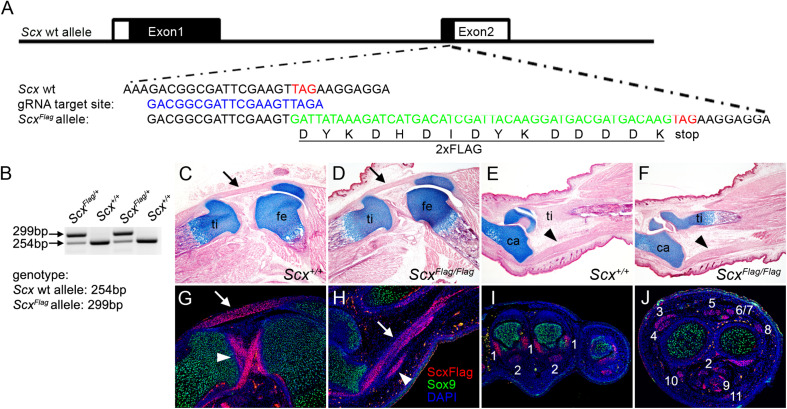
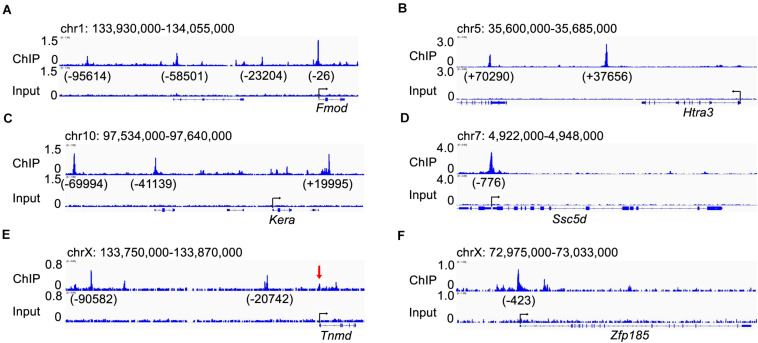
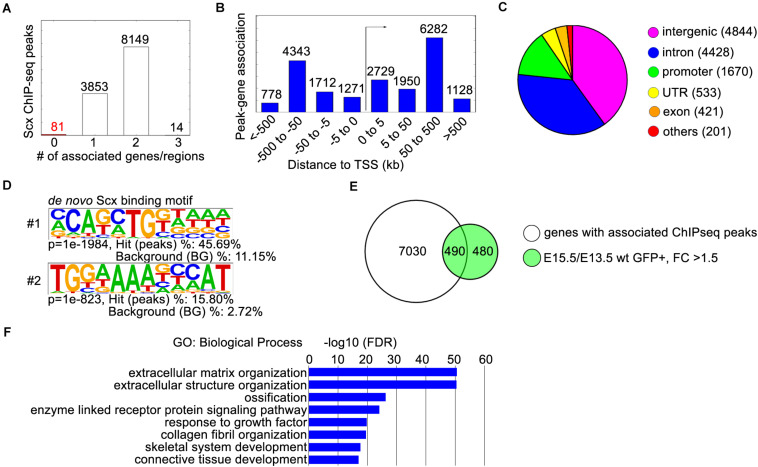
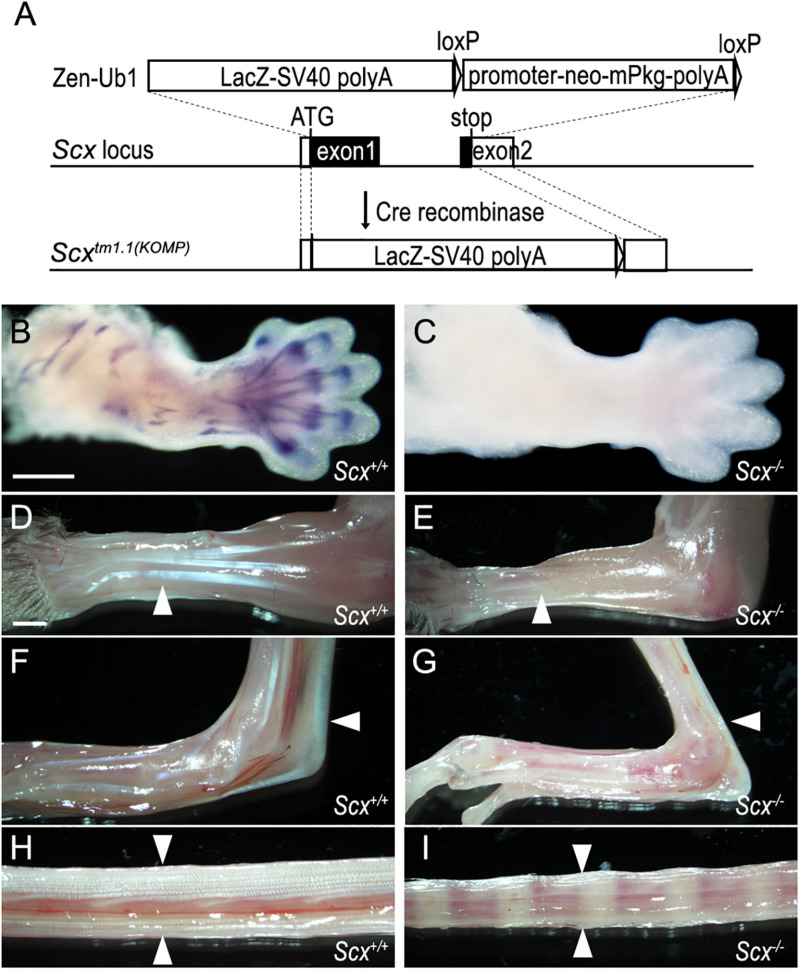
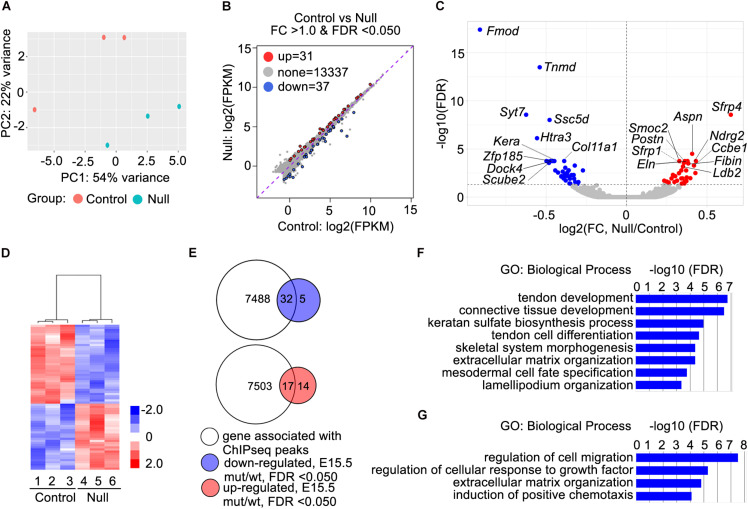
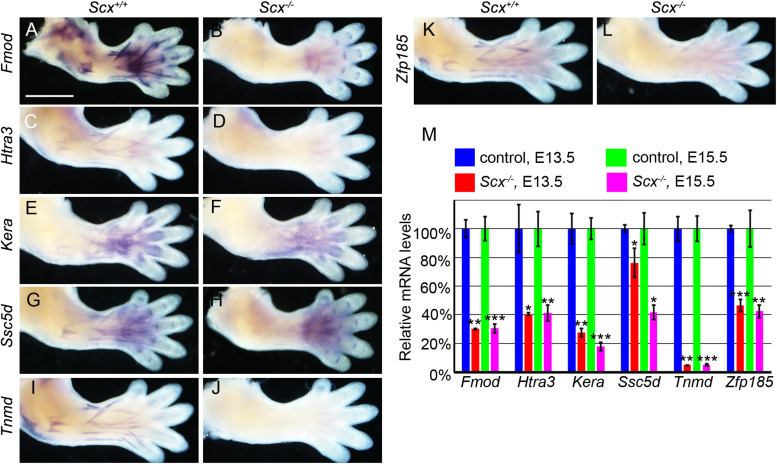
Proper development of tendons is crucial for the integration and function of the musculoskeletal system. Currently little is known about the molecular mechanisms controlling tendon development and tendon cell differentiation. The transcription factor Scleraxis (Scx) is expressed throughout tendon development and plays essential roles in both embryonic tendon development and adult tendon healing, but few direct target genes of Scx in tendon development have been reported and genome-wide identification of Scx direct target genes has been lacking. In this study, we have generated a knockin mouse strain, which produces fully functional endogenous Scx proteins containing a 2xFLAG epitope tag at the carboxy terminus. We mapped the genome-wide Scx binding sites in the developing limb tendon tissues, identifying 12,097 high quality Scx regulatory elements in-around 7,520 genes. Comparative analysis with previously reported embryonic tendon cell RNA-seq data identified 490 candidate Scx direct target genes in early tendon development. Furthermore, we characterized a new gene-knockout mouse line and performed whole transcriptome RNA sequencing analysis of E15.5 forelimb tendon cells from embryos and control littermates, identifying 68 genes whose expression in the developing tendon tissues significantly depended on Scx function. Combined analysis of the ChIP-seq and RNA-seq data yielded 32 direct target genes that required Scx for activation and an additional 17 target genes whose expression was suppressed by Scx during early tendon development. We further analyzed and validated Scx-dependent tendon-specific expression patterns of a subset of the target genes, including , , , , , and , by hybridization and real-time quantitative polymerase chain reaction assays. These results provide novel insights into the molecular mechanisms mediating Scx function in tendon development and homeostasis. The ChIP-seq and RNA-seq data provide a rich resource for aiding design of further studies of the mechanisms regulating tendon cell differentiation and tendon tissue regeneration. The mice provide a valuable new tool for unraveling the molecular mechanisms involving Scx in the protein interaction and gene-regulatory networks underlying many developmental and disease processes.
肌腱的正常发育对于肌肉骨骼系统的整合和功能至关重要。目前,关于控制肌腱发育和肌腱细胞分化的分子机制知之甚少。转录因子硬骨素(Scx)在整个肌腱发育过程中表达,在胚胎肌腱发育和成年肌腱愈合中都起着至关重要的作用,但在肌腱发育中Scx的直接靶基因报道较少,且缺乏全基因组范围内对Scx直接靶基因的鉴定。在本研究中,我们构建了一个敲入小鼠品系,该品系产生在羧基末端含有2xFLAG表位标签的完全功能性内源性Scx蛋白。我们绘制了发育中的肢体肌腱组织中全基因组范围内的Scx结合位点,在约7520个基因中鉴定出12097个高质量的Scx调控元件。与先前报道的胚胎肌腱细胞RNA测序数据进行比较分析,在早期肌腱发育中鉴定出490个候选Scx直接靶基因。此外,我们鉴定了一个新的基因敲除小鼠品系,并对来自该品系胚胎和对照同窝小鼠的E15.5前肢肌腱细胞进行了全转录组RNA测序分析,鉴定出68个基因,其在发育中的肌腱组织中的表达显著依赖于Scx功能。ChIP-seq和RNA-seq数据的联合分析产生了32个在早期肌腱发育中需要Scx激活的直接靶基因,以及另外17个其表达在早期肌腱发育过程中被Scx抑制的靶基因。我们通过杂交和实时定量聚合酶链反应分析进一步分析和验证了包括、、、、、和在内的一部分靶基因的Scx依赖性肌腱特异性表达模式。这些结果为介导Scx在肌腱发育和体内平衡中的功能的分子机制提供了新的见解。ChIP-seq和RNA-seq数据为辅助设计进一步研究调节肌腱细胞分化和肌腱组织再生的机制提供了丰富的资源。该品系小鼠为揭示Scx在许多发育和疾病过程潜在的蛋白质相互作用和基因调控网络中的分子机制提供了一个有价值的新工具。