Department of Neurosurgery, Icahn School of Medicine at Mount Sinai,10 Union Square East, 5th Floor, Suite 5E, New York, NY 10003, USA; Department of Oncological Sciences, The Tisch Cancer Institute, Icahn School of Medicine at Mount Sinai, New York, NY, USA; Nash Family Department of Neuroscience, Friedman Brain Institute, Icahn School of Medicine at Mount Sinai, New York, USA.
Department of Neurosurgery, Icahn School of Medicine at Mount Sinai,10 Union Square East, 5th Floor, Suite 5E, New York, NY 10003, USA; Department of Oncological Sciences, The Tisch Cancer Institute, Icahn School of Medicine at Mount Sinai, New York, NY, USA.
EBioMedicine. 2021 Jul;69:103453. doi: 10.1016/j.ebiom.2021.103453. Epub 2021 Jun 19.
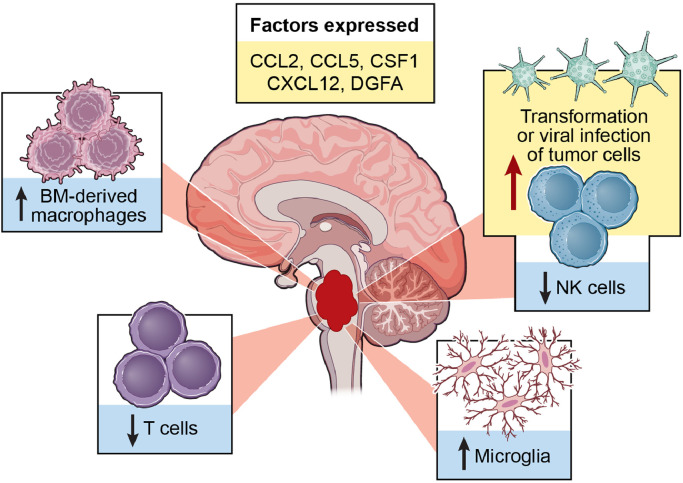
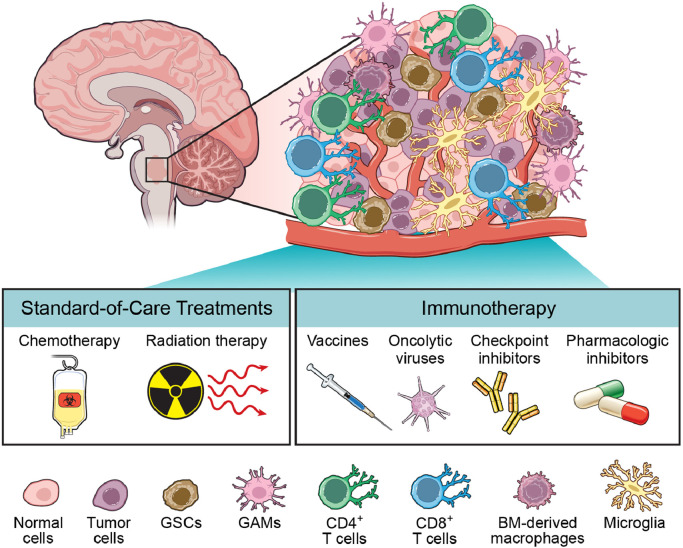
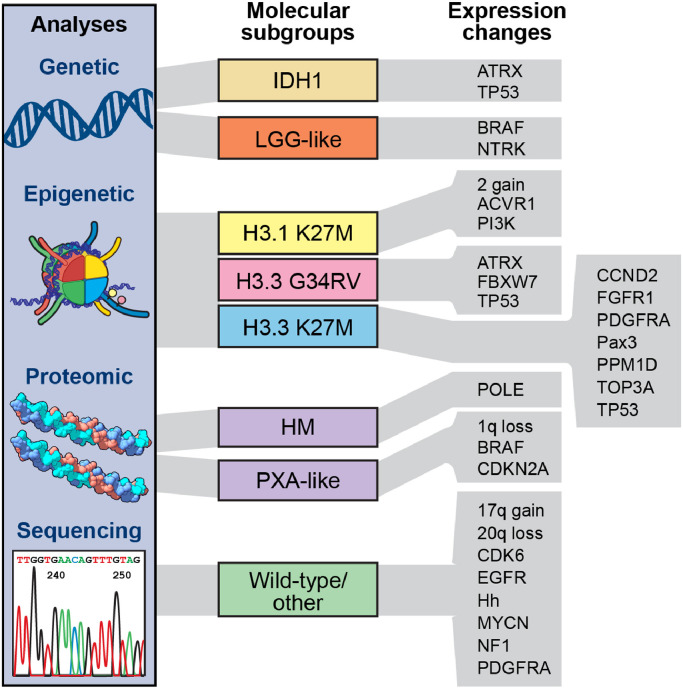
Diffuse midline glioma (DMG) is an incurable malignancy with the highest mortality rate among pediatric brain tumors. While radiotherapy and chemotherapy are the most common treatments, these modalities have limited promise. Due to their diffuse nature in critical areas of the brain, the prognosis of DMG remains dismal. DMGs are characterized by unique phenotypic heterogeneity and histological features. Mutations of H3K27M, TP53, and ACVR1 drive DMG tumorigenesis. Histological artifacts include pseudopalisading necrosis and vascular endothelial proliferation. Mouse models that recapitulate human DMG have been used to study key driver mutations and the tumor microenvironment. DMG consists of a largely immunologically cold tumor microenvironment that lacks immune cell infiltration, immunosuppressive factors, and immune surveillance. While tumor-associated macrophages are the most abundant immune cell population, there is reduced T lymphocyte infiltration. Immunotherapies can stimulate the immune system to find, attack, and eliminate cancer cells. However, it is critical to understand the immune microenvironment of DMG before designing immunotherapies since differences in the microenvironment influence treatment efficacy. To this end, our review aims to overview the immune microenvironment of DMG, discuss emerging insights about the immune landscape that drives disease pathophysiology, and present recent findings and new opportunities for therapeutic discovery.
弥漫性中线脑胶质瘤(DMG)是一种无法治愈的恶性肿瘤,其死亡率在儿童脑肿瘤中最高。尽管放疗和化疗是最常见的治疗方法,但这些方法的疗效有限。由于其在大脑关键区域的弥漫性特征,DMG 的预后仍然不容乐观。DMG 的特征是具有独特的表型异质性和组织学特征。H3K27M、TP53 和 ACVR1 的突变驱动 DMG 的肿瘤发生。组织学伪影包括假栅状坏死和血管内皮增殖。模拟人类 DMG 的小鼠模型已被用于研究关键驱动突变和肿瘤微环境。DMG 由一个主要免疫冷的肿瘤微环境组成,缺乏免疫细胞浸润、免疫抑制因子和免疫监视。虽然肿瘤相关巨噬细胞是最丰富的免疫细胞群体,但 T 淋巴细胞浸润减少。免疫疗法可以刺激免疫系统发现、攻击和消除癌细胞。然而,在设计免疫疗法之前,了解 DMG 的免疫微环境至关重要,因为微环境的差异会影响治疗效果。为此,我们的综述旨在概述 DMG 的免疫微环境,讨论驱动疾病病理生理学的免疫景观的新见解,并介绍治疗发现的最新发现和新机会。