Gani Maria Apriliani, Nurhan Ahmad Dzulfikri, Maulana Saipul, Siswodihardjo Siswandono, Shinta Dewi Wara, Khotib Junaidi
Department of Clinical Pharmacy, Faculty of Pharmacy, Airlangga University, Surabaya, Indonesia.
Department of Pharmacognosy and Phytochemistry, Faculty of Pharmacy, Airlangga University, Surabaya, Indonesia.
J Adv Pharm Technol Res. 2021 Apr-Jun;12(2):120-126. doi: 10.4103/japtr.JAPTR_88_21. Epub 2021 Apr 27.
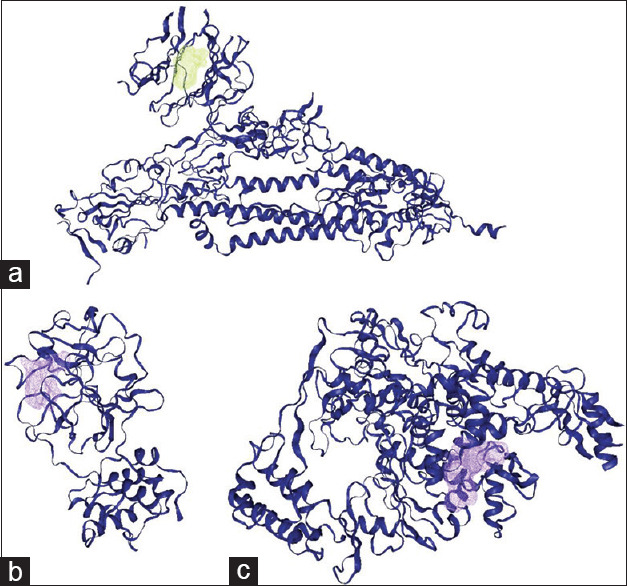
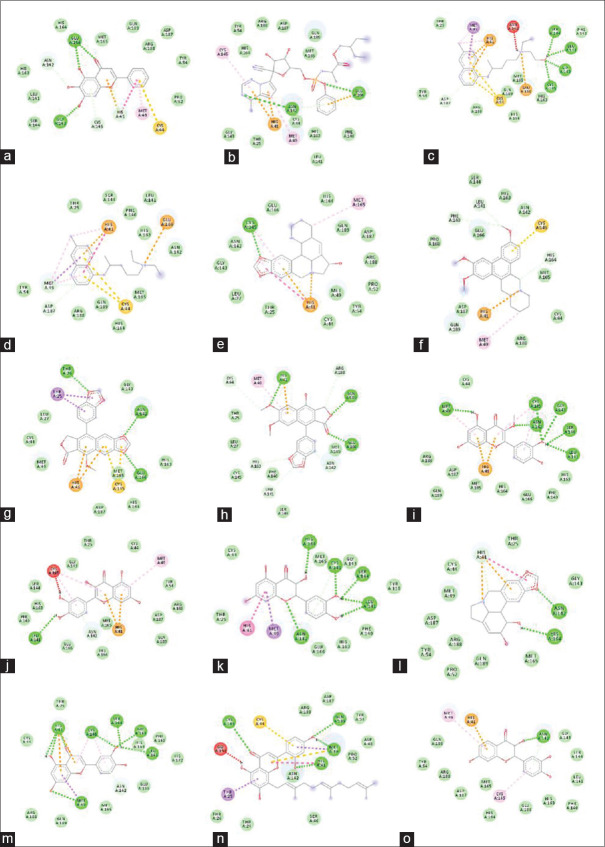
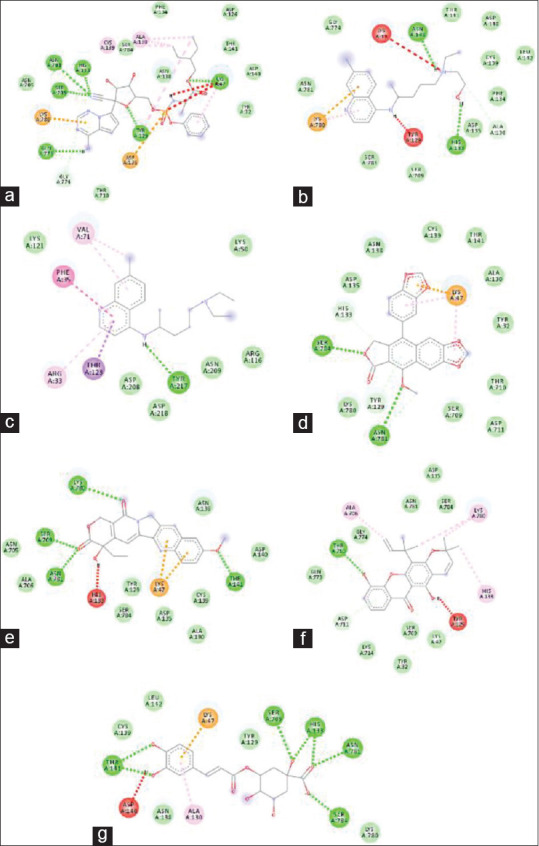
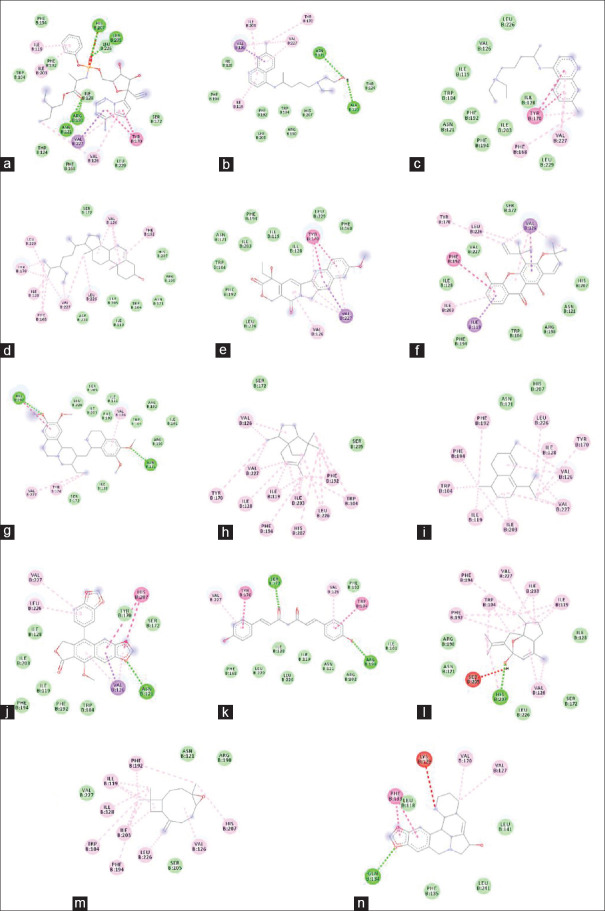
Severe acute respiratory syndrome coronavirus-2 (SARS-CoV-2) is a virus that causes the infectious disease coronavirus disease-2019. Currently, there is no effective drug for the prevention and treatment of this virus. This study aimed to identify secondary metabolites that potentially inhibit the key proteins of SARS-CoV-2. This was an molecular docking study of several secondary metabolites of Indonesian herbal plant compounds and other metabolites with antiviral testing history. Virtual screening using AutoDock Vina of 216 Lipinski rule-compliant plant metabolites was performed on 3C-like protease (3CL), RNA-dependent RNA polymerase (RdRp), and spike glycoprotein. Ligand preparation was performed using JChem and Schrödinger's software, and virtual protein elucidation was performed using AutoDockTools version 1.5.6. Virtual screening identified several RdRp, spike, and 3CL inhibitors. Justicidin D had binding affinities of -8.7, -8.1, and -7.6 kcal mol on RdRp, 3CL, and spike, respectively. 10-methoxycamptothecin had binding affinities of -8.5 and -8.2 kcal mol on RdRp and spike, respectively. Inoxanthone had binding affinities of -8.3 and -8.1 kcal mol on RdRp and spike, respectively, while binding affinities of caribine were -9.0 and -7.5 mol on 3CL and spike, respectively. Secondary metabolites of compounds from several plants were identified as potential agents for SARS-CoV-2 therapy.
严重急性呼吸综合征冠状病毒2(SARS-CoV-2)是一种引发2019冠状病毒病这一传染病的病毒。目前,尚无预防和治疗该病毒的有效药物。本研究旨在鉴定可能抑制SARS-CoV-2关键蛋白的次生代谢产物。这是一项针对印度尼西亚草药植物化合物的几种次生代谢产物以及其他具有抗病毒测试历史的代谢产物的分子对接研究。使用AutoDock Vina对216种符合Lipinski规则的植物代谢产物进行虚拟筛选,作用于3C样蛋白酶(3CL)、RNA依赖性RNA聚合酶(RdRp)和刺突糖蛋白。使用JChem和薛定谔软件进行配体制备,并使用1.5.6版本的AutoDockTools进行虚拟蛋白解析。虚拟筛选鉴定出了几种RdRp、刺突和3CL抑制剂。Justicidin D对RdRp、3CL和刺突的结合亲和力分别为-8.7、-8.1和-7.6 kcal/mol。10-甲氧基喜树碱对RdRp和刺突的结合亲和力分别为-8.5和-8.2 kcal/mol。异株荨醌对RdRp和刺突的结合亲和力分别为-8.3和-8.1 kcal/mol,而卡里宾对3CL和刺突的结合亲和力分别为-9.0和-7.5 kcal/mol。几种植物化合物的次生代谢产物被鉴定为SARS-CoV-2治疗的潜在药物。