Department of Viroscience, Erasmus Medical Center, Rotterdam, The Netherlands.
Department of Psychiatry, Erasmus Medical Center, Rotterdam, The Netherlands.
mSphere. 2021 Jun 30;6(3):e0027021. doi: 10.1128/mSphere.00270-21. Epub 2021 Jun 23.
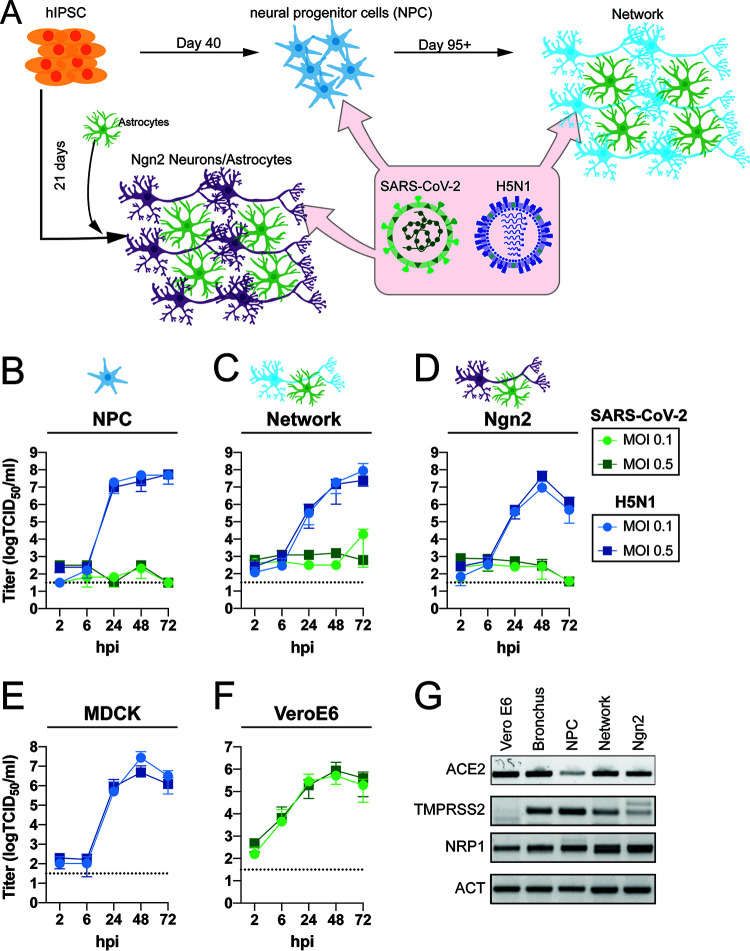
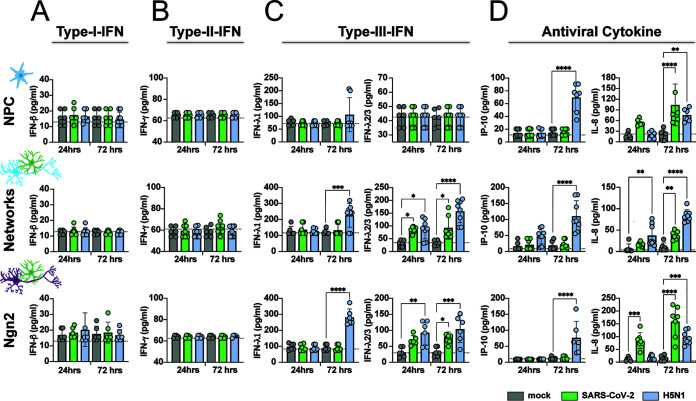
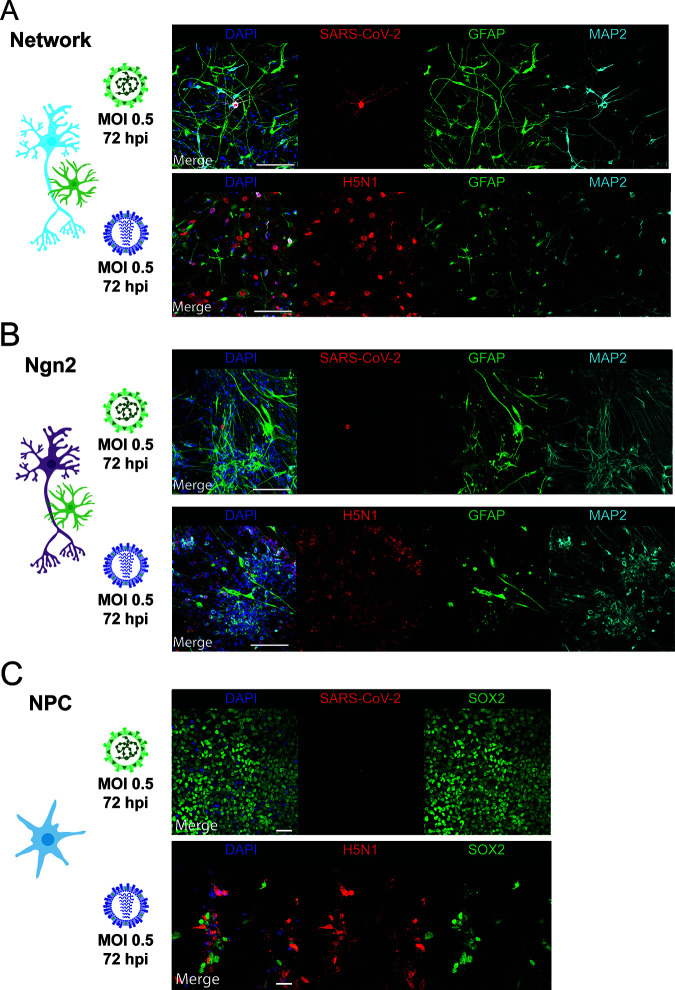
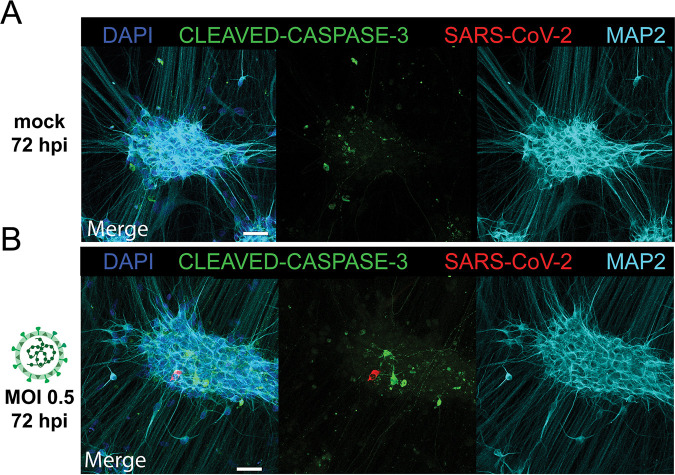
Severe acute respiratory syndrome coronavirus 2 (SARS-CoV-2) infection is associated with a wide variety of neurological complications. Even though SARS-CoV-2 is rarely detected in the central nervous system (CNS) or cerebrospinal fluid, evidence is accumulating that SARS-CoV-2 might enter the CNS via the olfactory nerve. However, what happens after SARS-CoV-2 enters the CNS is poorly understood. Therefore, we investigated the replication kinetics, cell tropism, and associated immune responses of SARS-CoV-2 infection in different types of neural cultures derived from human induced pluripotent stem cells (hiPSCs). SARS-CoV-2 was compared to the neurotropic and highly pathogenic H5N1 influenza A virus. SARS-CoV-2 infected a minority of individual mature neurons, without subsequent virus replication and spread, despite angiotensin-converting enzyme 2 (ACE2), transmembrane protease serine 2 (TMPRSS2), and neuropilin-1 (NPR1) expression in all cultures. However, this sparse infection did result in the production of type III interferons and interleukin-8 (IL-8). In contrast, H5N1 virus replicated and spread very efficiently in all cell types in all cultures. Taken together, our findings support the hypothesis that neurological complications might result from local immune responses triggered by virus invasion, rather than abundant SARS-CoV-2 replication in the CNS. Infections with the recently emerged severe acute respiratory syndrome coronavirus 2 (SARS-CoV-2) are often associated with neurological complications. Evidence suggests that SARS-CoV-2 enters the brain via the olfactory nerve; however, SARS-CoV-2 is only rarely detected in the central nervous system of COVID-19 patients. Here, we show that SARS-CoV-2 is able to infect neurons of human iPSC neural cultures but that this infection is abortive and does not result in virus spread to other cells. However, infection of neural cultures did result in the production of type III interferon and IL-8. This study suggests that SARS-CoV-2 might enter the CNS and infect individual neurons, triggering local immune responses that could contribute to the pathogenesis of SARS-CoV-2-associated CNS disease.
严重急性呼吸综合征冠状病毒 2(SARS-CoV-2)感染与多种神经系统并发症相关。尽管 SARS-CoV-2 在中枢神经系统(CNS)或脑脊液中很少被检测到,但有证据表明 SARS-CoV-2 可能通过嗅神经进入 CNS。然而,SARS-CoV-2 进入 CNS 后会发生什么情况还知之甚少。因此,我们研究了 SARS-CoV-2 在源自人诱导多能干细胞(hiPSC)的不同类型神经培养物中的复制动力学、细胞嗜性和相关免疫反应。我们将 SARS-CoV-2 与神经嗜性和高致病性 H5N1 甲型流感病毒进行了比较。SARS-CoV-2 感染了少数个体成熟神经元,但没有随后的病毒复制和传播,尽管所有培养物中均表达血管紧张素转换酶 2(ACE2)、跨膜蛋白酶丝氨酸 2(TMPRSS2)和神经纤毛蛋白 1(NPR1)。然而,这种稀疏感染确实导致了 III 型干扰素和白细胞介素 8(IL-8)的产生。相比之下,H5N1 病毒在所有培养物中的所有细胞类型中都能非常有效地复制和传播。总的来说,我们的研究结果支持这样一种假设,即神经系统并发症可能是由病毒入侵引发的局部免疫反应引起的,而不是 SARS-CoV-2 在中枢神经系统中大量复制引起的。最近出现的严重急性呼吸综合征冠状病毒 2(SARS-CoV-2)感染常伴有神经系统并发症。有证据表明,SARS-CoV-2 通过嗅神经进入大脑;然而,在 COVID-19 患者的中枢神经系统中很少检测到 SARS-CoV-2。在这里,我们表明 SARS-CoV-2 能够感染人 iPSC 神经培养物中的神经元,但这种感染是流产的,不会导致病毒传播到其他细胞。然而,神经培养物的感染确实导致了 III 型干扰素和 IL-8 的产生。这项研究表明,SARS-CoV-2 可能进入中枢神经系统并感染个别神经元,引发局部免疫反应,这可能有助于 SARS-CoV-2 相关中枢神经系统疾病的发病机制。