Infection. 2021 Oct;49(5):889-905. doi: 10.1007/s15010-021-01599-5. Epub 2021 Jun 25.
The ISARIC prospective multinational observational study is the largest cohort of hospitalized patients with COVID-19. We present relationships of age, sex, and nationality to presenting symptoms.
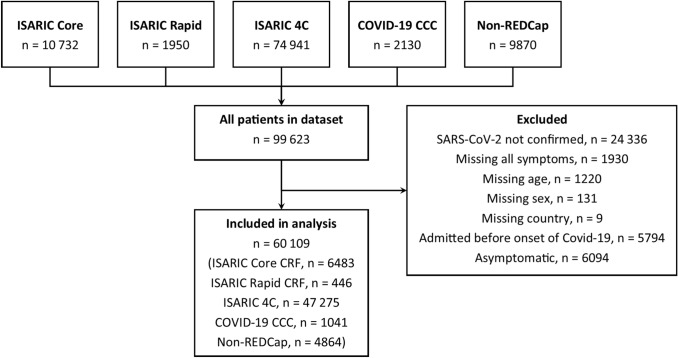
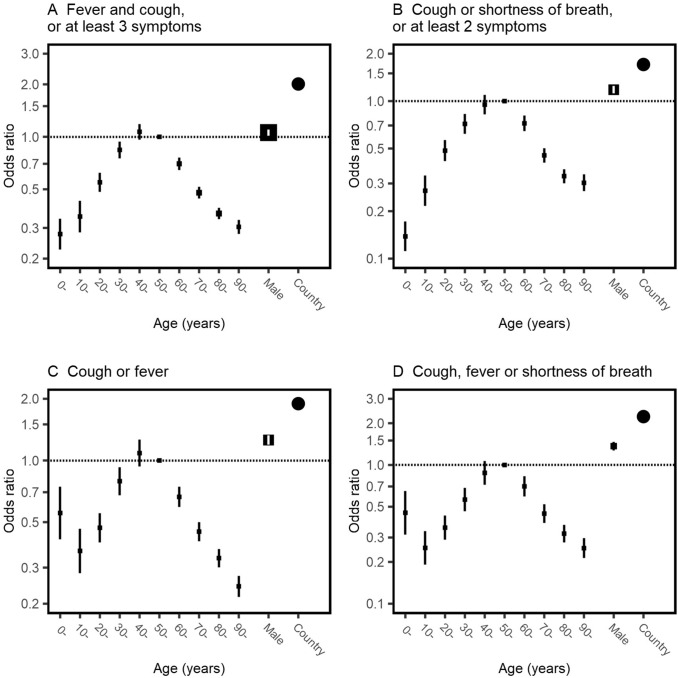
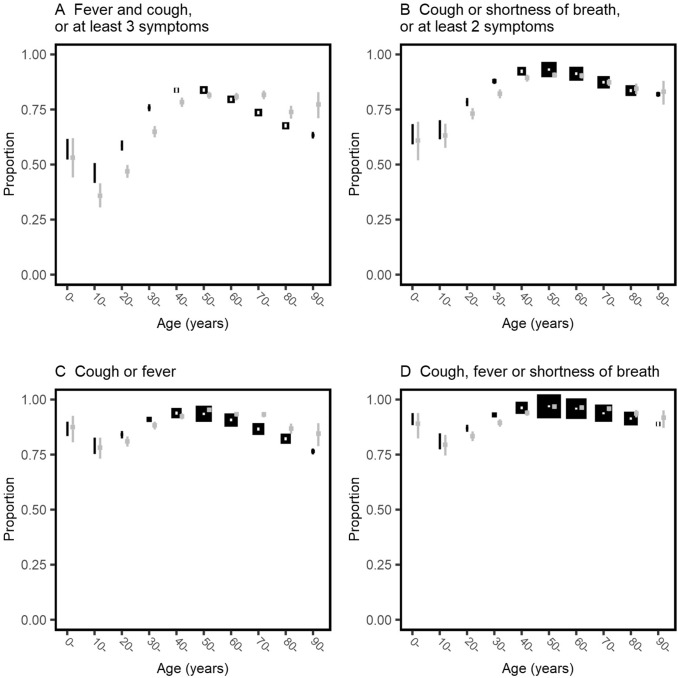
International, prospective observational study of 60 109 hospitalized symptomatic patients with laboratory-confirmed COVID-19 recruited from 43 countries between 30 January and 3 August 2020. Logistic regression was performed to evaluate relationships of age and sex to published COVID-19 case definitions and the most commonly reported symptoms.
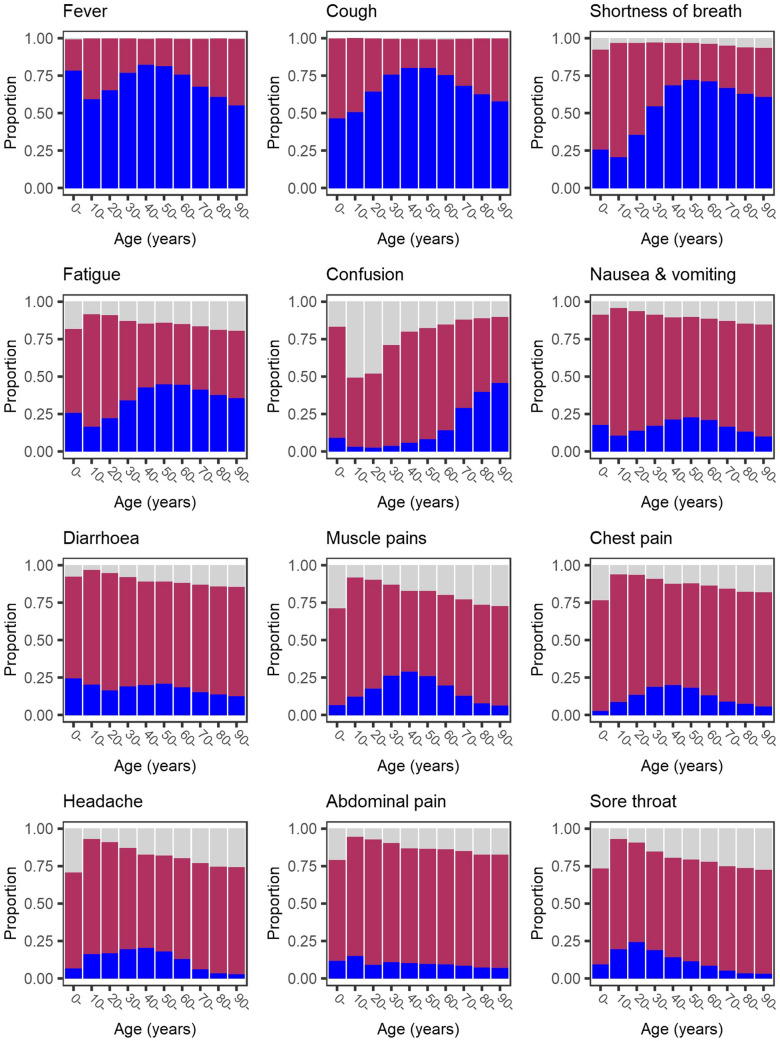
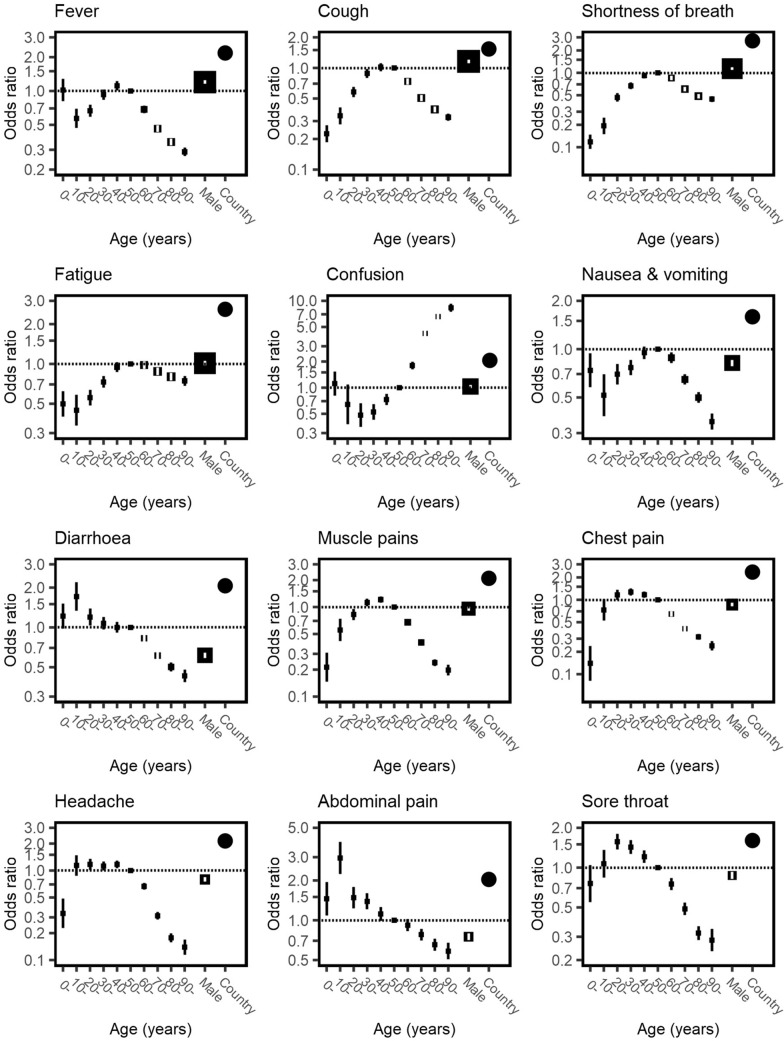
'Typical' symptoms of fever (69%), cough (68%) and shortness of breath (66%) were the most commonly reported. 92% of patients experienced at least one of these. Prevalence of typical symptoms was greatest in 30- to 60-year-olds (respectively 80, 79, 69%; at least one 95%). They were reported less frequently in children (≤ 18 years: 69, 48, 23; 85%), older adults (≥ 70 years: 61, 62, 65; 90%), and women (66, 66, 64; 90%; vs. men 71, 70, 67; 93%, each P < 0.001). The most common atypical presentations under 60 years of age were nausea and vomiting and abdominal pain, and over 60 years was confusion. Regression models showed significant differences in symptoms with sex, age and country.
This international collaboration has allowed us to report reliable symptom data from the largest cohort of patients admitted to hospital with COVID-19. Adults over 60 and children admitted to hospital with COVID-19 are less likely to present with typical symptoms. Nausea and vomiting are common atypical presentations under 30 years. Confusion is a frequent atypical presentation of COVID-19 in adults over 60 years. Women are less likely to experience typical symptoms than men.
ISARIC 是一项前瞻性的多国观察性研究,也是 COVID-19 住院患者中最大的队列。我们报告了年龄、性别和国籍与临床表现症状的关系。
这是一项国际性、前瞻性观察性研究,纳入了 2020 年 1 月 30 日至 8 月 3 日期间从 43 个国家招募的 60109 例有症状且实验室确诊的 COVID-19 住院患者。采用逻辑回归评估年龄和性别与已发表的 COVID-19 病例定义和最常见报告症状的关系。
发热(69%)、咳嗽(68%)和呼吸急促(66%)是最常见的“典型”症状。92%的患者至少有一个这样的症状。30 岁至 60 岁人群中“典型”症状的患病率最高(分别为 80%、79%、69%;至少有一种症状的比例为 95%)。儿童(≤18 岁:69%、48%、23%;90%)、老年人(≥70 岁:61%、62%、65%;90%)和女性(66%、66%、64%;90%;与男性 71%、70%、67%;93%,均 P<0.001)这些症状的报告频率较低。60 岁以下人群最常见的不典型表现为恶心、呕吐和腹痛,60 岁以上人群最常见的不典型表现为意识混乱。回归模型显示,症状在性别、年龄和国家之间存在显著差异。
本国际合作报告了 COVID-19 住院患者中最大队列的可靠症状数据。60 岁以上的成年人和儿童患 COVID-19 时,更不可能出现典型症状。30 岁以下人群常见的非典型症状为恶心和呕吐。60 岁以上人群中意识混乱是 COVID-19 的常见不典型表现。女性出现典型症状的可能性低于男性。