Department of Cell Biology and Anatomy, Hotchkiss Brain Institute, Cumming School of Medicine, HMRB 162, Health Sciences Centre, University of Calgary, 3330 Hospital Drive NW, Calgary, AB, T2N 4N1, Canada.
Yukon University, 500 University Drive, Whitehorse, YT, Y1A 5K4, Canada.
Mol Brain. 2021 Jun 26;14(1):97. doi: 10.1186/s13041-021-00808-4.
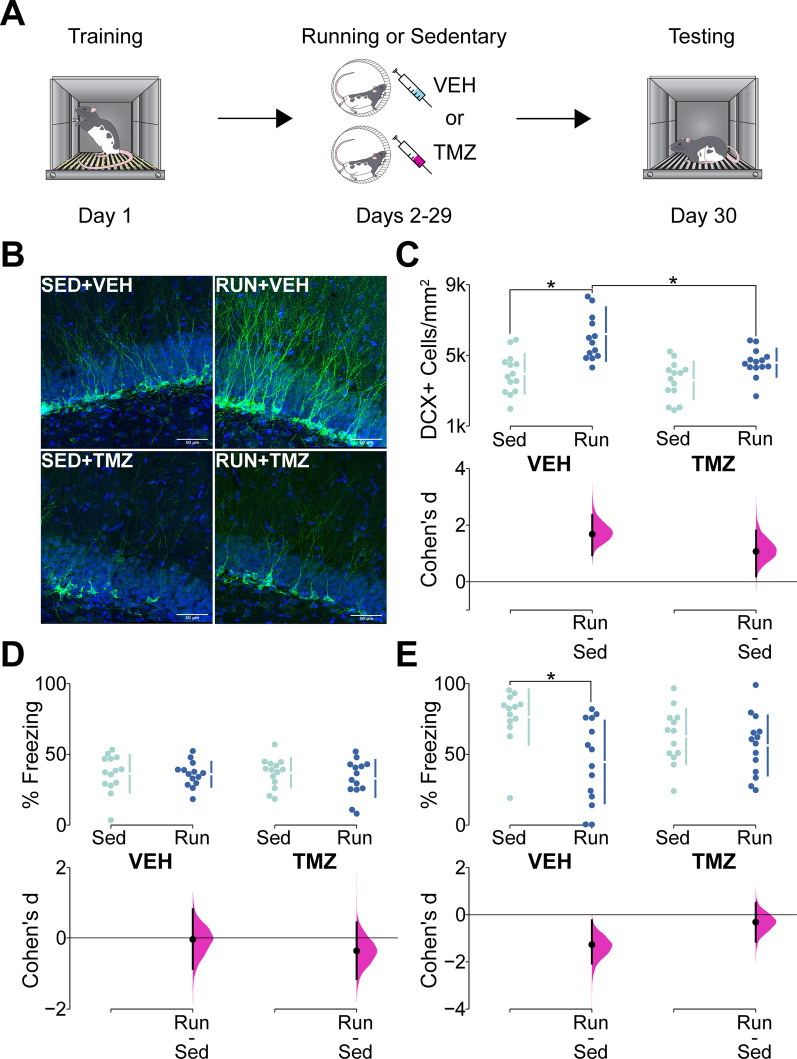
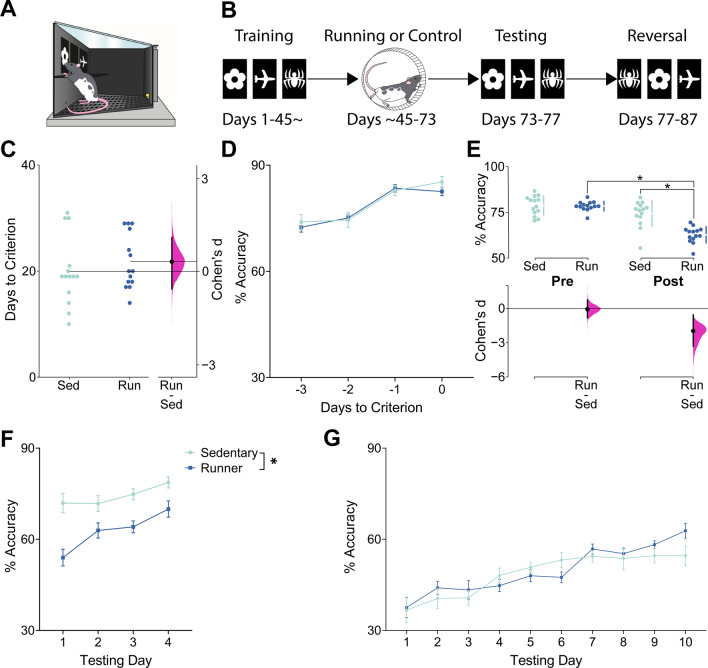
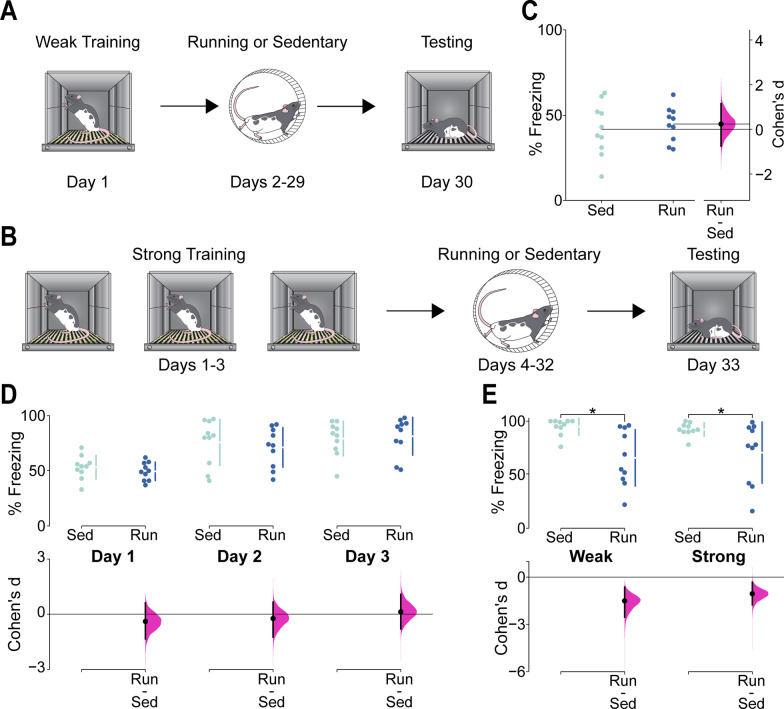
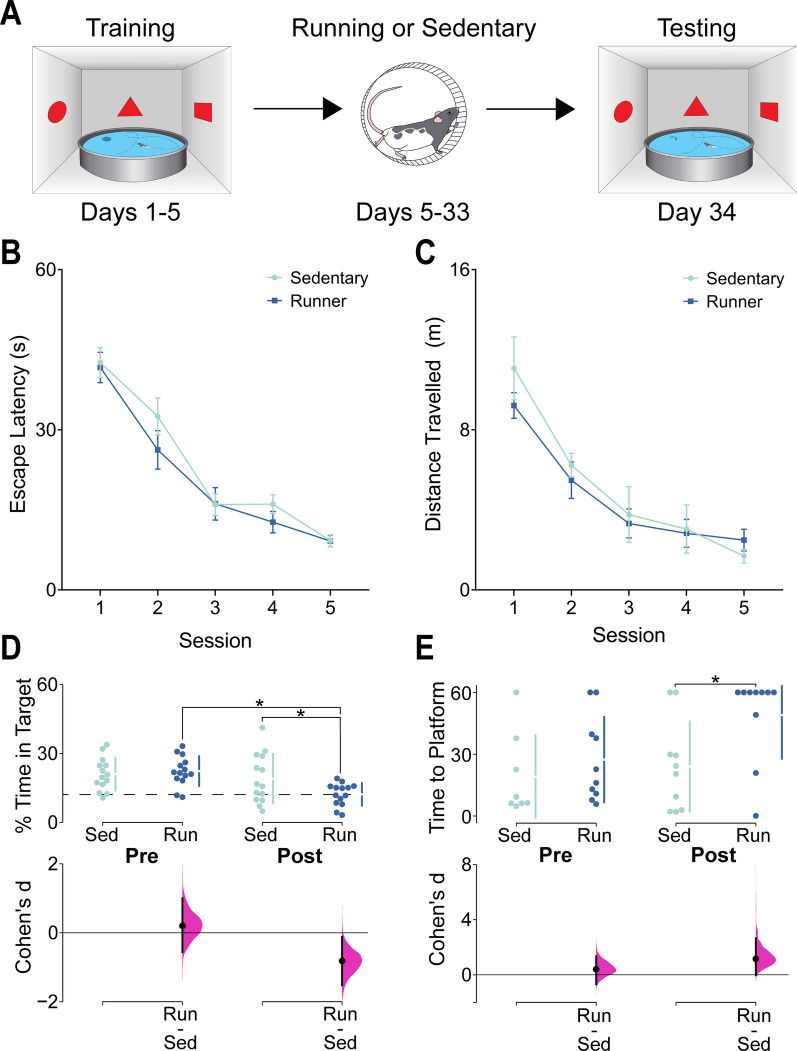
The formation and retention of hippocampus-dependent memories is impacted by neurogenesis, a process that involves the production of new neurons in the dentate gyrus of the hippocampus. Recent studies demonstrate that increasing neurogenesis after memory formation induces forgetting of previously acquired memories. Neurogenesis-induced forgetting was originally demonstrated in mice, but a recent report suggests that the same effect may be absent in rats. Although a general species difference is possible, other potential explanations for these incongruent findings are that memories which are more strongly reinforced become resilient to forgetting or that perhaps only certain types of memories are affected. Here, we investigated whether neurogenesis-induced forgetting occurs in rats using several hippocampus-dependent tasks including contextual fear conditioning (CFC), the Morris Water Task (MWT), and touchscreen paired associates learning (PAL). Neurogenesis was increased following training using voluntary exercise for 4 weeks before recall of the previous memory was assessed. We show that voluntary running causes forgetting of context fear memories in a neurogenesis-dependent manner, and that neurogenesis-induced forgetting is present in rats across behavioral tasks despite differences in complexity or reliance on spatial, context, or object memories. In addition, we asked whether stronger memories are less susceptible to forgetting by varying the strength of training. Even with a very strong training protocol in the CFC task, we still observed enhanced forgetting related to increased neurogenesis. These results suggest that forgetting due to neurogenesis is a conserved mechanism that aids in the clearance of memories.
海马体依赖性记忆的形成和保留受到神经发生的影响,这一过程涉及海马体齿状回中新神经元的产生。最近的研究表明,在记忆形成后增加神经发生会导致先前获得的记忆遗忘。神经发生诱导的遗忘最初在小鼠中得到证实,但最近的一项报告表明,在大鼠中可能不存在相同的效应。尽管可能存在一般的物种差异,但对于这些不一致的发现,其他潜在的解释可能是,记忆越强,就越不容易遗忘,或者可能只有某些类型的记忆受到影响。在这里,我们使用几种海马体依赖性任务(包括情景恐惧条件反射(CFC)、莫里斯水迷宫(MWT)和触摸屏配对联想学习(PAL))研究了神经发生诱导的遗忘是否发生在大鼠中。在回忆之前,通过 4 周的自愿运动训练来增加神经发生,然后评估之前的记忆。我们表明,自愿跑步以依赖神经发生的方式导致情景恐惧记忆的遗忘,并且尽管行为任务的复杂性或对空间、情景或物体记忆的依赖程度不同,神经发生诱导的遗忘在大鼠中仍然存在。此外,我们通过改变训练强度来询问是否更强的记忆更不易遗忘。即使在 CFC 任务中使用非常强的训练方案,我们仍然观察到与增加的神经发生相关的增强遗忘。这些结果表明,由于神经发生导致的遗忘是一种有助于清除记忆的保守机制。