Mathur Samarth, DeWoody J Andrew
Department of Biological Sciences Purdue University West Lafayette Indiana USA.
Present address: Department of Evolution, Ecology and Organismal Biology The Ohio State University Columbus Ohio USA.
Evol Appl. 2021 Apr 10;14(6):1540-1557. doi: 10.1111/eva.13216. eCollection 2021 Jun.
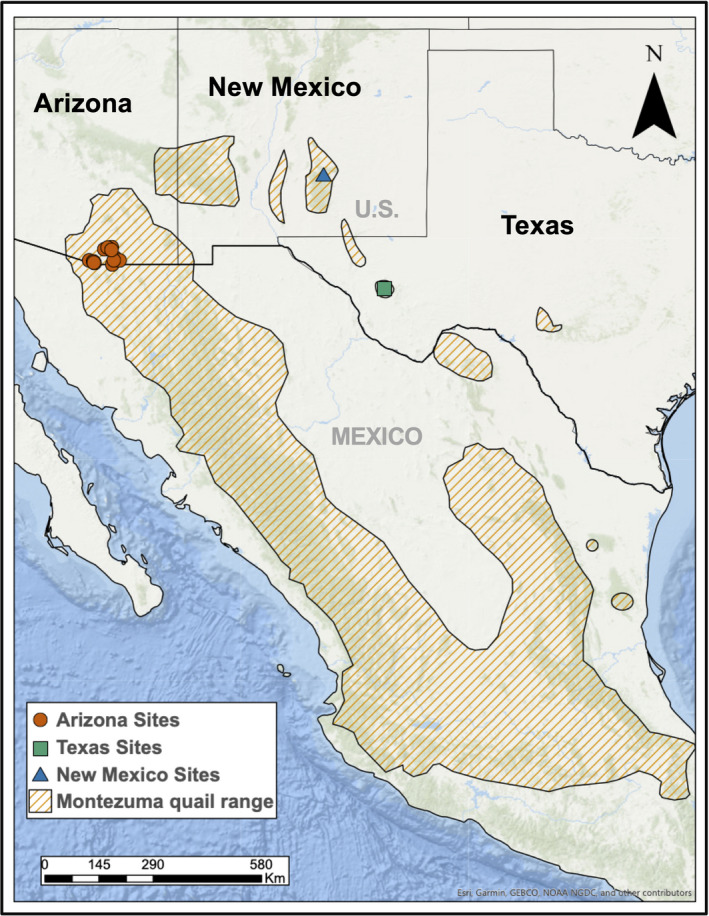
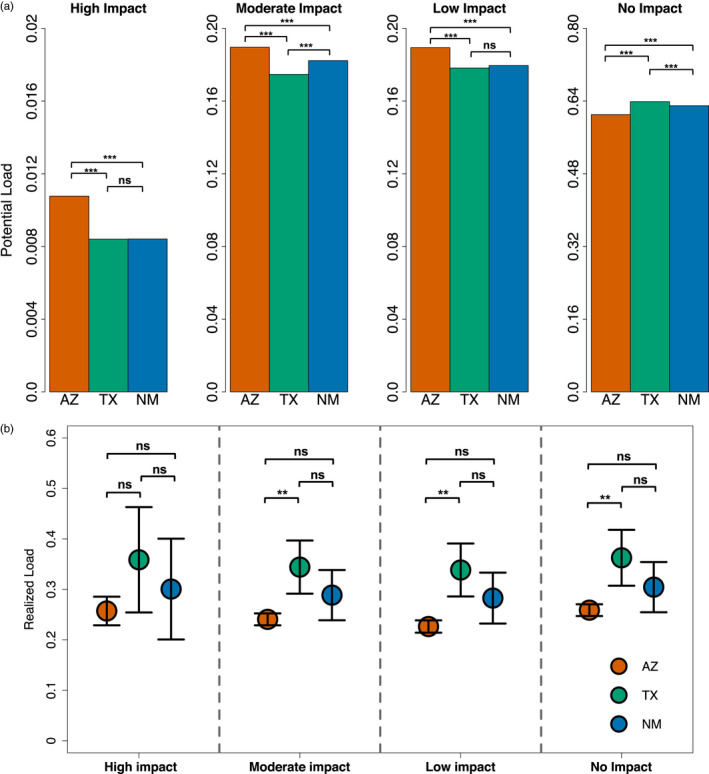
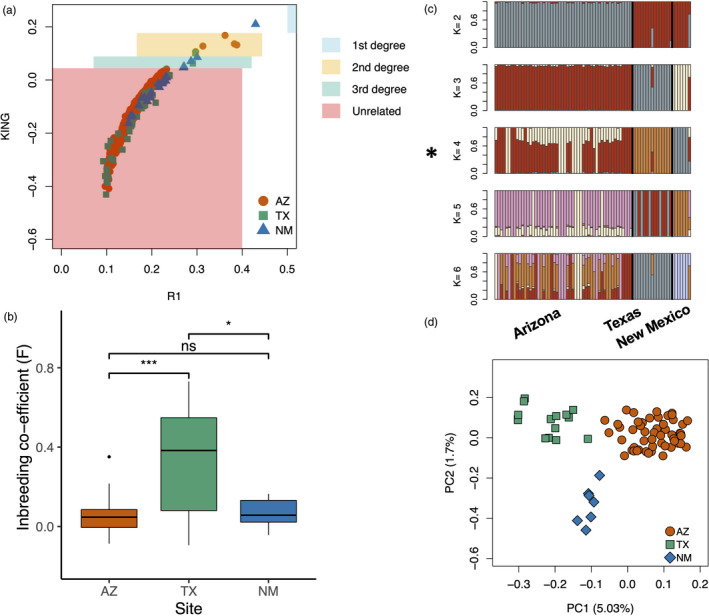
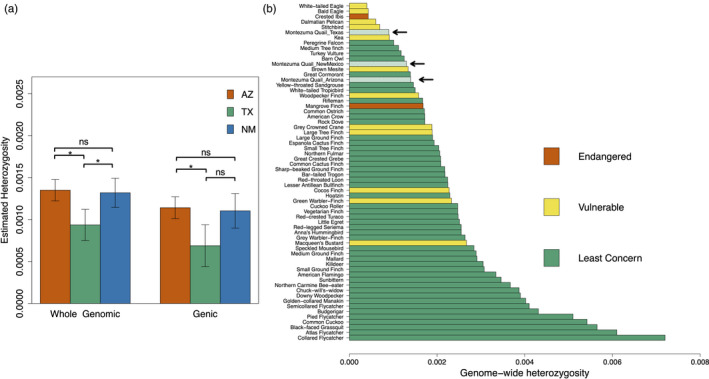
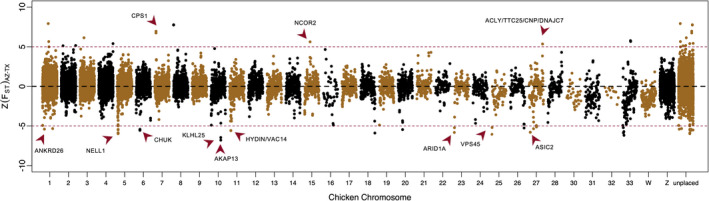
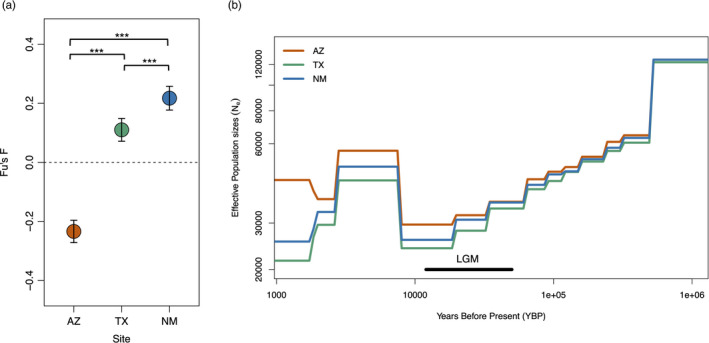
Populations with higher genetic diversity and larger effective sizes have greater evolutionary capacity (i.e., adaptive potential) to respond to ecological stressors. We are interested in how the variation captured in protein-coding genes fluctuates relative to overall genomic diversity and whether smaller populations suffer greater costs due to their genetic load of deleterious mutations compared with larger populations. We analyzed individual whole-genome sequences ( = 74) from three different populations of Montezuma quail (), a small ground-dwelling bird that is sustainably harvested in some portions of its range but is of conservation concern elsewhere. Our historical demographic results indicate that Montezuma quail populations in the United States exhibit low levels of genomic diversity due in large part to long-term declines in effective population sizes over nearly a million years. The smaller and more isolated Texas population is significantly more inbred than the large Arizona and the intermediate-sized New Mexico populations we surveyed. The Texas gene pool has a significantly smaller proportion of strongly deleterious variants segregating in the population compared with the larger Arizona gene pool. Our results demonstrate that even in small populations, highly deleterious mutations are effectively purged and/or lost due to drift. However, we find that in small populations the realized genetic load is elevated because of inbreeding coupled with a higher frequency of slightly deleterious mutations that are manifested in homozygotes. Overall, our study illustrates how population genomics can be used to proactively assess both neutral and functional aspects of contemporary genetic diversity in a conservation framework while simultaneously considering deeper demographic histories.
具有更高遗传多样性和更大有效种群规模的群体具有更强的进化能力(即适应潜力)来应对生态压力源。我们感兴趣的是,蛋白质编码基因中捕获的变异相对于整体基因组多样性如何波动,以及与较大种群相比,较小种群是否因其有害突变的遗传负荷而承受更大的代价。我们分析了来自蒙特祖马鹌鹑(一种小型地栖鸟类)三个不同种群的个体全基因组序列(n = 74),该鸟类在其分布范围的某些区域可持续收获,但在其他地方则受到保护关注。我们的历史种群统计结果表明,美国的蒙特祖马鹌鹑种群基因组多样性水平较低,这在很大程度上归因于近百万年来有效种群规模的长期下降。我们调查的较小且更孤立的德克萨斯种群的近亲繁殖程度明显高于大型的亚利桑那种群和中等规模的新墨西哥种群。与较大的亚利桑那基因库相比,德克萨斯基因库中在种群中分离的强有害变异比例明显更小。我们的结果表明,即使在小种群中,高度有害的突变也会由于漂变而有效地被清除和/或丢失。然而,我们发现,在小种群中,由于近亲繁殖以及纯合子中表现出的轻度有害突变频率较高,实际的遗传负荷会升高。总体而言,我们的研究说明了如何在保护框架中利用种群基因组学来主动评估当代遗传多样性的中性和功能方面,同时考虑更深入的种群统计历史。