Psychology Department, University of Wisconsin, Madison, Wisconsin, USA.
Wisconsin National Primate Research Center, Madison, Wisconsin, USA.
Dev Sci. 2021 Nov;24(6):e13114. doi: 10.1111/desc.13114. Epub 2021 Jun 27.
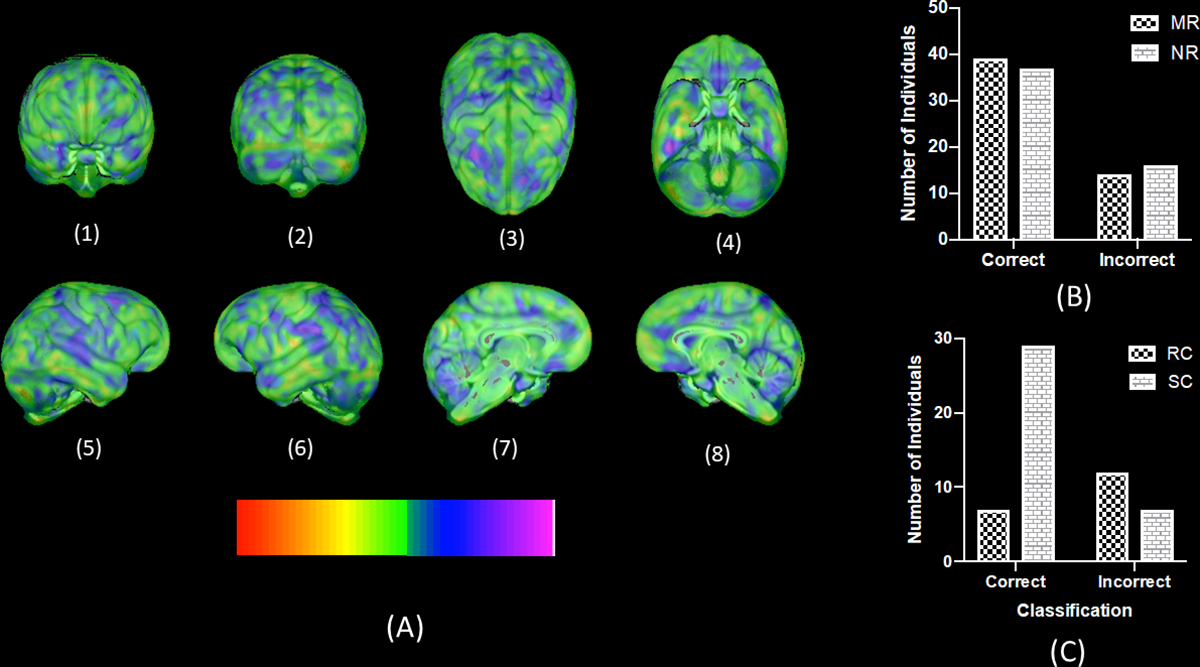
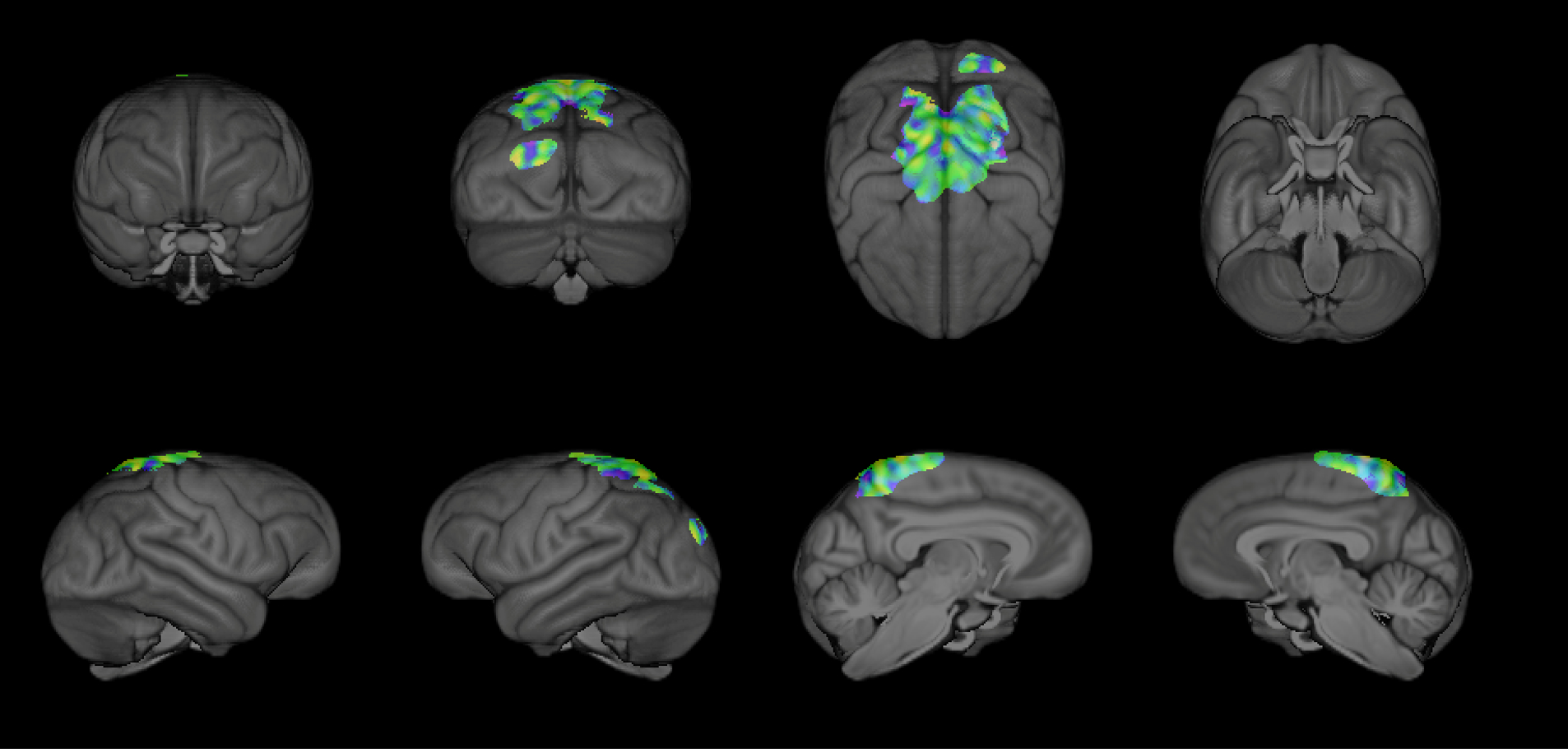
Early life experiences, including separation from caregivers, can result in substantial, persistent effects on neural, behavioral, and physiological systems as is evidenced in a long-standing literature and consistent findings across species, populations, and experimental models. In humans and other animals, differential rearing conditions can affect brain structure and function. We tested for whole brain patterns of morphological difference between 108 chimpanzees reared typically with their mothers (MR; N = 54) and those reared decades ago in a nursery with peers, human caregivers, and environmental enrichment (NR; N = 54). We applied support vector machine (SVM) learning to archival MRI images of chimpanzee brains to test whether we could, with any degree of significant probability, retrospectively classify subjects as MR and NR based on variation in gray matter within the entire brain. We could accurately discriminate MR and NR chimpanzee brains with nearly 70% accuracy. The combined brain regions discriminating the two rearing groups were widespread throughout the cortex. We believe this is the first report using machine language learning as an analytic method for discriminating nonhuman primate brains based on early rearing experiences. In this sense, the approach and findings are novel, and we hope they stimulate application of the technique to studies on neural outcomes associated with early experiences. The findings underscore the potential for infant separation from caregivers to leave a long-term mark on the developing brain.
早期生活经历,包括与照顾者分离,可能会对神经、行为和生理系统产生实质性和持久的影响,这在长期的文献和跨物种、种群和实验模型的一致发现中得到了证明。在人类和其他动物中,不同的养育条件会影响大脑结构和功能。我们测试了 108 只黑猩猩的全脑形态差异模式,这些黑猩猩中,有 54 只是在母亲的典型养育环境中长大的(MR),而另外 54 只是在几十年前在有同伴、人类照顾者和环境丰富的托儿所中长大的(NR)。我们应用支持向量机(SVM)学习对黑猩猩大脑的存档 MRI 图像进行分析,以测试我们是否可以根据整个大脑灰质的变化,以一定程度的显著概率,回溯性地将研究对象分类为 MR 和 NR。我们可以准确地区分 MR 和 NR 黑猩猩的大脑,准确率接近 70%。区分这两组养育方式的大脑区域广泛分布在皮层中。我们相信这是首次使用机器语言学习作为一种分析方法,根据早期养育经验来区分非人类灵长类动物的大脑。从这个意义上说,该方法和研究结果是新颖的,我们希望它们能激发该技术在与早期经验相关的神经结果研究中的应用。这些发现强调了婴儿与照顾者分离对大脑发育留下长期影响的潜力。