Department of Biochemistry, Faculty of Medicine, McGill University, Montreal, Canada.
Goodman Cancer Research Centre, McGill University, Montreal, Canada.
Elife. 2021 Jun 28;10:e65150. doi: 10.7554/eLife.65150.
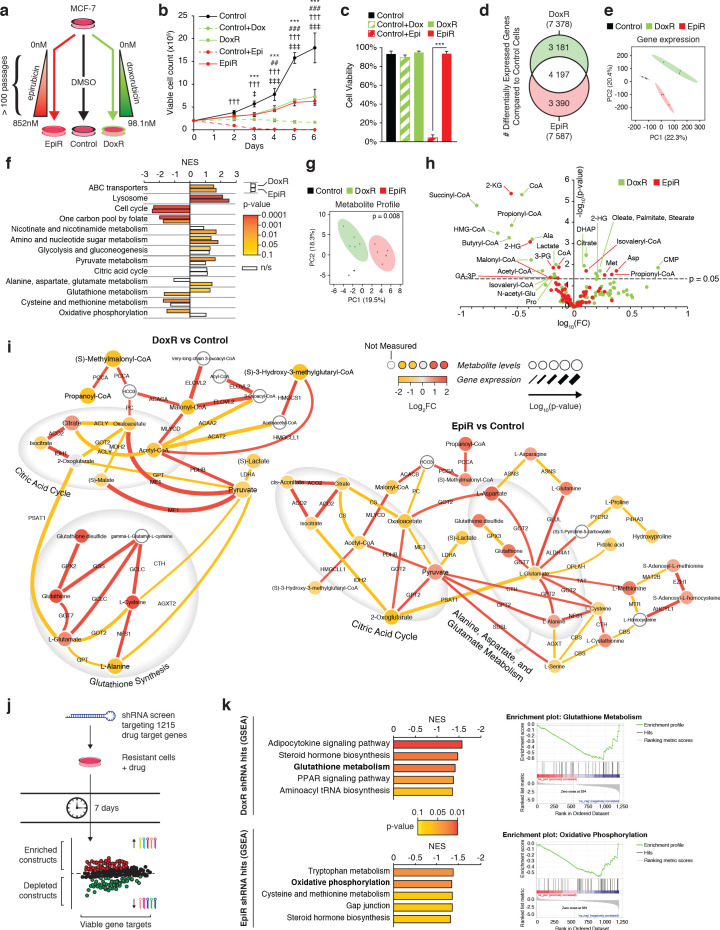
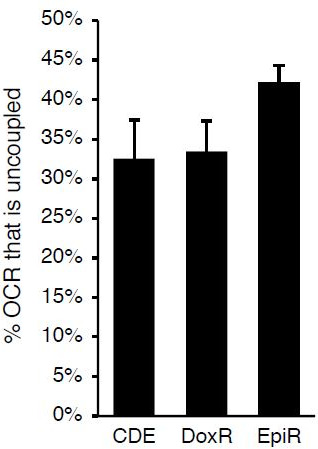
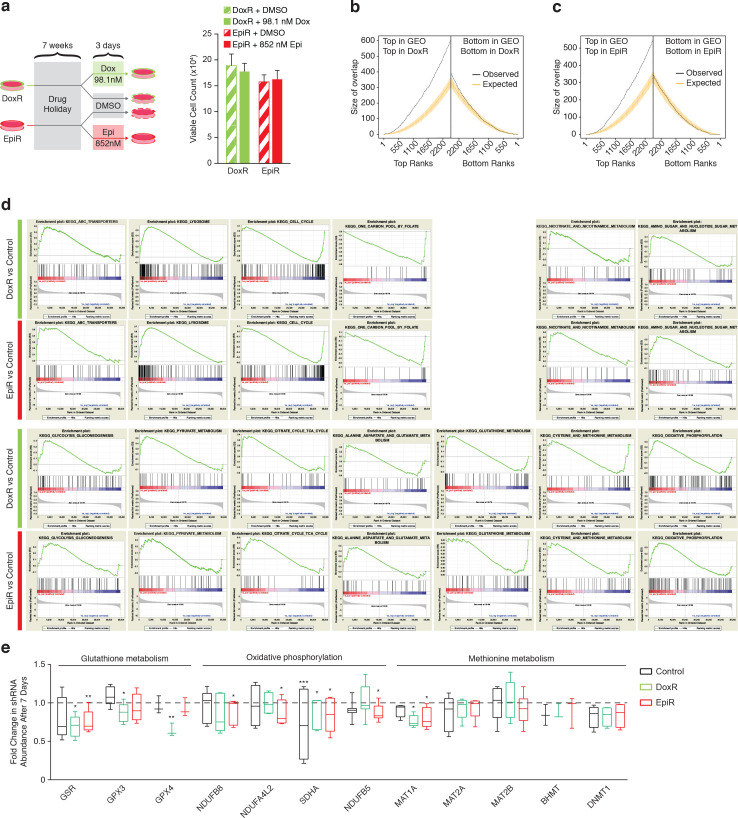
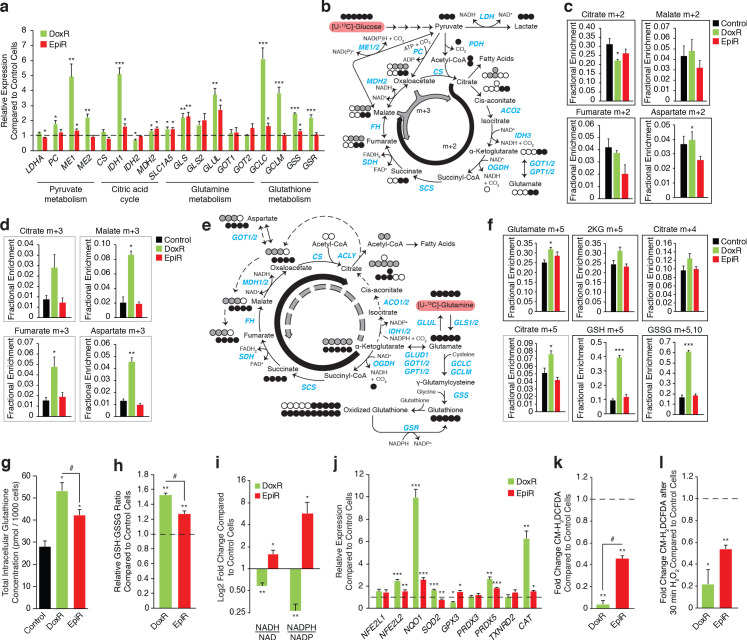
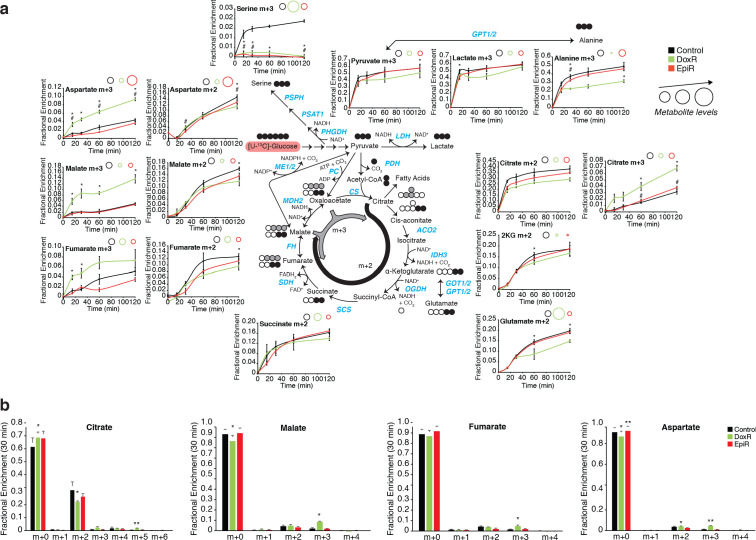
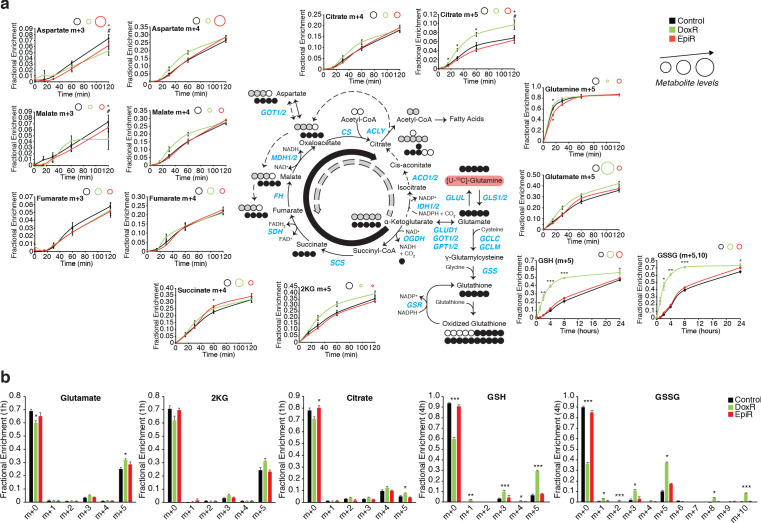
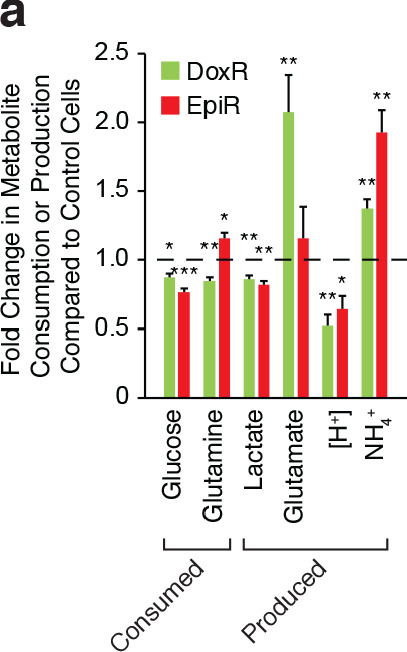
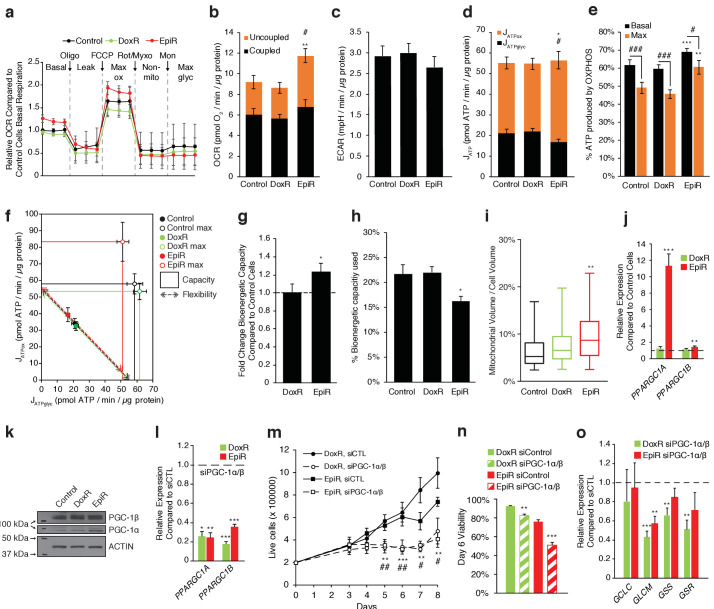
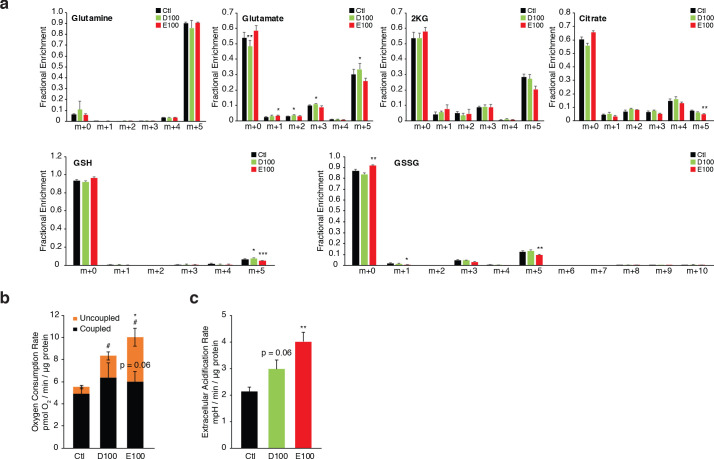
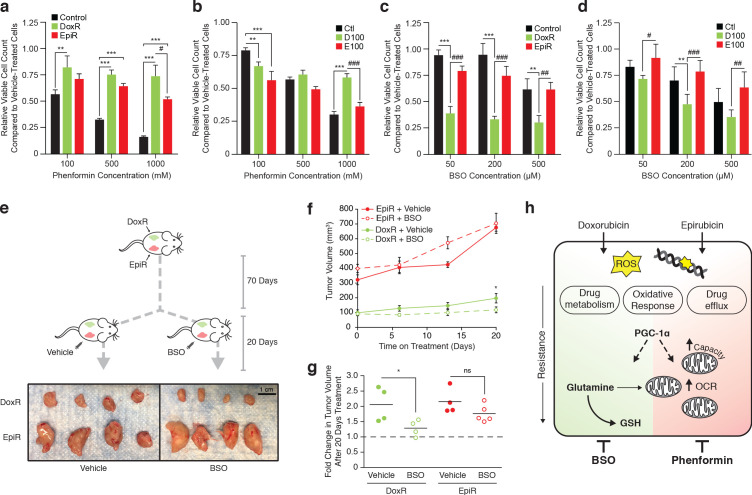
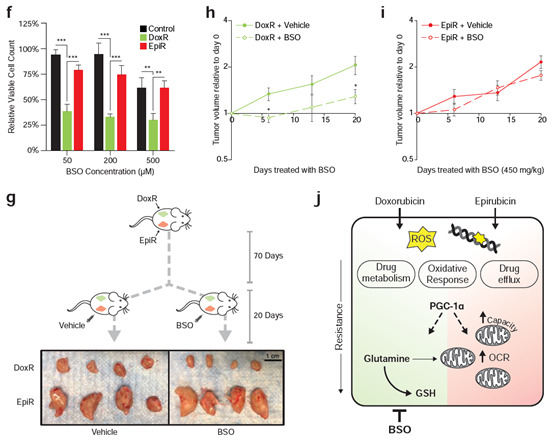
Chemotherapy resistance is a critical barrier in cancer treatment. Metabolic adaptations have been shown to fuel therapy resistance; however, little is known regarding the generality of these changes and whether specific therapies elicit unique metabolic alterations. Using a combination of metabolomics, transcriptomics, and functional genomics, we show that two anthracyclines, doxorubicin and epirubicin, elicit distinct primary metabolic vulnerabilities in human breast cancer cells. Doxorubicin-resistant cells rely on glutamine to drive oxidative phosphorylation and glutathione synthesis, while epirubicin-resistant cells display markedly increased bioenergetic capacity and mitochondrial ATP production. The dependence on these distinct metabolic adaptations is revealed by the increased sensitivity of doxorubicin-resistant cells and tumor xenografts to buthionine sulfoximine (BSO), a drug that interferes with glutathione synthesis, compared with epirubicin-resistant counterparts that are more sensitive to the biguanide phenformin. Overall, our work reveals that metabolic adaptations can vary with therapeutics and that these metabolic dependencies can be exploited as a targeted approach to treat chemotherapy-resistant breast cancer.
化疗耐药是癌症治疗中的一个关键障碍。代谢适应性已被证明为耐药性提供动力;然而,对于这些变化的普遍性以及特定治疗方法是否会引起独特的代谢改变,人们知之甚少。我们使用代谢组学、转录组学和功能基因组学的组合,表明两种蒽环类抗生素,阿霉素和表阿霉素,在人乳腺癌细胞中引起不同的主要代谢脆弱性。阿霉素耐药细胞依赖谷氨酰胺来驱动氧化磷酸化和谷胱甘肽合成,而表阿霉素耐药细胞表现出明显增加的生物能量能力和线粒体 ATP 产生。与对谷氨酰胺合成抑制剂丁硫氨酸亚砜(BSO)更敏感的表阿霉素耐药细胞相比,这种对这些不同代谢适应性的依赖性揭示了阿霉素耐药细胞和肿瘤异种移植物的敏感性增加,BSO 是一种干扰谷胱甘肽合成的药物。总的来说,我们的工作表明,代谢适应性可能因治疗方法而异,并且这些代谢依赖性可以被利用作为治疗化疗耐药性乳腺癌的靶向方法。