Economics Department, University of Western Australia Business School, Perth, Australia.
Economics and Social Sciences, BRAC University, Dhaka, Bangladesh.
PLoS One. 2021 Jun 28;16(6):e0253348. doi: 10.1371/journal.pone.0253348. eCollection 2021.
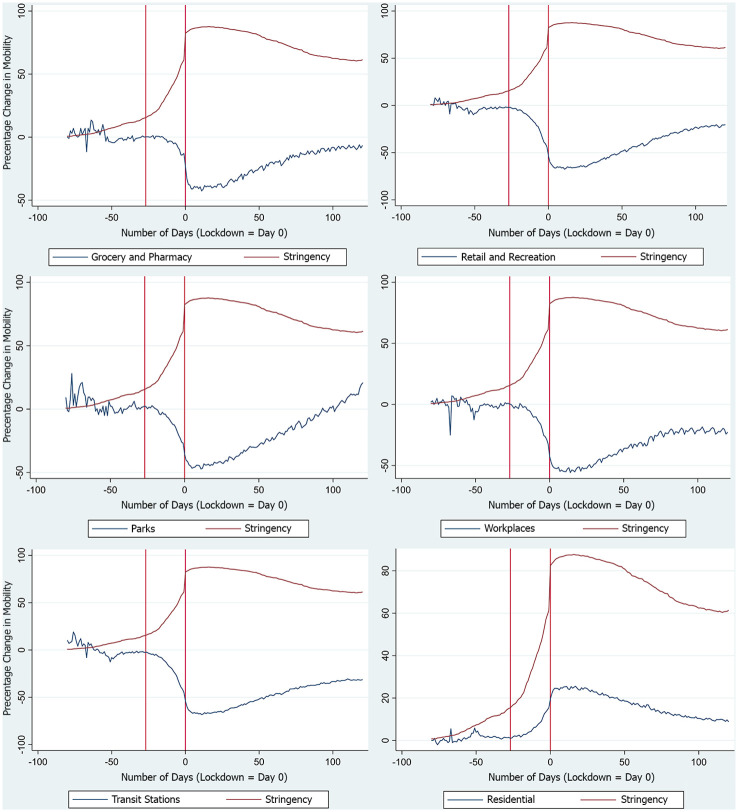
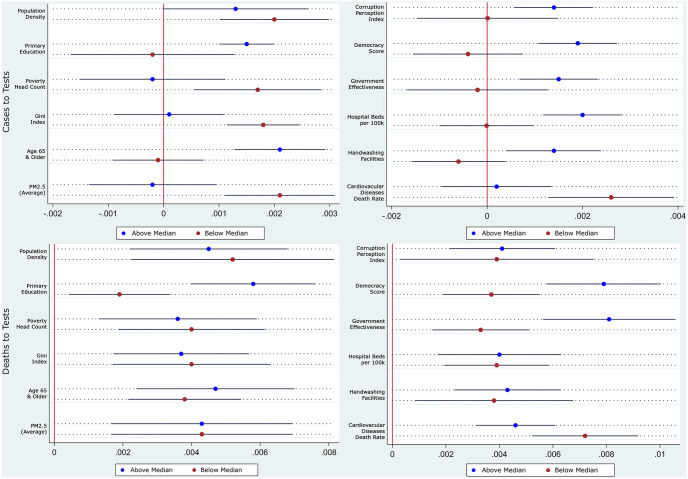
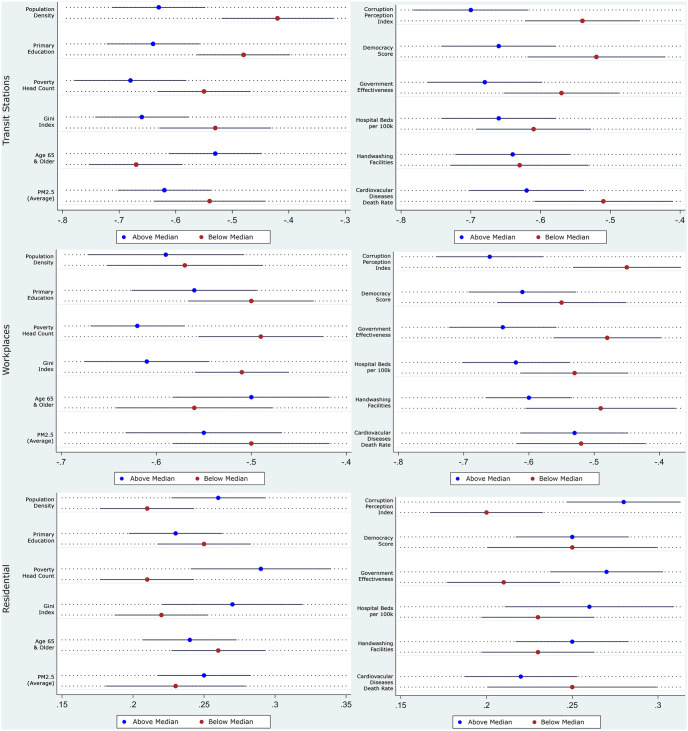
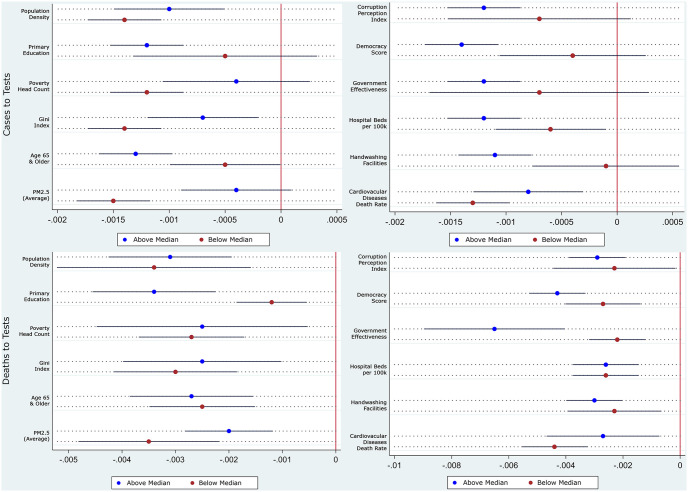
Countries across the world responded to the COVID-19 pandemic with what might well be the set of biggest state-led mobility and activity restrictions in the history of humankind. But how effective were these measures across countries? Compared to multiple recent studies that document an association between such restrictions and the control of the contagion, we use an instrumental variable approach to estimate the causal effect of these restrictions on mobility, and the growth rate of confirmed cases and deaths during the first wave of the pandemic. Using the level of stringency in the rest of the world to predict the level of stringency of the restriction measures in a country, we show while stricter contemporaneous measures affected mobility, stringency in seven to fourteen days mattered most for containing the contagion. Heterogeneity analysis, by various institutional inequalities, reveals that even though the restrictions reduced mobility more in relatively less-developed countries, the causal effect of a reduction in mobility was higher in more developed countries. We propose several explanations. Our results highlight the need to complement mobility and activity restrictions with other health and information measures, especially in less-developed countries, to combat the COVID-19 pandemic effectively.
世界各国对 COVID-19 大流行的反应,可能是人类历史上规模最大的国家主导的流动性和活动限制措施。但这些措施在各国的效果如何?与多项最近的研究记录了这些限制措施与控制传染病之间的关联相比,我们使用工具变量方法来估计这些限制措施对流动性以及大流行第一波期间确诊病例和死亡人数增长率的因果影响。利用世界其他地区的严格程度来预测一个国家限制措施的严格程度,我们表明,虽然更严格的同期措施会影响流动性,但 7 至 14 天的严格程度对遏制传染病最为重要。通过各种制度不平等的异质性分析表明,尽管限制措施使流动性在相对欠发达国家下降幅度更大,但在较发达国家,流动性下降的因果效应更高。我们提出了几种解释。我们的研究结果强调需要将流动性和活动限制措施与其他卫生和信息措施相结合,尤其是在欠发达国家,以有效应对 COVID-19 大流行。