David Braley Centre for Antibiotic Discovery, McMaster University, Hamilton, Ontario, Canada; M.G. DeGroote Institute for Infectious Disease Research, McMaster University, Hamilton, Ontario, Canada; Department of Biochemistry and Biomedical Sciences, McMaster University, Hamilton, Ontario, Canada.
Biological Chemistry Group, Institute of Biology Leiden, Leiden University, Leiden, The Netherlands.
J Biol Chem. 2021 Aug;297(2):100918. doi: 10.1016/j.jbc.2021.100918. Epub 2021 Jun 25.
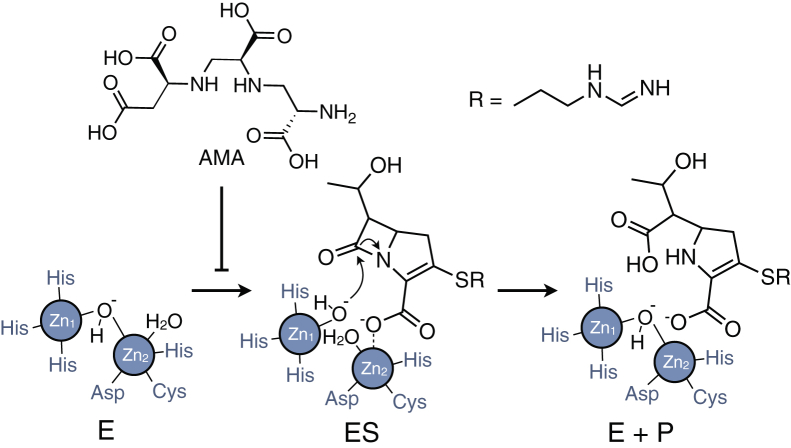
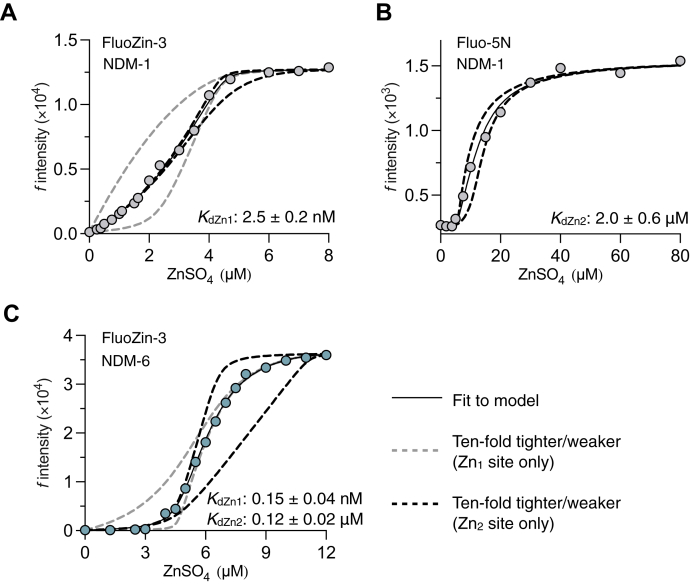
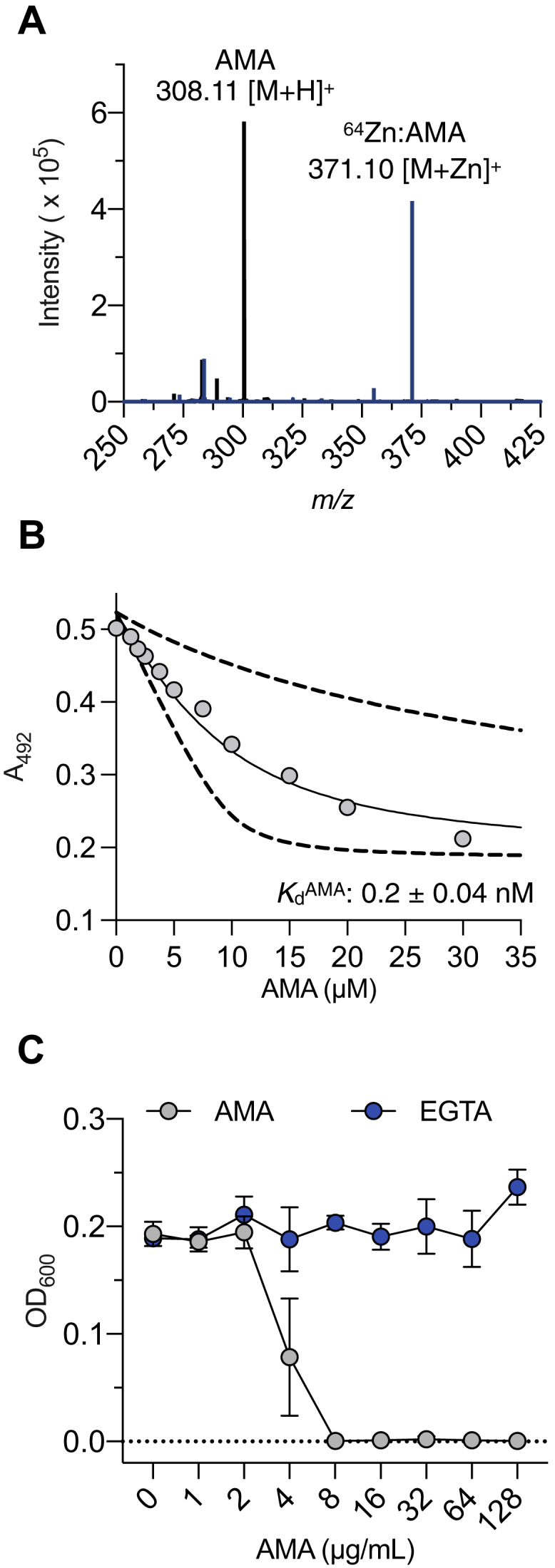
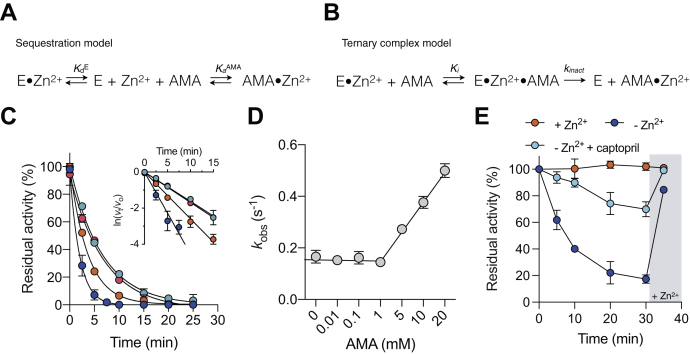
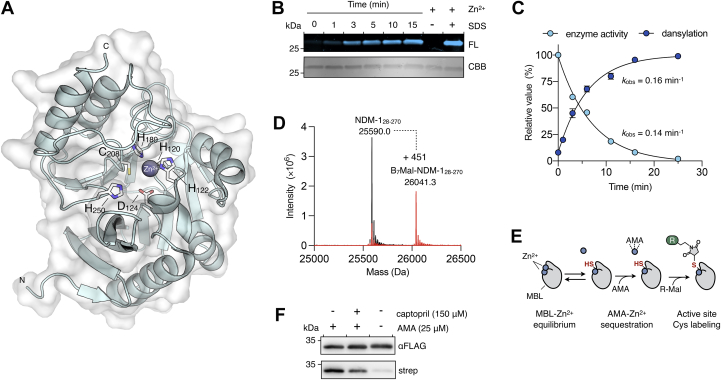
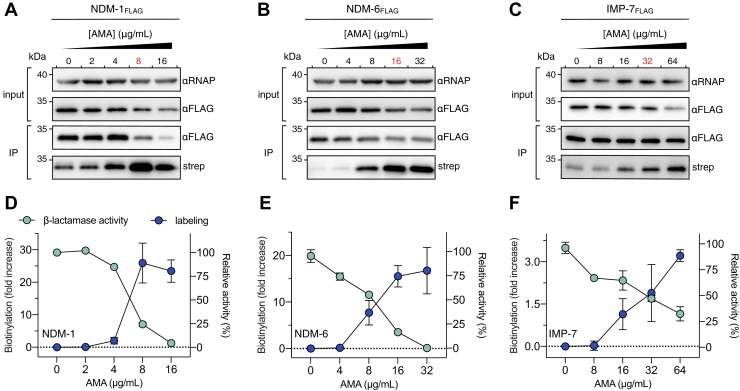
Class B metallo-β-lactamases (MBLs) are Zn-dependent enzymes that catalyze the hydrolysis of β-lactam antibiotics to confer resistance in bacteria. Several problematic groups of MBLs belong to subclass B1, including the binuclear New Delhi MBL (NDM), Verona integrin-encoded MBL, and imipenemase-type enzymes, which are responsible for widespread antibiotic resistance. Aspergillomarasmine A (AMA) is a natural aminopolycarboxylic acid that functions as an effective inhibitor of class B1 MBLs. The precise mechanism of action of AMA is not thoroughly understood, but it is known to inactivate MBLs by removing one catalytic Zn cofactor. We investigated the kinetics of MBL inactivation in detail and report that AMA is a selective Zn scavenger that indirectly inactivates NDM-1 by encouraging the dissociation of a metal cofactor. To further investigate the mechanism in living bacteria, we used an active site probe and showed that AMA causes the loss of a Zn ion from a low-affinity binding site of NDM-1. Zn-depleted NDM-1 is rapidly degraded, contributing to the efficacy of AMA as a β-lactam potentiator. However, MBLs with higher metal affinity and stability such as NDM-6 and imipenemase-7 exhibit greater tolerance to AMA. These results indicate that the mechanism of AMA is broadly applicable to diverse Zn chelators and highlight that leveraging Zn availability can influence the survival of MBL-producing bacteria when they are exposed to β-lactam antibiotics.
B 类金属β-内酰胺酶(MBLs)是 Zn 依赖性酶,可催化β-内酰胺抗生素水解,从而使细菌产生耐药性。属于 B1 亚类的几类有问题的 MBL 包括双核新德里 MBL(NDM)、 Verona 整合素编码 MBL 和亚胺培南酶型,它们是广泛耐药的原因。 Aspergillomarasmine A(AMA)是一种天然的多氨基多羧酸,可作为 B1 类 MBL 的有效抑制剂。AMA 的精确作用机制尚不清楚,但已知它通过去除一个催化 Zn 辅助因子来使 MBL 失活。我们详细研究了 MBL 失活动力学,并报告称 AMA 是一种选择性的 Zn 清除剂,通过促进金属辅助因子的解离来间接使 NDM-1 失活。为了进一步研究活细菌中的机制,我们使用了活性位点探针,并表明 AMA 导致 NDM-1 的一个 Zn 离子从低亲和力结合位点丢失。耗尽 Zn 的 NDM-1 迅速降解,这有助于 AMA 作为β-内酰胺增效剂的功效。然而,具有更高金属亲和力和稳定性的 MBL,如 NDM-6 和亚胺培南酶-7,对 AMA 的耐受性更强。这些结果表明,AMA 的机制广泛适用于不同的 Zn 螯合剂,并强调了当产 MBL 细菌暴露于β-内酰胺抗生素时,利用 Zn 可用性可以影响它们的存活。