Sztandarski Patryk, Marchewka Joanna, Wojciechowski Franciszek, Riber Anja B, Gunnarsson Stefan, Horbańczuk Jarosław Olav
Institute of Genetics and Animal Biotechnology, Polish Academy of Sciences, ul. Postępu 36A, Jastrzębiec, 05-552 Magdalenka, Poland.
Institute of Genetics and Animal Biotechnology, Polish Academy of Sciences, ul. Postępu 36A, Jastrzębiec, 05-552 Magdalenka, Poland.
Poult Sci. 2021 Aug;100(8):101265. doi: 10.1016/j.psj.2021.101265. Epub 2021 May 19.
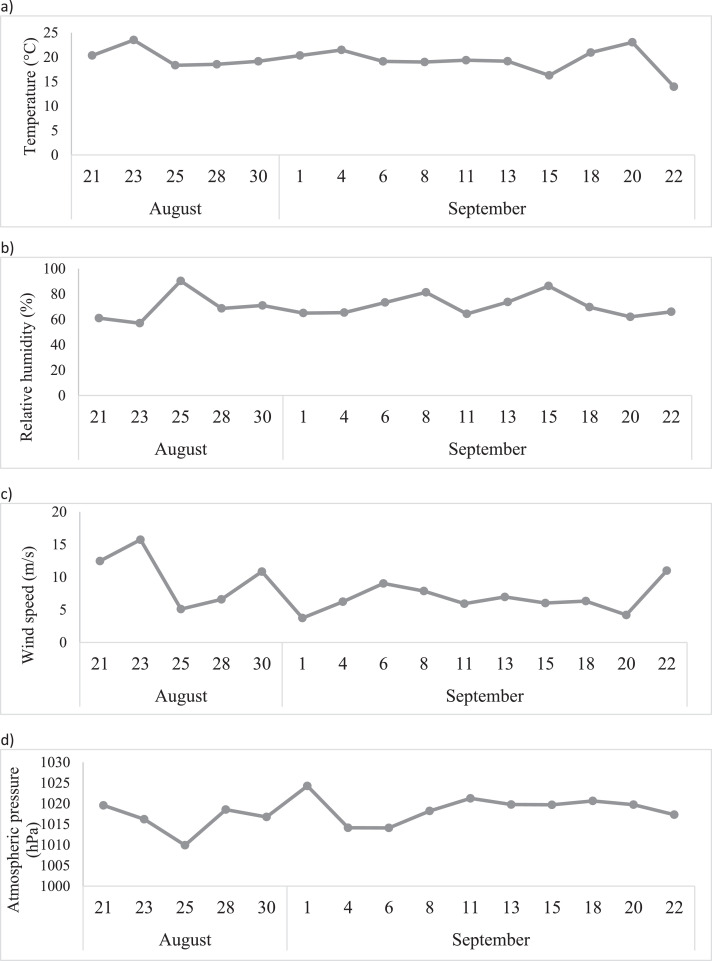
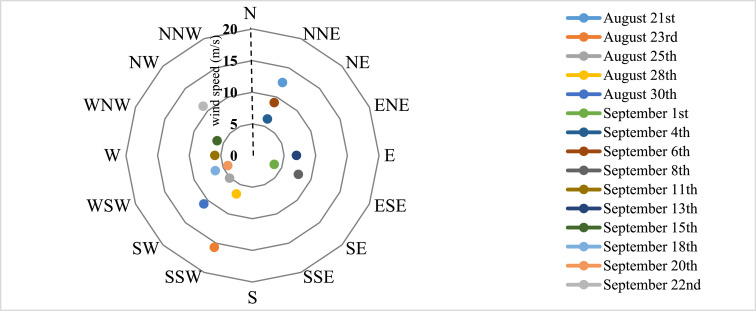
Ranging area use by domestic poultry is not always optimal and differences in it exist on the levels of breed, flock and individual bird. Outdoor shelters are usually not protective for all weather parameters and may not fulfil a protective role to all birds within the flock all time, if individuals are sensitive to different weather conditions. The aim of this study was to investigate associations between different weather parameters and the use of the range by individual Green-legged Partridge and Sasso C44 chickens. In August 2018, 60 birds per genetic strain were housed in groups of 10 from wks 5 to 10, under conditions exceeding minimal EU requirements of organic meat chicken production. Birds in each pen had access to an outdoor range that was video-recorded during the experiment to obtain frequencies of individual birds' use of the ranges. Weather data were collected each minute throughout the whole experiment by an automatic weather station. In each pen, birds tagged individually with a laminated color tag, had access to an outdoor range that was video-recorded during the experiment. Frequencies of individual birds' use of the ranges were manually obtained from the recordings. Univariate and multivariate linear regression models were used to investigate the associations between the variables. The results showed significant associations between weather parameters and range use for one third of Green-legged Partridge and Sasso chickens (n = 21 in both breeds). Between breeds, range use associations with different weather parameters were identified. Negative associations with relative humidity occurred most frequently in Green-legged Partridges (n = 8; R from 0.1 to 0.17), while positive associations with atmospheric pressure (n = 7; R from 0.09 to 0.17) were most common in Sasso chickens. Further investigations into the reasons behind individual sensitivity of meat-purpose chickens to specific weather conditions would increase the understanding of their preferences and needs, which over time will improve animal welfare.
家禽的活动区域使用情况并非总是最佳,在品种、鸡群和个体层面都存在差异。室外庇护所通常无法抵御所有天气因素,而且如果个体对不同天气条件敏感,可能无法一直对鸡群中的所有鸡起到保护作用。本研究的目的是调查不同天气参数与绿脚鹧鸪和萨索C44鸡个体对活动区域使用之间的关联。2018年8月,每个遗传品系60只鸡,从第5周龄到第10周龄以每组10只的方式饲养,饲养条件超过欧盟有机肉鸡生产的最低要求。每个鸡舍中的鸡可以进入室外活动区域,实验期间对该区域进行视频记录,以获取个体鸡使用活动区域的频率。在整个实验过程中,自动气象站每分钟收集一次天气数据。在每个鸡舍中,用层压彩色标签单独标记的鸡可以进入室外活动区域,实验期间对该区域进行视频记录。个体鸡使用活动区域的频率是从记录中手动获取的。使用单变量和多变量线性回归模型来研究变量之间的关联。结果显示,三分之一的绿脚鹧鸪和萨索鸡(两个品种各n = 21只)的天气参数与活动区域使用之间存在显著关联。在不同品种之间,确定了活动区域使用与不同天气参数的关联。绿脚鹧鸪中与相对湿度的负相关最为常见(n = 8;R为0.1至0.17),而萨索鸡中与大气压力的正相关最为常见(n = 7;R为0.09至0.17)。进一步研究肉用鸡个体对特定天气条件敏感的原因,将增进对它们偏好和需求的理解,随着时间的推移将改善动物福利。