Ren Li-Xin, Qi Jin-Chun, Zhao An-Ning, Shi Bei, Zhang Hong, Wang Dan-Dan, Yang Zhan
Department of Urology, The Second Hospital of Hebei Medical University, 215 Heping West Road, Shijiazhuang, 050000, China.
Cancer Cell Int. 2021 Jun 28;21(1):323. doi: 10.1186/s12935-021-02020-9.
The dysfunction of myc-related zinc finger protein (MAZ) has been proven to contribute to tumorigenesis and development of multiple cancer types. However, the biological roles and clinical significance of MAZ in clear cell renal carcinoma (ccRCC) remain unclear.
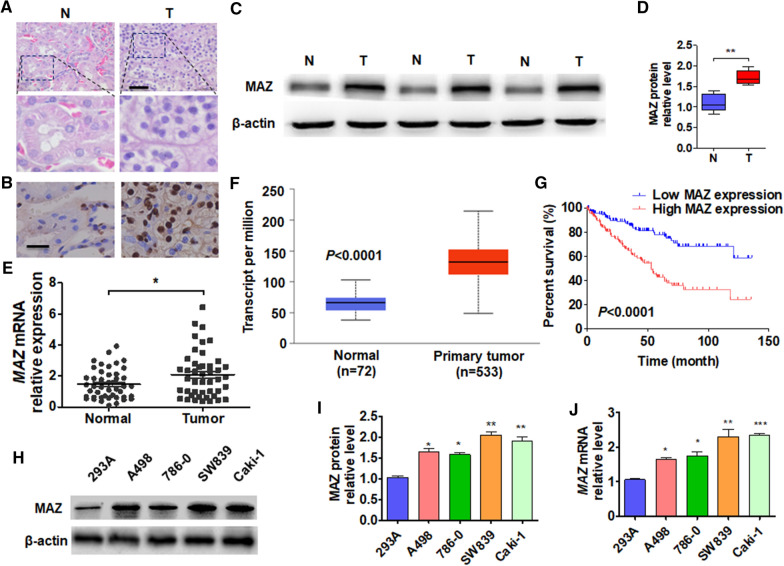
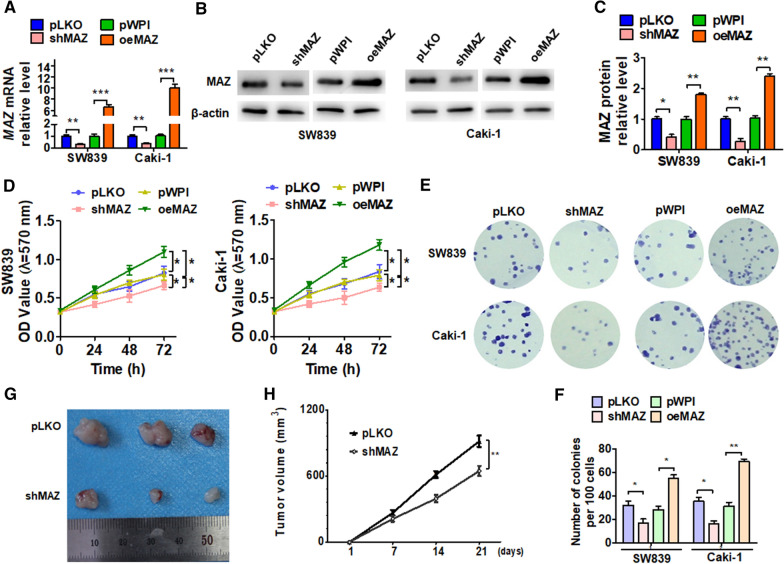
MAZ expression was examined in ccRCC and normal kidney tissue by quantitative real-time PCR and Western blot. Statistical analysis was used to evaluate the clinical correlation between MAZ expression and clinicopathological characteristics to determine the relationship between MAZ expression and the survival of ccRCC patients. The biological roles of MAZ in cells were investigated in vitro using MTT and colony assays. Luciferase reporter assays and chromatin immunoprecipitation (ChIP) were used to investigate the relationship between MAZ and its potential downstream signaling molecules.
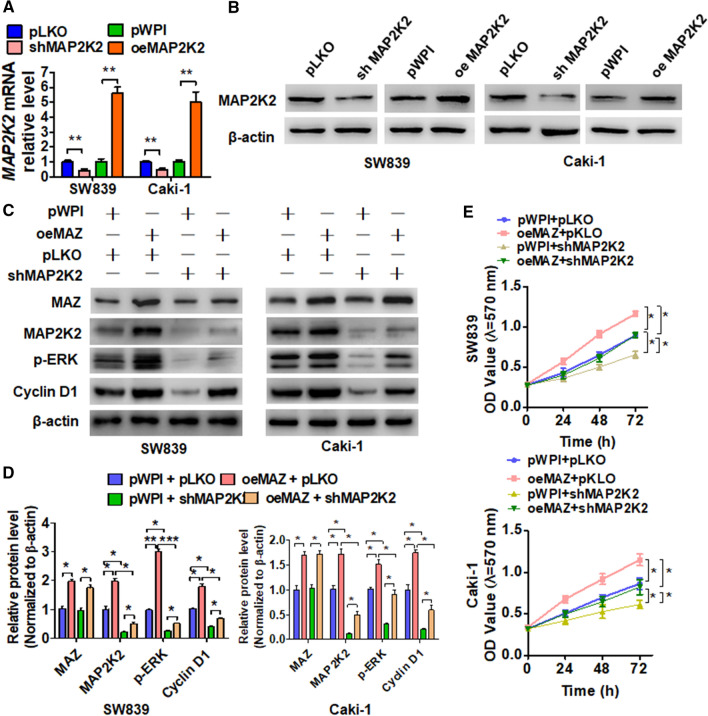
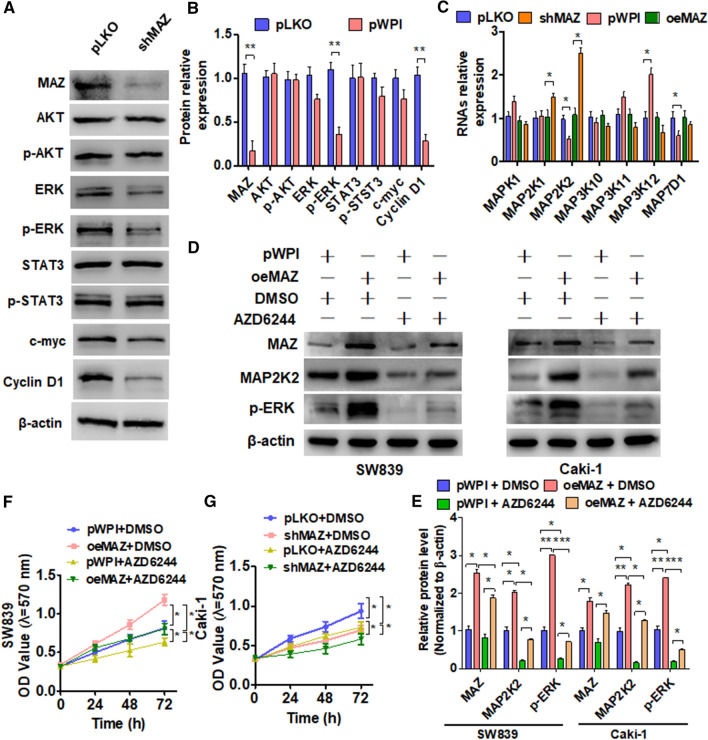
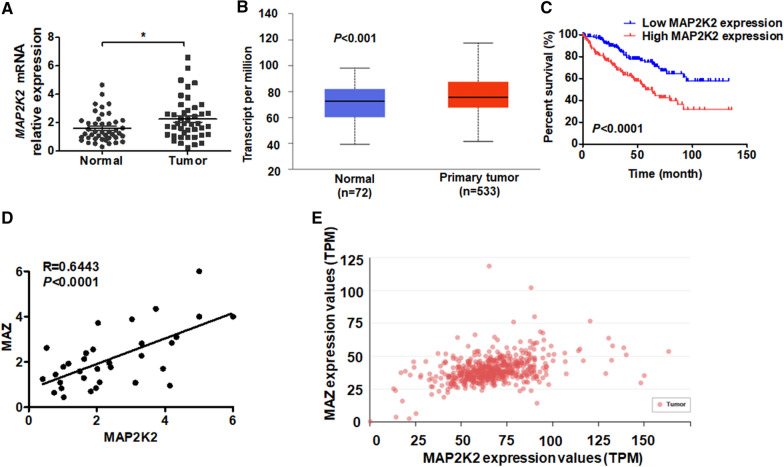
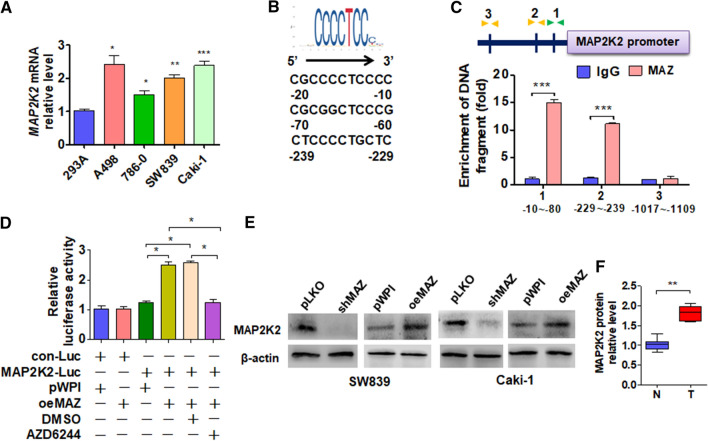
MAZ expression is elevated in ccRCC tissues, and higher levels of MAZ were correlated with poor survival of patients with ccRCC. MAZ upregulation elevates the proliferation ability of ccRCC cells in vitro, whereas silencing MAZ represses this ability. Our results further reveal that MAZ promotes cell growth, which is dependent on ERK signaling. Importantly, we found that MAZ positively regulates MAP2K2 expression in ccRCC cells. Mechanistically, MAZ binds to the MAP2K2 promoter and increases MAP2K2 transcription. Furthermore, MAP2K2 levels were shown to be increased in ccRCC tissues and to be associated with a poor prognosis of ccRCC patients. MAP2K2 upregulation activates the ERK signaling pathway and promotes ccRCC progression.
These results reveal that the MAZ/MAP2K2/ERK signaling axis plays a crucial role in promoting ccRCC progression, which suggests the potential therapeutic utility of MAZ in ccRCC.
已证实与 myc 相关的锌指蛋白(MAZ)功能失调有助于多种癌症类型的发生和发展。然而,MAZ 在透明细胞肾细胞癌(ccRCC)中的生物学作用和临床意义仍不清楚。
通过定量实时 PCR 和蛋白质免疫印迹法检测 ccRCC 和正常肾组织中 MAZ 的表达。采用统计学分析评估 MAZ 表达与临床病理特征之间的临床相关性,以确定 MAZ 表达与 ccRCC 患者生存率之间的关系。体外使用 MTT 和集落形成试验研究 MAZ 在细胞中的生物学作用。荧光素酶报告基因试验和染色质免疫沉淀(ChIP)试验用于研究 MAZ 与其潜在下游信号分子之间的关系。
MAZ 在 ccRCC 组织中的表达升高,且较高水平的 MAZ 与 ccRCC 患者的不良生存率相关。MAZ 的上调提高了 ccRCC 细胞在体外的增殖能力,而沉默 MAZ 则抑制了这种能力。我们的结果进一步表明,MAZ 促进细胞生长,这依赖于 ERK 信号通路。重要的是,我们发现 MAZ 在 ccRCC 细胞中正向调节 MAP2K2 的表达。机制上,MAZ 与 MAP2K2 启动子结合并增加 MAP2K2 的转录。此外,MAP2K2 水平在 ccRCC 组织中升高,并与 ccRCC 患者的不良预后相关。MAP2K2 的上调激活 ERK 信号通路并促进 ccRCC 的进展。
这些结果表明,MAZ/MAP2K2/ERK 信号轴在促进 ccRCC 进展中起关键作用,这提示了 MAZ 在 ccRCC 中的潜在治疗价值。