Chen Cai, D'Alessandro Enrico, Murani Eduard, Zheng Yao, Giosa Domenico, Yang Naisu, Wang Xiaoyan, Gao Bo, Li Kui, Wimmers Klaus, Song Chengyi
College of Animal Science & Technology, Yangzhou University, 225009, Yangzhou, Jiangsu, China.
Department of Veterinary Science, University of Messina, 98168, Messina, Italy.
Mob DNA. 2021 Jun 28;12(1):17. doi: 10.1186/s13100-021-00246-y.
Molecular markers based on retrotransposon insertion polymorphisms (RIPs) have been developed and are widely used in plants and animals. Short interspersed nuclear elements (SINEs) exert wide impacts on gene activity and even on phenotypes. However, SINE RIP profiles in livestock remain largely unknown, and not be revealed in pigs.
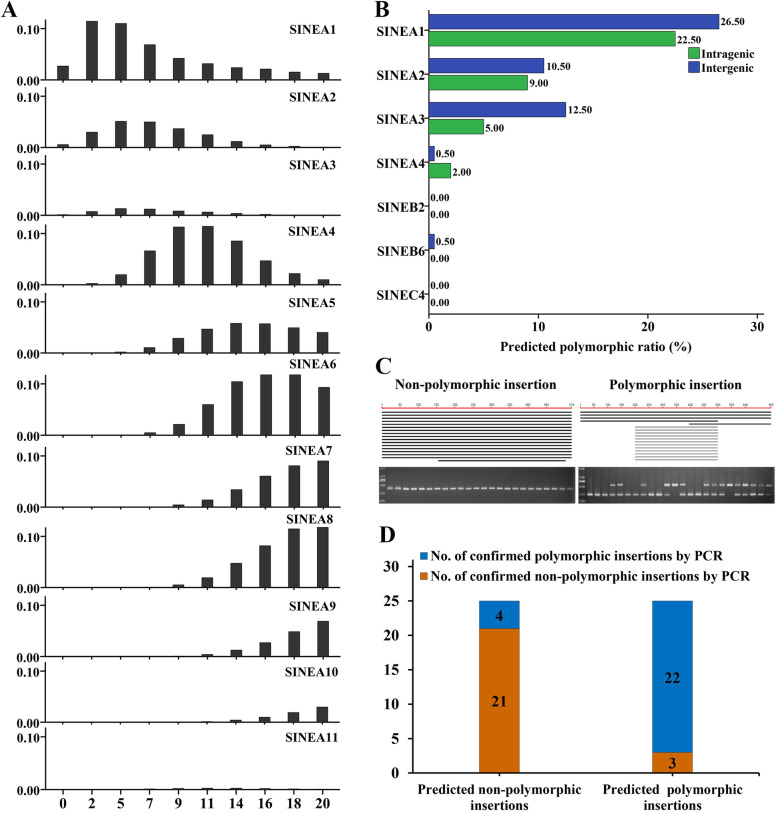
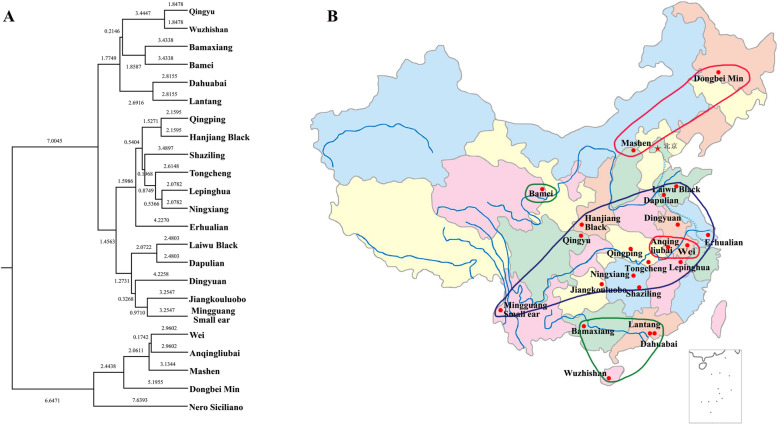
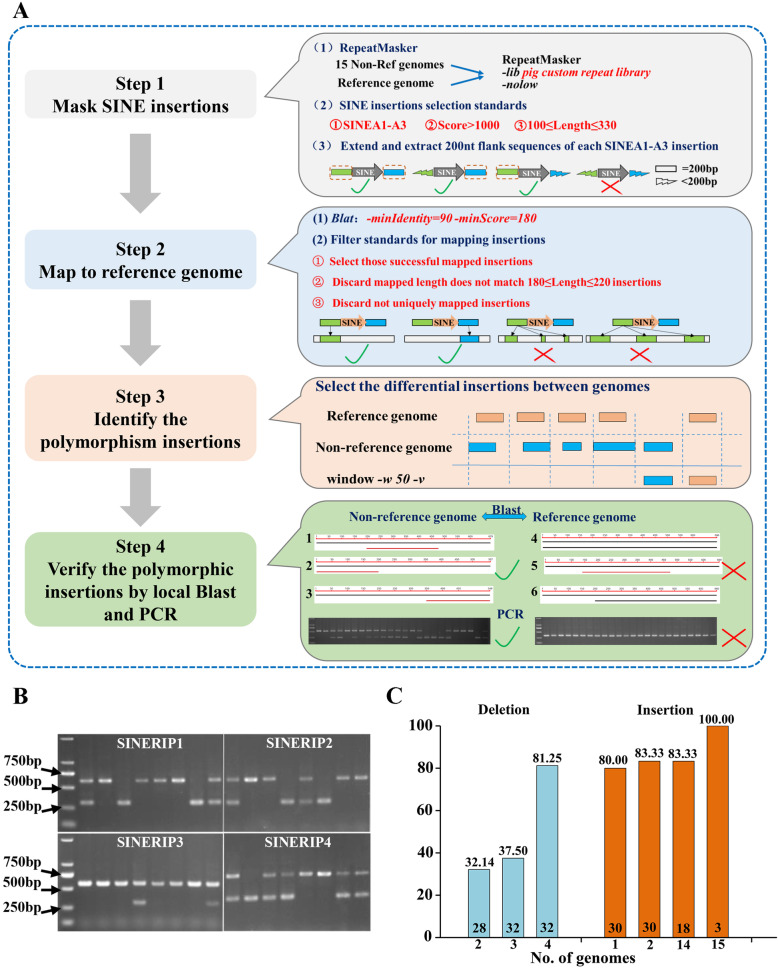
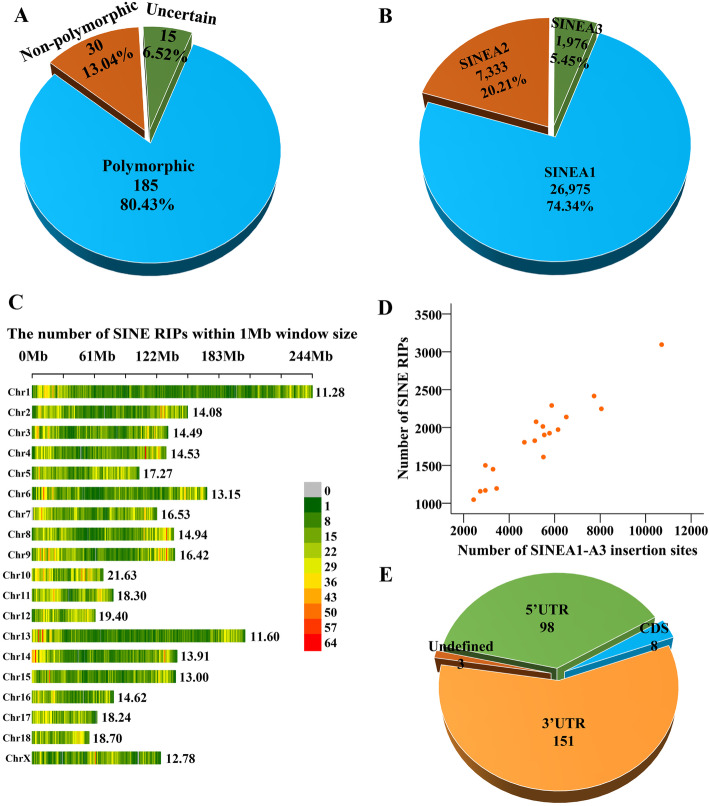
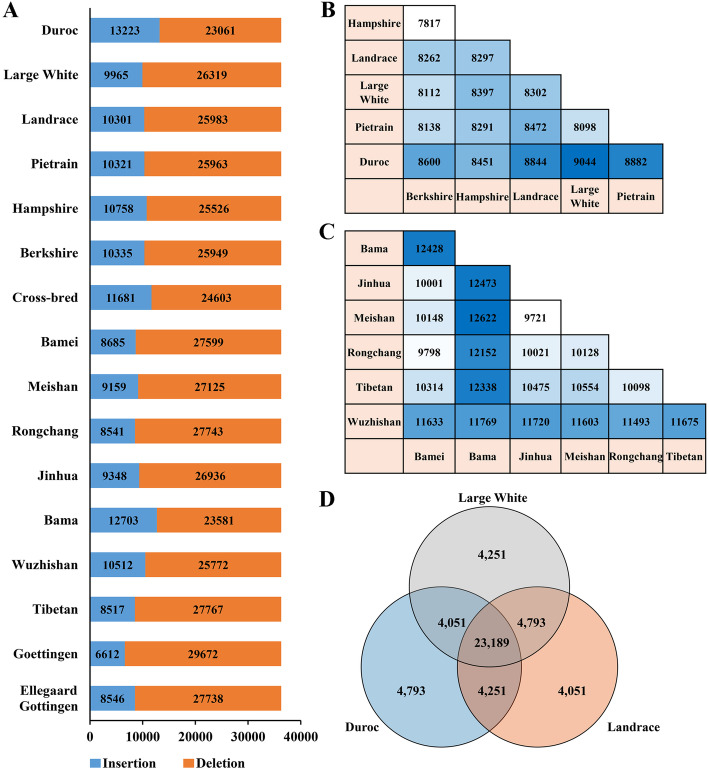
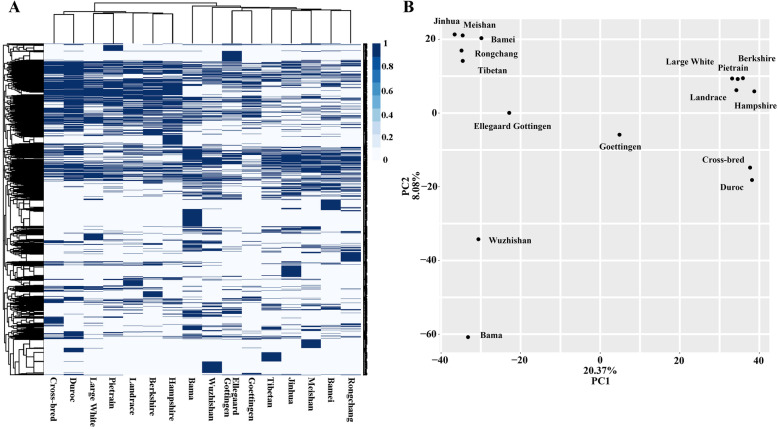
Our data revealed that SINEA1 displayed the most polymorphic insertions (22.5 % intragenic and 26.5 % intergenic), followed by SINEA2 (10.5 % intragenic and 9 % intergenic) and SINEA3 (12.5 % intragenic and 5.0 % intergenic). We developed a genome-wide SINE RIP mining protocol and obtained a large number of SINE RIPs (36,284), with over 80 % accuracy and an even distribution in chromosomes (14.5/Mb), and 74.34 % of SINE RIPs generated by SINEA1 element. Over 65 % of pig SINE RIPs overlap with genes, most of them (> 95 %) are in introns. Overall, about one forth (23.09 %) of the total genes contain SINE RIPs. Significant biases of SINE RIPs in the transcripts of protein coding genes were observed. Nearly half of the RIPs are common in these pig breeds. Sixteen SINE RIPs were applied for population genetic analysis in 23 pig breeds, the phylogeny tree and cluster analysis were generally consistent with the geographical distributions of native pig breeds in China.
Our analysis revealed that SINEA1-3 elements, particularly SINEA1, are high polymorphic across different pig breeds, and generate large-scale structural variations in the pig genomes. And over 35,000 SINE RIP markers were obtained. These data indicate that young SINE elements play important roles in creating new genetic variations and shaping the evolution of pig genome, and also provide strong evidences to support the great potential of SINE RIPs as genetic markers, which can be used for population genetic analysis and quantitative trait locus (QTL) mapping in pig.
基于逆转座子插入多态性(RIPs)的分子标记已被开发出来,并广泛应用于植物和动物中。短散在核元件(SINEs)对基因活性甚至表型都有广泛影响。然而,家畜中的SINE RIP图谱仍 largely未知,在猪中尚未得到揭示。
我们的数据显示,SINEA1表现出最多的多态性插入(基因内22.5%,基因间26.5%),其次是SINEA2(基因内10.5%,基因间9%)和SINEA3(基因内12.5%,基因间5.0%)。我们开发了一种全基因组SINE RIP挖掘方案,获得了大量的SINE RIPs(36,284个),准确率超过80%,在染色体上分布均匀(14.5/Mb),且74.34%的SINE RIPs由SINEA1元件产生。超过65%的猪SINE RIPs与基因重叠,其中大部分(>95%)位于内含子中。总体而言,约四分之一(23.09%)的基因含有SINE RIPs。在蛋白质编码基因的转录本中观察到SINE RIPs存在显著偏差。近一半的RIPs在这些猪品种中是常见的。16个SINE RIPs被应用于23个猪品种的群体遗传分析,系统发育树和聚类分析总体上与中国地方猪品种的地理分布一致。
我们的分析表明,SINEA1 - 3元件,特别是SINEA1,在不同猪品种中具有高度多态性,并在猪基因组中产生大规模结构变异。并且获得了超过35,000个SINE RIP标记。这些数据表明,年轻的SINE元件在创造新的遗传变异和塑造猪基因组进化中发挥重要作用,也为支持SINE RIPs作为遗传标记的巨大潜力提供了有力证据,可用于猪的群体遗传分析和数量性状位点(QTL)定位。