Rehman Yasir, Saini Amreen, Huang Sarina, Sood Emma, Gill Ravneet, Yanikomeroglu Sezgi
Health Research Methodology, McMaster University, Hamilton, Ontario, Canada.
Michael DeGroote Institute of Pain and Research Center, McMaster University, Hamilton, Ontario, Canada.
AIMS Neurosci. 2021 May 13;8(3):414-434. doi: 10.3934/Neuroscience.2021022. eCollection 2021.
Existing reviews exploring cannabis effectiveness have numerous limitations including narrow search strategies. We systematically explored cannabis effects on PTSD symptoms, quality of life (QOL), and return to work (RTW). We also investigated harm outcomes such as adverse effects and dropouts due to adverse effects, inefficacy, and all-cause dropout rates.
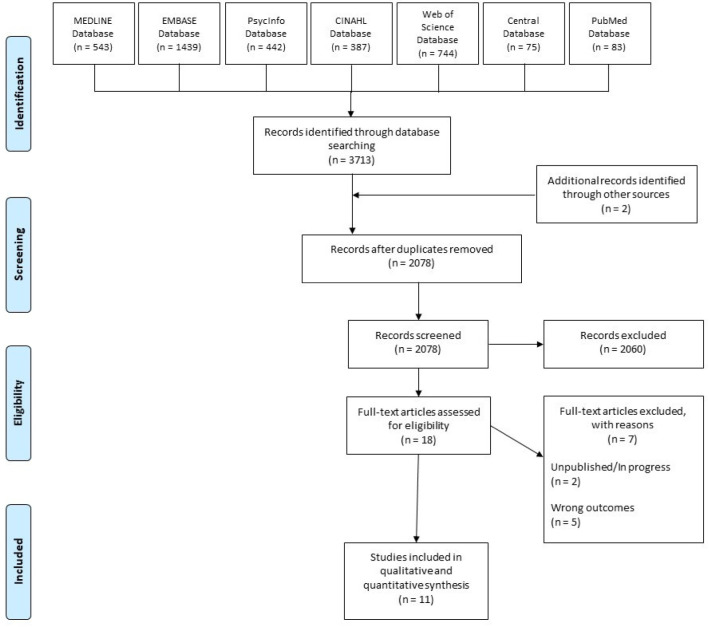
Our search in MEDLINE, EMBASE, PsycInfo, CINAHL, Web of Science, CENTRAL, and PubMed databases, yielded 1 eligible RCT and 10 observational studies (n = 4672). Risk of bias (RoB) was assessed with the Cochrane risk of bias tool and ROBINS-I.
Evidence from the included studies was mainly based on non-randomized studies with no comparators. Results from unpooled, high RoB studies showed that cannabis was associated with a reduction in overall PTSD symptoms and improved QOL. Dry mouth, headaches, and psychoactive effects such as agitation and euphoria were the commonly reported adverse effects. In most studies, cannabis was well tolerated, but small proportions of patients experienced a worsening of PTSD symptoms.
Evidence in the current study primarily stems from low quality and high RoB observational studies. Further RCTs investigating cannabis effects on PTSD treatment should be conducted with larger sample sizes and explore a broader range of patient-important outcomes.
现有的关于大麻有效性的综述存在诸多局限性,包括检索策略狭窄。我们系统地探讨了大麻对创伤后应激障碍(PTSD)症状、生活质量(QOL)和重返工作岗位(RTW)的影响。我们还调查了不良后果,如不良反应以及因不良反应、无效和全因退出率导致的退出情况。
我们在MEDLINE、EMBASE、PsycInfo、CINAHL、Web of Science、CENTRAL和PubMed数据库中进行检索,得到1项符合条件的随机对照试验(RCT)和10项观察性研究(n = 4672)。使用Cochrane偏倚风险工具和ROBINS-I评估偏倚风险(RoB)。
纳入研究的证据主要基于无对照的非随机研究。未合并的高RoB研究结果表明,大麻与总体PTSD症状减轻和生活质量改善有关。口干、头痛以及如激动和欣快感等精神活性作用是常见的不良反应。在大多数研究中,大麻耐受性良好,但一小部分患者的PTSD症状恶化。
本研究中的证据主要来自低质量和高RoB的观察性研究。应开展进一步的RCT,以更大的样本量研究大麻对PTSD治疗的影响,并探索更广泛的对患者重要的结局。