Chiba Toshinori, Kanazawa Tetsufumi, Koizumi Ai, Ide Kentarou, Taschereau-Dumouchel Vincent, Boku Shuken, Hishimoto Akitoyo, Shirakawa Miyako, Sora Ichiro, Lau Hakwan, Yoneda Hiroshi, Kawato Mitsuo
Computational Neuroscience Laboratories, Department of Decoded Neurofeedback, Advanced Telecommunications Research Institute International, Kyoto, Japan.
Department of Psychiatry, Graduate School of Medicine, Kobe University, Kobe, Japan.
Front Hum Neurosci. 2019 Jul 17;13:233. doi: 10.3389/fnhum.2019.00233. eCollection 2019.
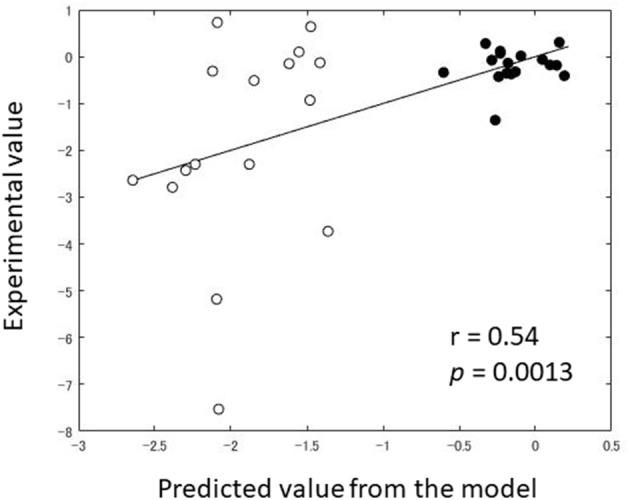
Post-traumatic stress disorder (PTSD) is a neuropsychiatric affective disorder that can develop after traumatic life-events. Exposure-based therapy is currently one of the most effective treatments for PTSD. However, exposure to traumatic stimuli is so aversive that a significant number of patients drop-out of therapy during the course of treatment. Among various attempts to develop novel therapies that bypass such aversiveness, neurofeedback appears promising. With neurofeedback, patients can unconsciously self-regulate brain activity via real-time monitoring and feedback of the EEG or fMRI signals. With conventional neurofeedback methods, however, it is difficult to induce neural representation related to specific trauma because the feedback is based on the neural signals averaged within specific brain areas. To overcome this difficulty, novel neurofeedback approaches such as Decoded Neurofeedback (DecNef) might prove helpful. Instead of the average BOLD signals, DecNef allows patients to implicitly regulate multivariate voxel patterns of the BOLD signals related with feared stimuli. As such, DecNef effects are postulated to derive either from exposure or counter-conditioning, or some combination of both. Although the exact mechanism is not yet fully understood. DecNef has been successfully applied to reduce fear responses induced either by fear-conditioned or phobic stimuli among non-clinical participants. Follows the Preferred Reporting Items for Systematic Reviews and Meta-Analyses (PRISMA) guidelines, a systematic review was conducted to compare DecNef effect with those of conventional EEG/fMRI-based neurofeedback on PTSD amelioration. To elucidate the possible mechanisms of DecNef on fear reduction, we mathematically modeled the effects of exposure-based and counter conditioning separately and applied it to the data obtained from past DecNef studies. Finally, we conducted DecNef on four PTSD patients. Here, we review recent advances in application of neurofeedback to PTSD treatments, including the DecNef. This review is intended to be informative for neuroscientists in general as well as practitioners planning to use neurofeedback as a therapeutic strategy for PTSD. Our mathematical model suggested that exposure is the key component for DecNef effects in the past studies. Following DecNef a significant reduction of PTSD severity was observed. This effect was comparable to those reported for conventional neurofeedback approach. Although a much larger number of participants will be needed in future, DecNef could be a promising therapy that bypasses the unpleasantness of conscious exposure associated with conventional therapies for fear related disorders, including PTSD.
创伤后应激障碍(PTSD)是一种神经精神性情感障碍,可在经历创伤性生活事件后发生。基于暴露的疗法是目前治疗PTSD最有效的方法之一。然而,接触创伤性刺激非常令人厌恶,以至于相当多的患者在治疗过程中退出治疗。在各种开发绕过这种厌恶感的新疗法的尝试中,神经反馈似乎很有前景。通过神经反馈,患者可以通过脑电图(EEG)或功能磁共振成像(fMRI)信号的实时监测和反馈来无意识地自我调节大脑活动。然而,使用传统的神经反馈方法,很难诱导与特定创伤相关的神经表征,因为反馈是基于特定脑区内平均的神经信号。为了克服这一困难,诸如解码神经反馈(DecNef)等新的神经反馈方法可能会有所帮助。DecNef允许患者隐式调节与恐惧刺激相关的BOLD信号的多变量体素模式,而不是平均BOLD信号。因此,DecNef的效果被假定来自暴露或反条件作用,或两者的某种组合。尽管确切机制尚未完全了解,但DecNef已成功应用于减少非临床参与者中由恐惧条件或恐惧刺激引起的恐惧反应。遵循系统评价和Meta分析的首选报告项目(PRISMA)指南,进行了一项系统评价,以比较DecNef与传统基于EEG/fMRI的神经反馈对PTSD改善的效果。为了阐明DecNef减轻恐惧的可能机制,我们分别对基于暴露和反条件作用的效果进行了数学建模,并将其应用于过去DecNef研究获得的数据。最后,我们对四名PTSD患者进行了DecNef治疗。在这里,我们回顾了神经反馈在PTSD治疗中的最新应用进展,包括DecNef。这篇综述旨在为一般神经科学家以及计划将神经反馈作为PTSD治疗策略使用的从业者提供信息。我们的数学模型表明,在过去的研究中,暴露是DecNef效果的关键组成部分。接受DecNef治疗后,观察到PTSD严重程度显著降低。这种效果与传统神经反馈方法报告的效果相当。尽管未来需要更多的参与者,但DecNef可能是一种有前途的疗法,可以绕过与包括PTSD在内的恐惧相关疾病的传统疗法相关的有意识暴露的不愉快。