Ding Nan, Zhang Wei, Wang Zhuo, Bai Chong, He Qian, Dong Yuchao, Feng Xiumin, Zhang Jingxi, Gao Shen
Department of Pharmacy, First Affiliated Hospital of Naval Medical University (Changhai Hospital), Shanghai, People's Republic of China.
Department of Pharmacy, Shanghai Pulmonary Hospital, Tongji University School of Medicine, Shanghai, People's Republic of China.
Int J Chron Obstruct Pulmon Dis. 2021 Jun 23;16:1913-1924. doi: 10.2147/COPD.S311178. eCollection 2021.
The present study aimed to investigate the prevalence and associated factors of suboptimal daily peak inspiratory flow (PIF) and technical misuse of three commonly used dry powder inhalers (DPIs) in outpatients with stable chronic airway diseases.
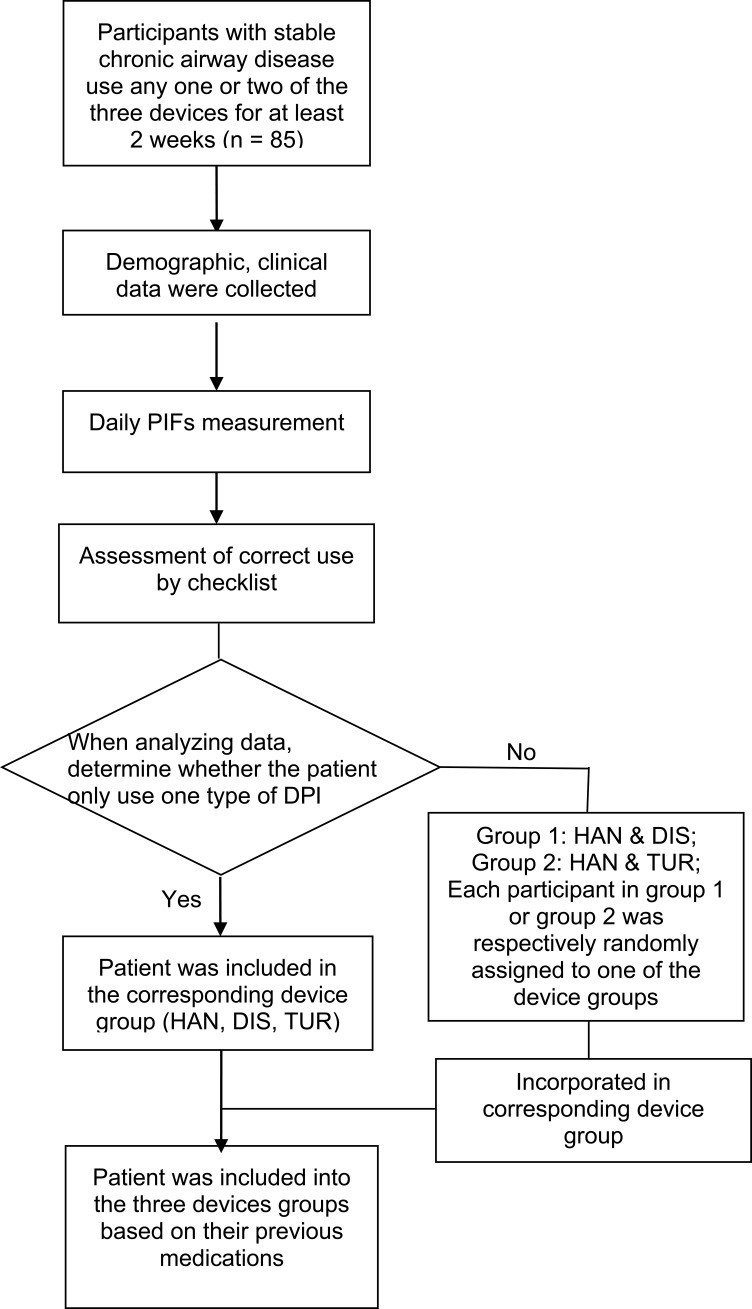
Included in this study were 85 outpatients with stable asthma, chronic obstructive pulmonary disease (COPD), or asthma-COPD Overlap (ACO) and had previously used any of Turbuhaler (TUR), Diskus (DIS), HandiHaler (HAN) between December 2018 and September 2019. The patient's daily PIF against the resistance of a specific DPI and operation technique was investigated by two pharmacists by using In-Check DIAL G16 and a checklist.
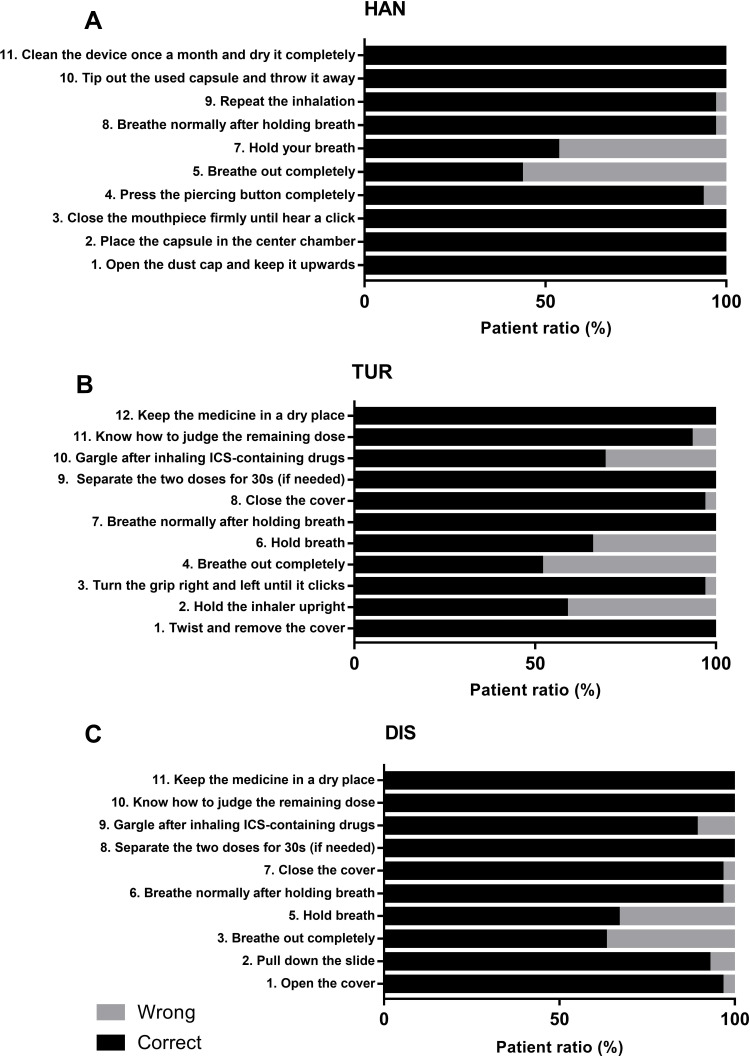
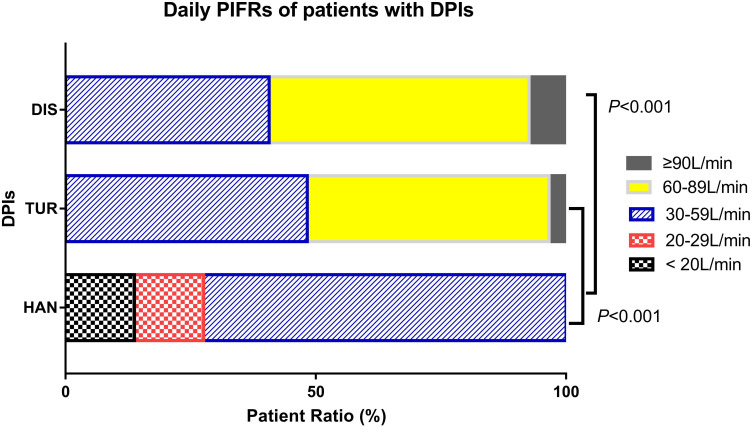
Of the 85 patients, the proportion of patients with a suboptimal daily PIF and technical misuse was 38.8% and 65.9%, respectively. In logistic regression, we observed that the factors that increase the risk for suboptimal daily PIF were age (OR=1.06) and combination with respiratory diseases (OR = 6.59). The factor that decreases the risk for misuse was the higher education level (OR =0.63).
Even if patients have received training at the time of initial prescription, the standardization of the use of DPIs by patients in our center was still unoptimistic. Age and combined with respiratory diseases were associated with suboptimal PIF. Higher education level decreased the incidence of technique misuse.
本研究旨在调查稳定期慢性气道疾病门诊患者每日最佳吸气峰流速(PIF)未达标准的患病率及相关因素,以及三种常用干粉吸入器(DPI)的技术误用情况。
本研究纳入了85例稳定期哮喘、慢性阻塞性肺疾病(COPD)或哮喘-COPD重叠综合征(ACO)门诊患者,这些患者在2018年12月至2019年9月期间曾使用过都保(TUR)、准纳器(DIS)、易纳器(HAN)中的任何一种。两名药剂师使用In-Check DIAL G16和一份检查表,对患者针对特定DPI阻力的每日PIF及操作技术进行了调查。
85例患者中,每日PIF未达标准和技术误用的患者比例分别为38.8%和65.9%。在逻辑回归分析中,我们观察到增加每日PIF未达标准风险的因素为年龄(OR = 1.06)和合并呼吸系统疾病(OR = 6.59)。降低误用风险的因素是较高的教育水平(OR = 0.63)。
即使患者在初始处方时接受过培训,本中心患者使用DPI的标准化情况仍不容乐观。年龄和合并呼吸系统疾病与PIF未达标准有关。较高的教育水平降低了技术误用的发生率。