Zhai Tianye, Salmeron Betty Jo, Gu Hong, Adinoff Bryon, Stein Elliot A, Yang Yihong
Neuroimaging Research Branch, Intramural Research Program, National Institute on Drug Abuse, National Institutes of Health, Baltimore, MD 21224, USA.
Veterans Affairs North Texas Health Care System, Dallas, TX 75216, USA.
Brain Commun. 2021 Jun 2;3(2):fcab120. doi: 10.1093/braincomms/fcab120. eCollection 2021.
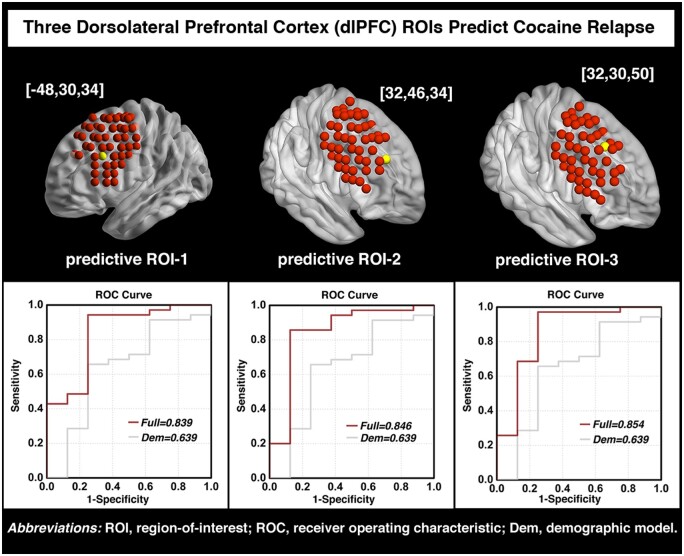
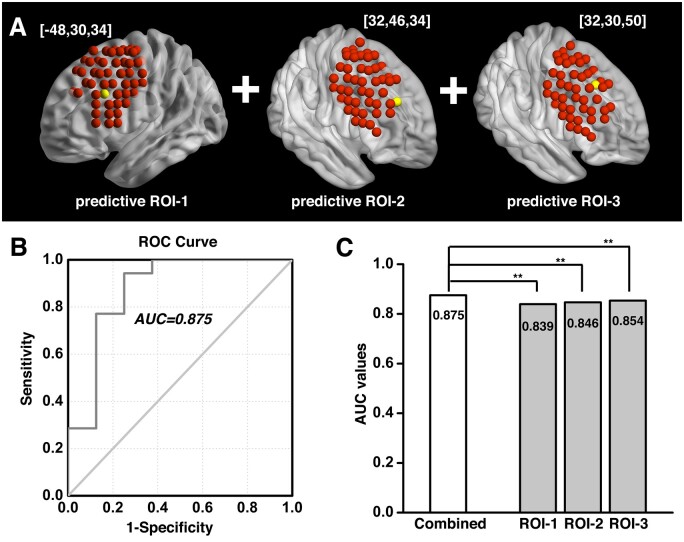
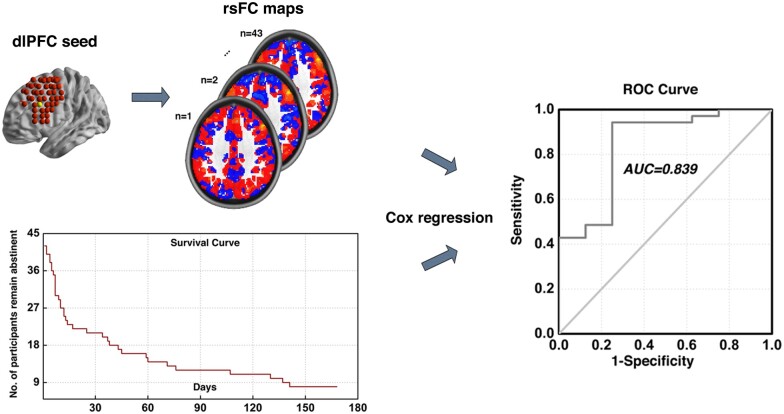
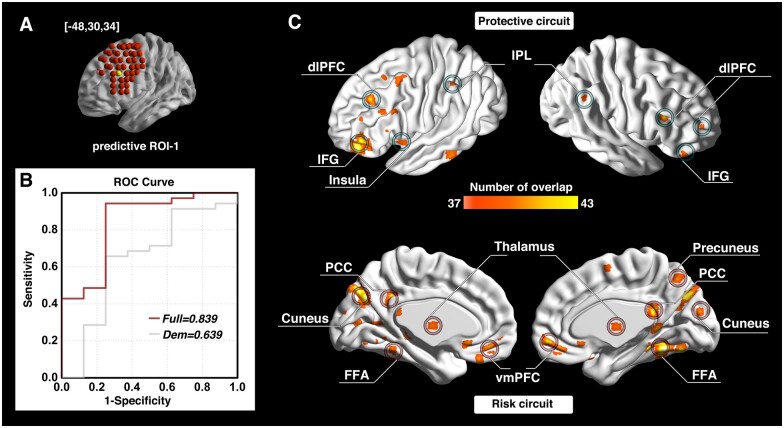
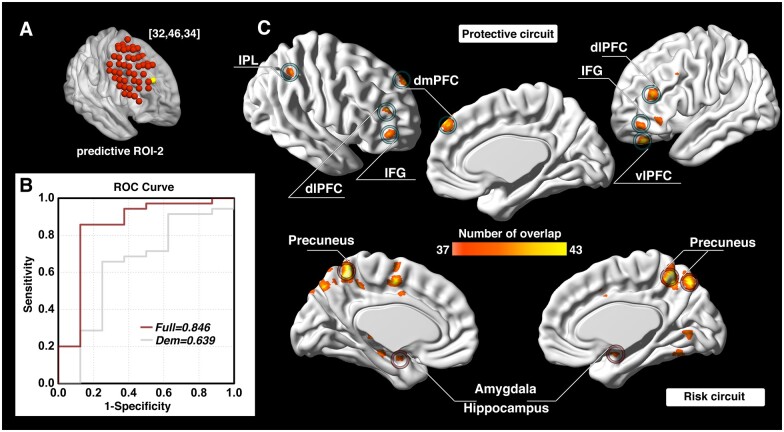
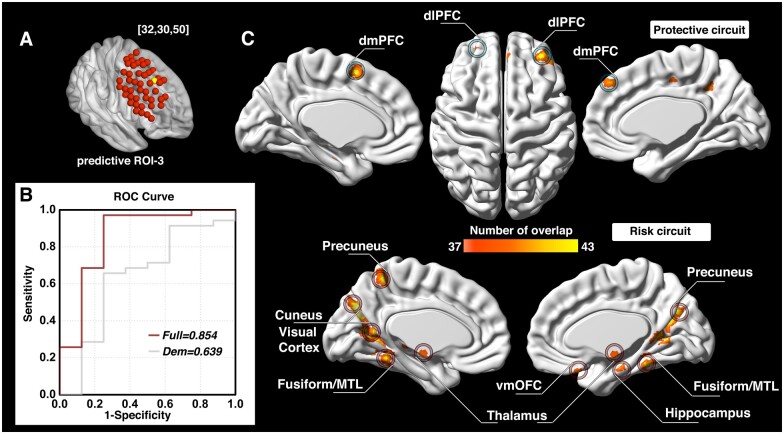
Relapse is one of the most perplexing problems of addiction. The dorsolateral prefrontal cortex is crucially involved in numerous cognitive and affective processes that are implicated in the phenotypes of both substance use disorders and other neuropsychiatric diseases and has become the principal site to deliver transcranial magnetic stimulation for their treatment. However, the dorsolateral prefrontal cortex is an anatomically large and functionally heterogeneous region, and the specific dorsolateral prefrontal cortex locus and dorsolateral prefrontal cortex-based functional circuits that contribute to drug relapse and/or treatment outcome remain unknown. We systematically investigated the relationship of cocaine relapse with functional circuits from 98 dorsolateral prefrontal cortex regions-of-interest defined by evenly sampling the entire surface of bilateral dorsolateral prefrontal cortex in a cohort of cocaine dependent patients ( = 43, 5 Fr) following a psychosocial treatment intervention. Cox regression models were utilized to predict relapse likelihood based on dorsolateral prefrontal cortex functional connectivity strength. Functional connectivity from only 3 of the 98 dorsolateral prefrontal cortex loci, one in the left and two in the right hemisphere, significantly predicted cocaine relapse with an accuracy of 83.9%, 84.6% and 85.4%, respectively. Combining all three loci significantly improved prediction validity to 87.5%. Protective and risk circuits related to these dorsolateral prefrontal cortex loci were identified that have previously been implicated to support 'bottom up' drive to use drug and 'top down' control over behaviour together with social emotional, learning and memory processing. Three dorsolateral prefrontal cortex-centric circuits were identified that predict relapse to cocaine use with high accuracy. These functionally distinct dorsolateral prefrontal cortex-based circuits provide insights into the multiple roles played by the dorsolateral prefrontal cortex in cognitive and affective functioning that affects treatment outcome. The identified dorsolateral prefrontal cortex loci may serve as potential neuromodulation targets to be tested in subsequent clinical studies for addiction treatment and as clinically relevant biomarkers of its efficacy. Zhai et al. identify three dorsolateral prefrontal cortex (dlPFC)-centric circuits that predict cocaine relapse with high accuracy, providing insights into the multiple roles of the dlPFC in brain functioning that affects treatment outcome and suggesting the dlPFC loci as potential neuromodulation targets for addiction treatment.
复吸是成瘾最令人困惑的问题之一。背外侧前额叶皮层在众多认知和情感过程中起着关键作用,这些过程与物质使用障碍和其他神经精神疾病的表型有关,并且已成为为其治疗进行经颅磁刺激的主要部位。然而,背外侧前额叶皮层是一个解剖学上较大且功能异质性的区域,导致药物复吸和/或治疗结果的特定背外侧前额叶皮层位点以及基于背外侧前额叶皮层的功能回路仍然未知。我们系统地研究了在一组可卡因依赖患者(n = 43, 5Fr)接受心理社会治疗干预后,可卡因复吸与从双侧背外侧前额叶皮层整个表面均匀采样定义的98个背外侧前额叶皮层感兴趣区域的功能回路之间的关系。使用Cox回归模型基于背外侧前额叶皮层功能连接强度预测复吸可能性。98个背外侧前额叶皮层位点中只有3个位点的功能连接,一个在左半球,两个在右半球,分别以83.9%、84.6%和85.4%的准确率显著预测可卡因复吸。将所有三个位点结合起来可将预测有效性显著提高到87.5%。确定了与这些背外侧前额叶皮层位点相关的保护和风险回路,这些回路先前被认为支持使用药物的“自下而上”驱动力以及对行为的“自上而下”控制,同时涉及社会情感、学习和记忆处理。确定了三个以背外侧前额叶皮层为中心的回路,它们能高精度地预测可卡因使用的复吸情况。这些功能上不同的基于背外侧前额叶皮层的回路为背外侧前额叶皮层在影响治疗结果的认知和情感功能中所起的多种作用提供了见解。所确定的背外侧前额叶皮层位点可能作为潜在的神经调节靶点,在后续成瘾治疗的临床研究中进行测试,并作为其疗效的临床相关生物标志物。翟等人确定了三个以背外侧前额叶皮层(dlPFC)为中心的回路,它们能高精度地预测可卡因复吸,为dlPFC在影响治疗结果的脑功能中的多种作用提供了见解,并表明dlPFC位点作为成瘾治疗的潜在神经调节靶点。