Division of Cardiovascular Medicine, University of Cambridge, Cambridge, UK.
Curr Cardiol Rep. 2021 Jul 1;23(8):99. doi: 10.1007/s11886-021-01529-9.
To examine the use of positron emission tomography (PET) for imaging post-infarct myocardial inflammation and repair.
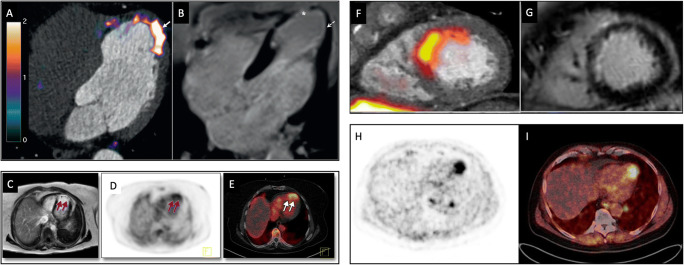
Dysregulated immune responses after myocardial infarction are associated with adverse cardiac remodelling and an increased likelihood of ischaemic heart failure. PET imaging utilising novel tracers can be applied to visualise different components of the post-infarction inflammatory and repair processes. This approach could offer unique pathophysiological insights that could prove useful for the identification and risk-stratification of individuals who would ultimately benefit most from emerging immune-modulating therapies. PET imaging could also bridge the clinical translational gap as a surrogate measure of drug efficacy in early-stage clinical trials in patients with myocardial infarction. The use of hybrid PET/MR imaging, in particular, offers the additional advantage of simultaneous in vivo molecular imaging and detailed assessment of myocardial function, viability and tissue characterisation. Further research is needed to realise the true clinical translational value of PET imaging after myocardial infarction.
探讨正电子发射断层扫描(PET)在成像心肌梗死后炎症和修复中的应用。
心肌梗死后免疫反应失调与不良的心脏重构和缺血性心力衰竭的可能性增加有关。利用新型示踪剂的 PET 成像可用于可视化梗死后炎症和修复过程的不同成分。这种方法可以提供独特的病理生理学见解,这可能对识别和分层最终最受益于新兴免疫调节治疗的个体非常有用。PET 成像还可以作为心肌梗死后早期临床试验中药物疗效的替代指标,从而弥合临床转化差距。特别是,使用混合 PET/MR 成像提供了同时进行体内分子成像和详细评估心肌功能、存活和组织特征的额外优势。需要进一步的研究来实现心肌梗死后 PET 成像的真正临床转化价值。