NIHR Biomedical Research Centre, Moorfields Eye Hospital and UCL Institute of Ophthalmology, London EC1V 9EL, UK.
Department of Clinical & Movement Neurosciences, UCL Queens Square Institute of Neurology, London NW3 2PF, UK.
Cells. 2021 Jun 5;10(6):1402. doi: 10.3390/cells10061402.
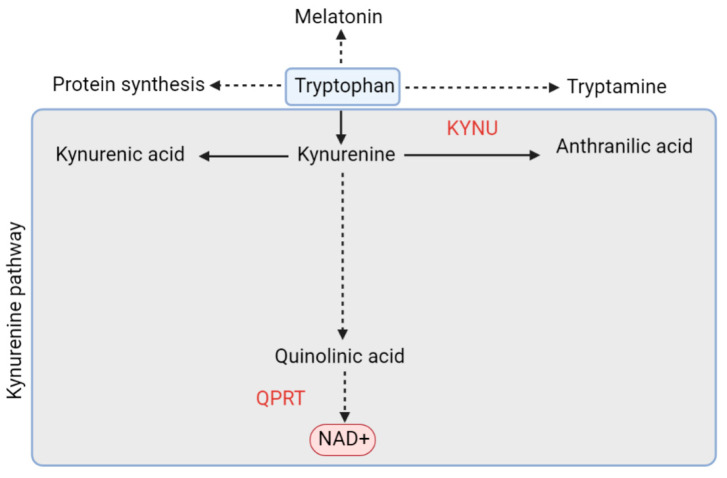
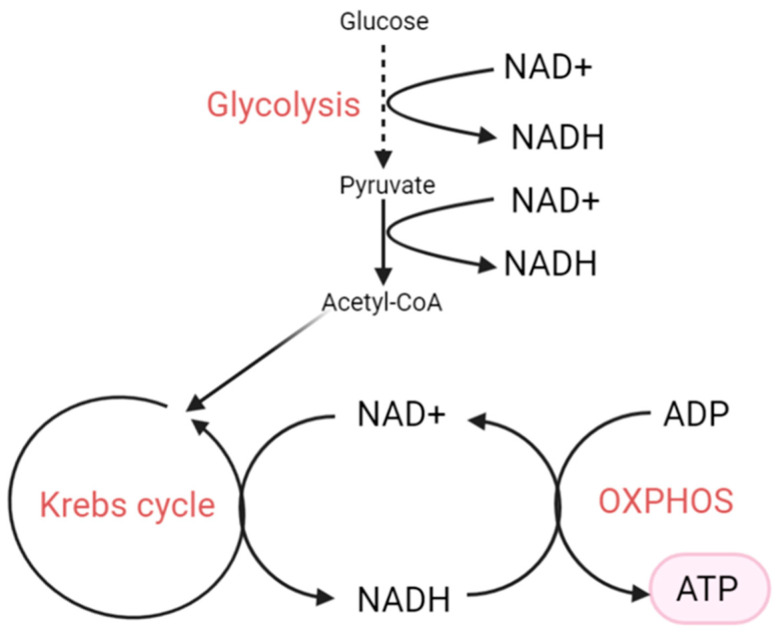
Glaucoma is the leading cause of irreversible blindness worldwide. Its prevalence and incidence increase exponentially with age and the level of intraocular pressure (IOP). IOP reduction is currently the only therapeutic modality shown to slow glaucoma progression. However, patients still lose vision despite best treatment, suggesting that other factors confer susceptibility. Several studies indicate that mitochondrial function may underlie both susceptibility and resistance to developing glaucoma. Mitochondria meet high energy demand, in the form of ATP, that is required for the maintenance of optimum retinal ganglion cell (RGC) function. Reduced nicotinamide adenine dinucleotide (NAD) levels have been closely correlated to mitochondrial dysfunction and have been implicated in several neurodegenerative diseases including glaucoma. NAD is at the centre of various metabolic reactions culminating in ATP production-essential for RGC function. In this review we present various pathways that influence the NAD(H) redox state, affecting mitochondrial function and making RGCs susceptible to degeneration. Such disruptions of the NAD(H) redox state are generalised and not solely induced in RGCs because of high IOP. This places the NAD(H) redox state as a potential systemic biomarker for glaucoma susceptibility and progression; a hypothesis which may be tested in clinical trials and then translated to clinical practice.
青光眼是全球导致不可逆性失明的主要原因。其患病率和发病率随年龄和眼内压(IOP)水平呈指数级增长。目前,降低 IOP 是唯一被证明可以减缓青光眼进展的治疗方法。然而,尽管进行了最佳治疗,患者仍会丧失视力,这表明其他因素也会导致易感性。几项研究表明,线粒体功能可能是导致易感性和对青光眼发展的抵抗力的基础。线粒体以 ATP 的形式满足高能量需求,这是维持最佳视网膜神经节细胞(RGC)功能所必需的。还原型烟酰胺腺嘌呤二核苷酸(NAD)水平与线粒体功能障碍密切相关,并与包括青光眼在内的几种神经退行性疾病有关。NAD 是各种代谢反应的中心,最终导致 ATP 的产生——这对 RGC 功能至关重要。在这篇综述中,我们介绍了影响 NAD(H)氧化还原状态的各种途径,这些途径会影响线粒体功能,使 RGC 容易发生退化。由于 IOP 升高,这种 NAD(H)氧化还原状态的破坏是普遍存在的,而不仅仅是在 RGC 中诱导的。这将 NAD(H)氧化还原状态作为青光眼易感性和进展的潜在系统生物标志物;这一假设可以在临床试验中进行检验,然后转化为临床实践。