Frank Reidy Research Center for Bioelectrics, Old Dominion University, Norfolk, VA 23508, USA.
School of Medical Diagnostic & Translational Sciences, College of Health Sciences, Old Dominion University, Norfolk, VA 23508, USA.
Cells. 2021 Jun 13;10(6):1489. doi: 10.3390/cells10061489.
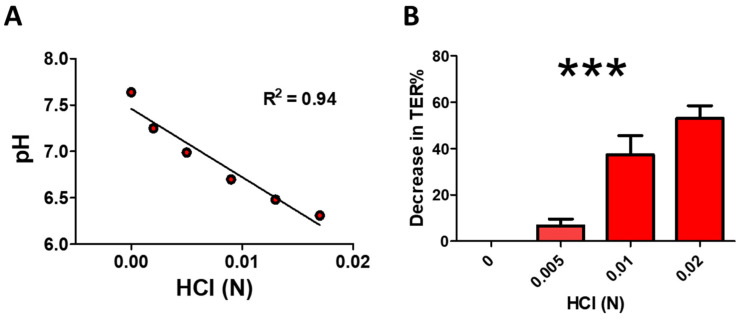
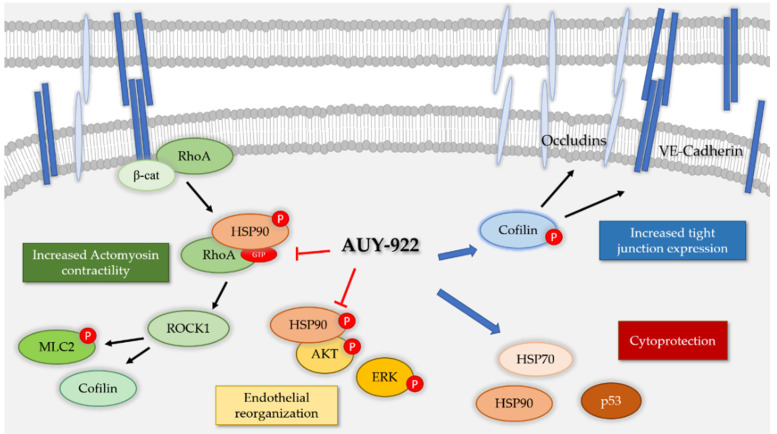
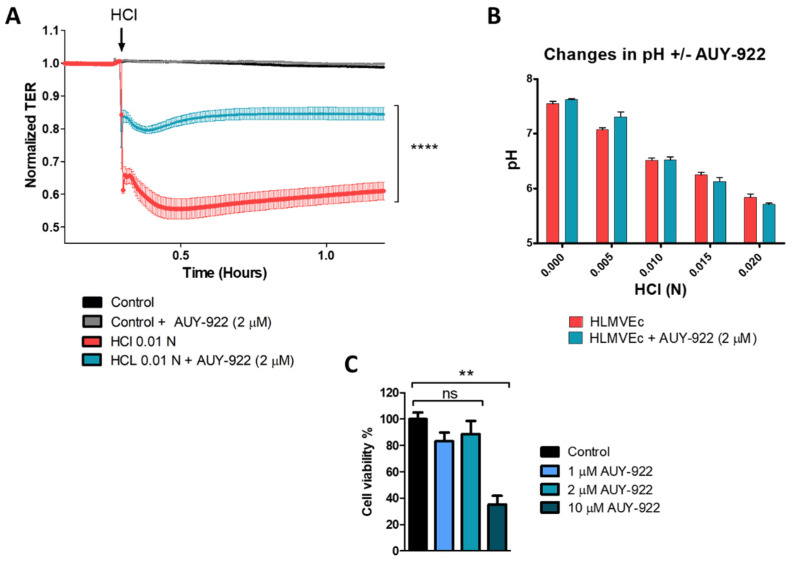
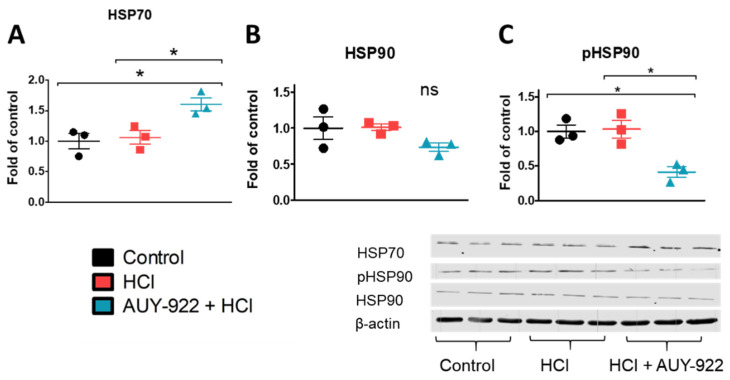
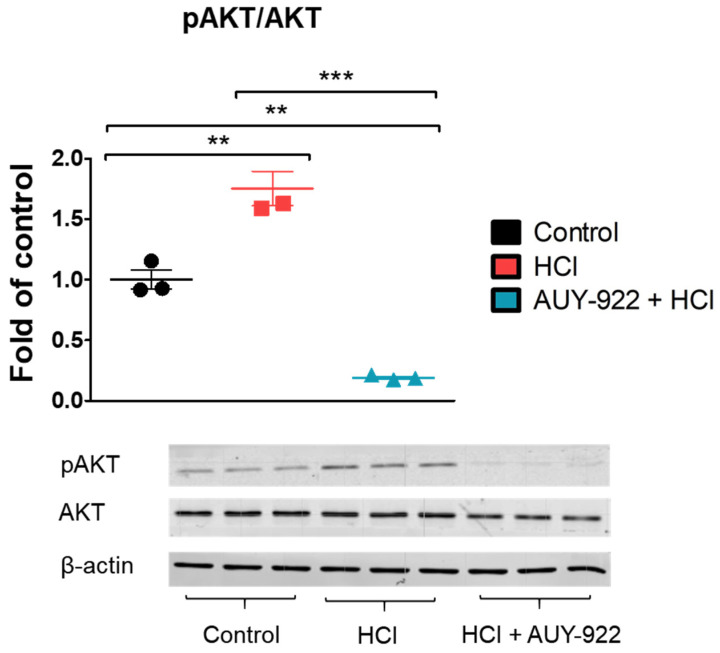
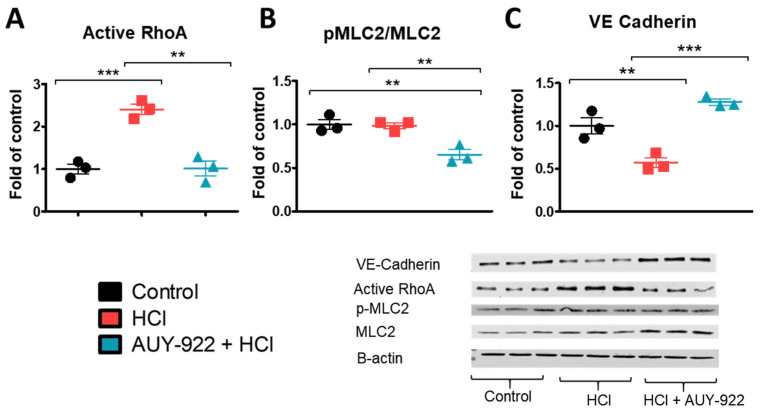
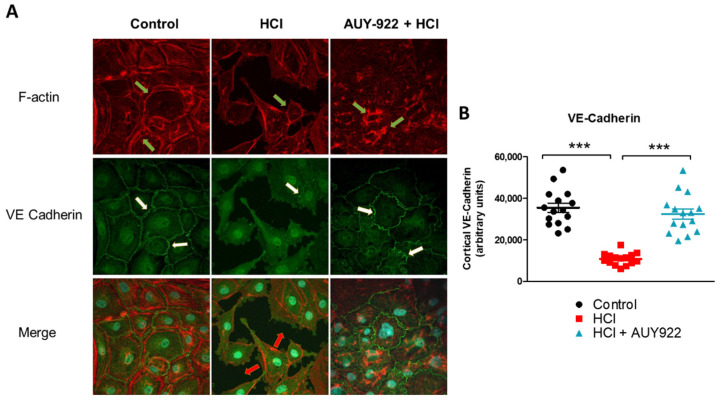
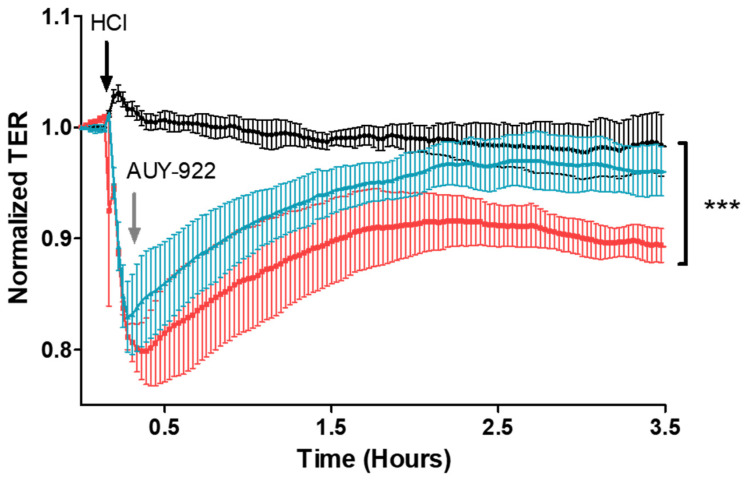
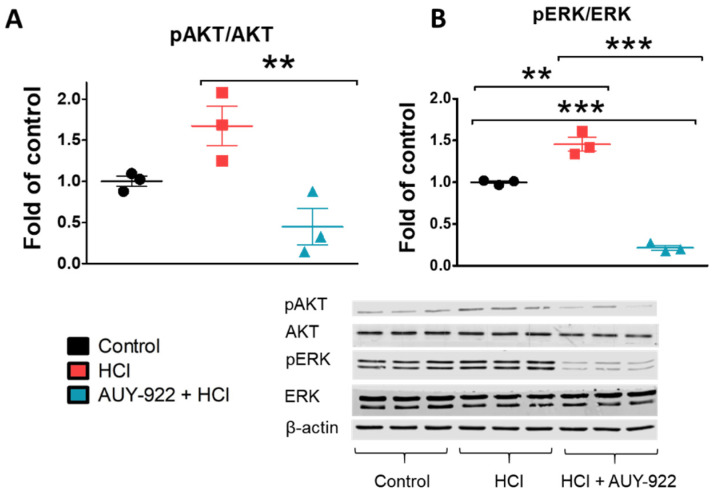
Exposure to hydrochloric acid (HCl) leads acutely to asthma-like symptoms, acute respiratory distress syndrome (ARDS), including compromised alveolo-capillary barrier, and respiratory failure. To better understand the direct effects of HCl on pulmonary endothelial function, we studied the characteristics of HCl-induced endothelial barrier dysfunction in primary cultures of human lung microvascular endothelial cells (HLMVEC), defined the involved molecular pathways, and tested the potentially beneficial effects of Heat Shock Protein 90 (HSP90) inhibitors. HCl impaired barrier function in a time- and concentration-dependent manner and was associated with activation of Protein Kinase B (AKT), Ras homolog family member A (RhoA) and myosin light chain 2 (MLC2), as well as loss of plasmalemmal VE-cadherin, rearrangement of cortical actin, and appearance of inter-endothelial gaps. Pre-treatment or post-treatment of HLMVEC with AUY-922, a third-generation HSP90 inhibitor, prevented and restored HCl-induced endothelial barrier dysfunction. AUY-922 increased the expression of HSP70 and inhibited the activation (phosphorylation) of extracellular-signal regulated kinase (ERK) and AKT. AUY-922 also prevented the HCl-induced activation of RhoA and MLC2 and the internalization of plasmalemmal VE-cadherin. We conclude that, by increasing the expression of cytoprotective proteins, interfering with actomyosin contractility, and enhancing the expression of junction proteins, inhibition of HSP90 may represent a useful approach for the management of HCl-induced endothelial dysfunction and acute lung injury.
暴露于盐酸(HCl)会导致类似哮喘的症状、急性呼吸窘迫综合征(ARDS),包括肺泡毛细血管屏障受损和呼吸衰竭。为了更好地了解 HCl 对肺内皮功能的直接影响,我们研究了人肺微血管内皮细胞(HLMVEC)原代培养物中 HCl 诱导的内皮屏障功能障碍的特征,确定了涉及的分子途径,并测试了热休克蛋白 90(HSP90)抑制剂的潜在有益作用。HCl 以时间和浓度依赖的方式损害屏障功能,并与蛋白激酶 B(AKT)、Ras 同源家族成员 A(RhoA)和肌球蛋白轻链 2(MLC2)的激活以及质膜 VE-钙粘蛋白的丢失、皮质肌动蛋白的重排和内皮细胞间隙的出现有关。第三代 HSP90 抑制剂 AUY-922 预处理或后处理 HLMVEC 可预防和恢复 HCl 诱导的内皮屏障功能障碍。AUY-922 增加了 HSP70 的表达并抑制了细胞外信号调节激酶(ERK)和 AKT 的激活(磷酸化)。AUY-922 还可预防 HCl 诱导的 RhoA 和 MLC2 的激活以及质膜 VE-钙粘蛋白的内化。我们得出结论,通过增加细胞保护蛋白的表达、干扰肌动球蛋白收缩性以及增强连接蛋白的表达,抑制 HSP90 可能是治疗 HCl 诱导的内皮功能障碍和急性肺损伤的一种有用方法。