Cottle Louise, Gilroy Ian, Deng Kylie, Loudovaris Thomas, Thomas Helen E, Gill Anthony J, Samra Jaswinder S, Kebede Melkam A, Kim Jinman, Thorn Peter
Charles Perkins Centre, School of Medical Sciences, University of Sydney, Camperdown 2006, Australia.
School of Computer Science, University of Sydney, Camperdown 2006, Australia.
Metabolites. 2021 Jun 7;11(6):363. doi: 10.3390/metabo11060363.
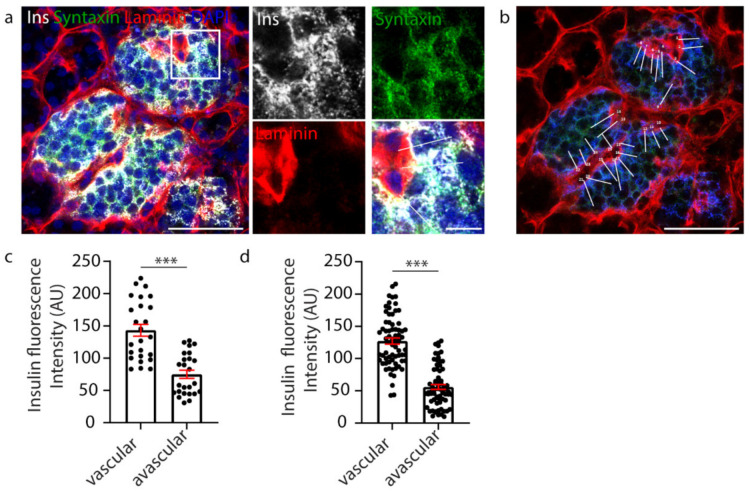
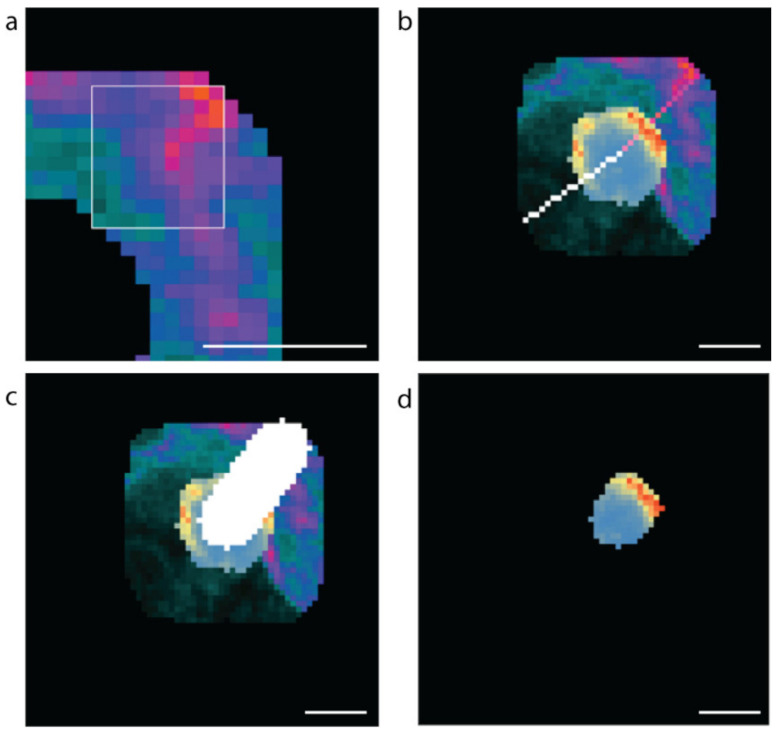
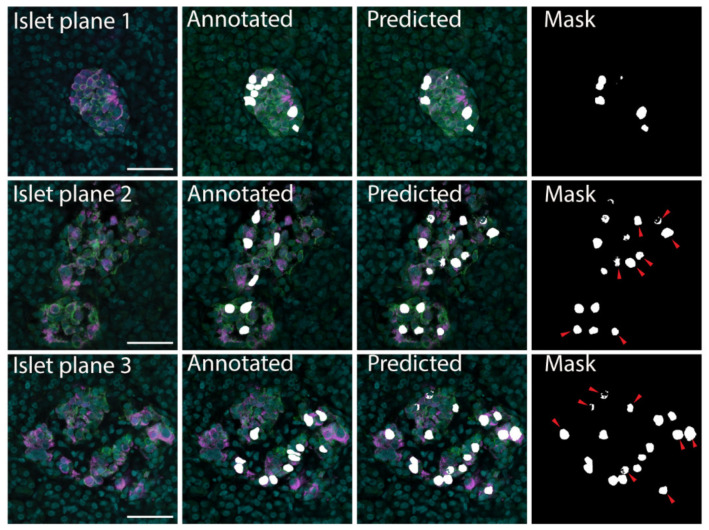
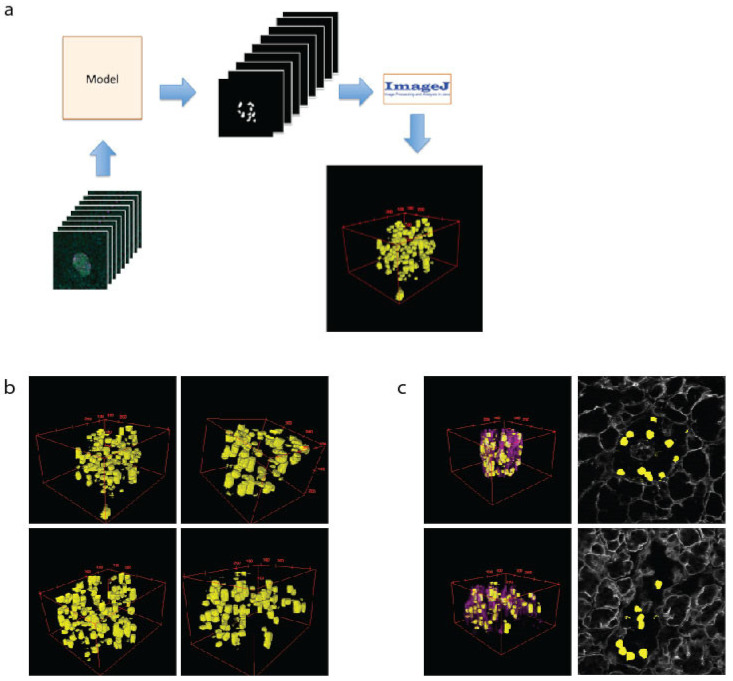
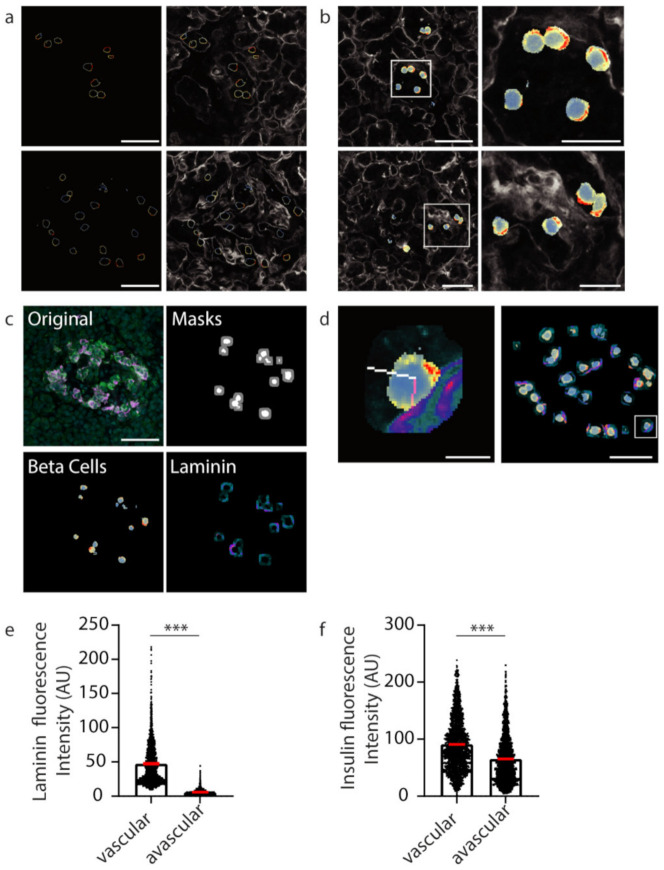
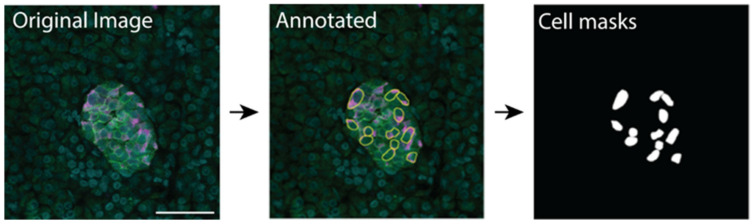
Pancreatic β cells secrete the hormone insulin into the bloodstream and are critical in the control of blood glucose concentrations. β cells are clustered in the micro-organs of the islets of Langerhans, which have a rich capillary network. Recent work has highlighted the intimate spatial connections between β cells and these capillaries, which lead to the targeting of insulin secretion to the region where the β cells contact the capillary basement membrane. In addition, β cells orientate with respect to the capillary contact point and many proteins are differentially distributed at the capillary interface compared with the rest of the cell. Here, we set out to develop an automated image analysis approach to identify individual β cells within intact islets and to determine if the distribution of insulin across the cells was polarised. Our results show that a U-Net machine learning algorithm correctly identified β cells and their orientation with respect to the capillaries. Using this information, we then quantified insulin distribution across the β cells to show enrichment at the capillary interface. We conclude that machine learning is a useful analytical tool to interrogate large image datasets and analyse sub-cellular organisation.
胰腺β细胞将胰岛素激素分泌到血液中,对控制血糖浓度至关重要。β细胞聚集在具有丰富毛细血管网络的胰岛微器官中。最近的研究突出了β细胞与这些毛细血管之间紧密的空间联系,这导致胰岛素分泌靶向到β细胞与毛细血管基底膜接触的区域。此外,β细胞相对于毛细血管接触点进行定向,并且与细胞的其他部分相比,许多蛋白质在毛细血管界面处呈差异分布。在这里,我们着手开发一种自动图像分析方法,以识别完整胰岛内的单个β细胞,并确定胰岛素在细胞间的分布是否极化。我们的结果表明,U-Net机器学习算法能够正确识别β细胞及其相对于毛细血管的方向。利用这些信息,我们随后量化了胰岛素在β细胞中的分布,以显示在毛细血管界面处的富集。我们得出结论,机器学习是一种有用的分析工具,可用于研究大型图像数据集和分析亚细胞组织。