Altvater Bianca, Kailayangiri Sareetha, Pérez Lanuza Lina F, Urban Katja, Greune Lea, Flügge Maike, Meltzer Jutta, Farwick Nicole, König Simone, Görlich Dennis, Hartmann Wolfgang, Rossig Claudia
Department of Pediatric Hematology and Oncology, University Children's Hospital Muenster, 48149 Muenster, Germany.
Core Unit Proteomics, Interdisciplinary Center for Clinical Research, 48149 Muenster, Germany.
Cancers (Basel). 2021 Jun 8;13(12):2857. doi: 10.3390/cancers13122857.
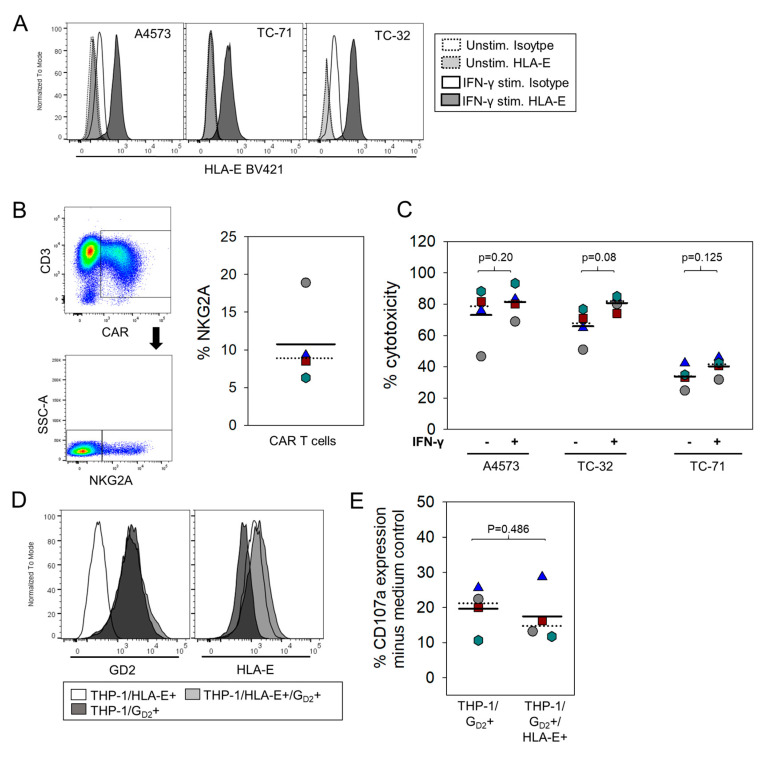
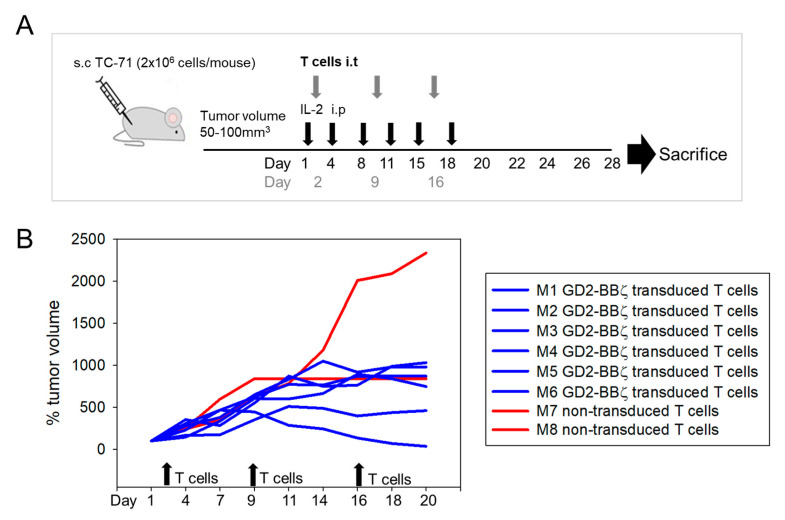
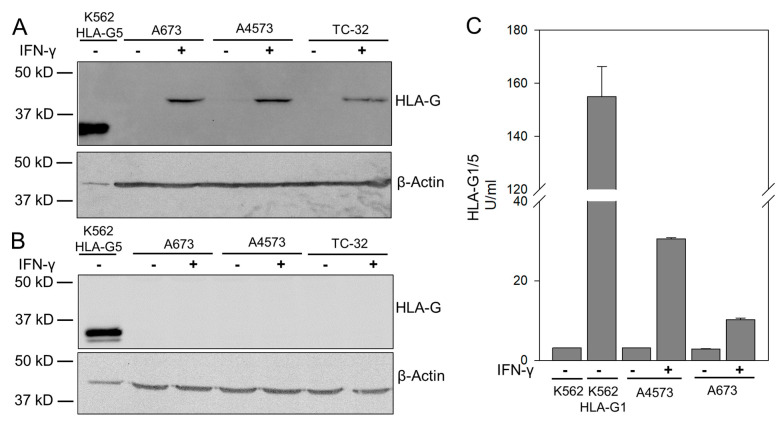
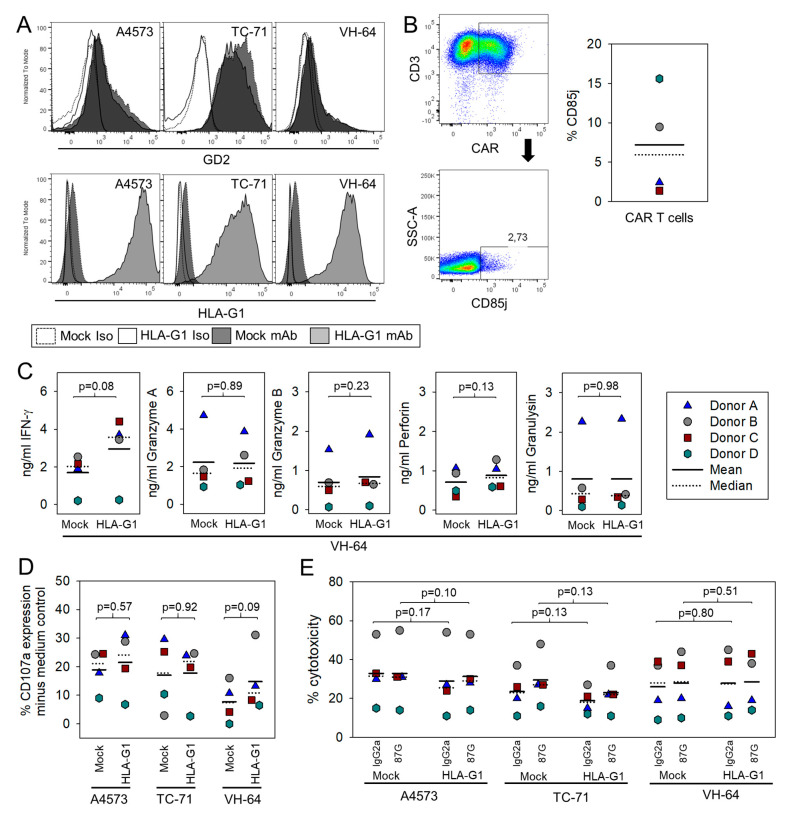
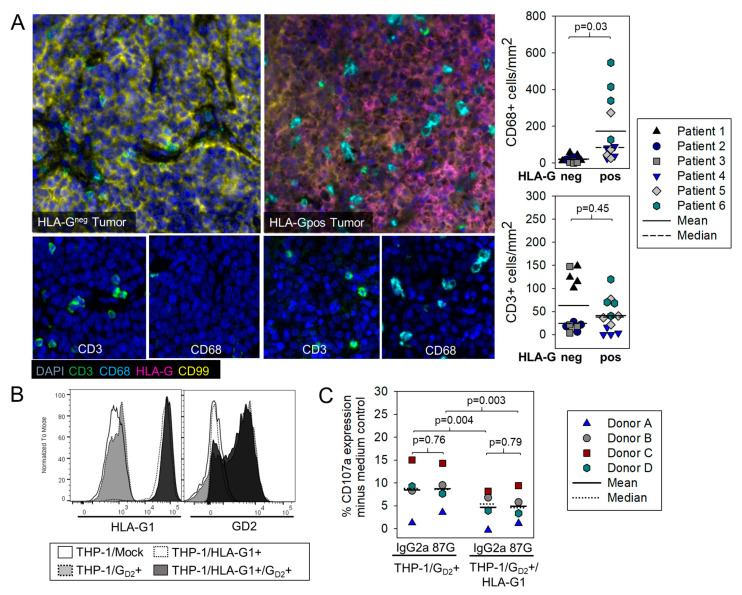
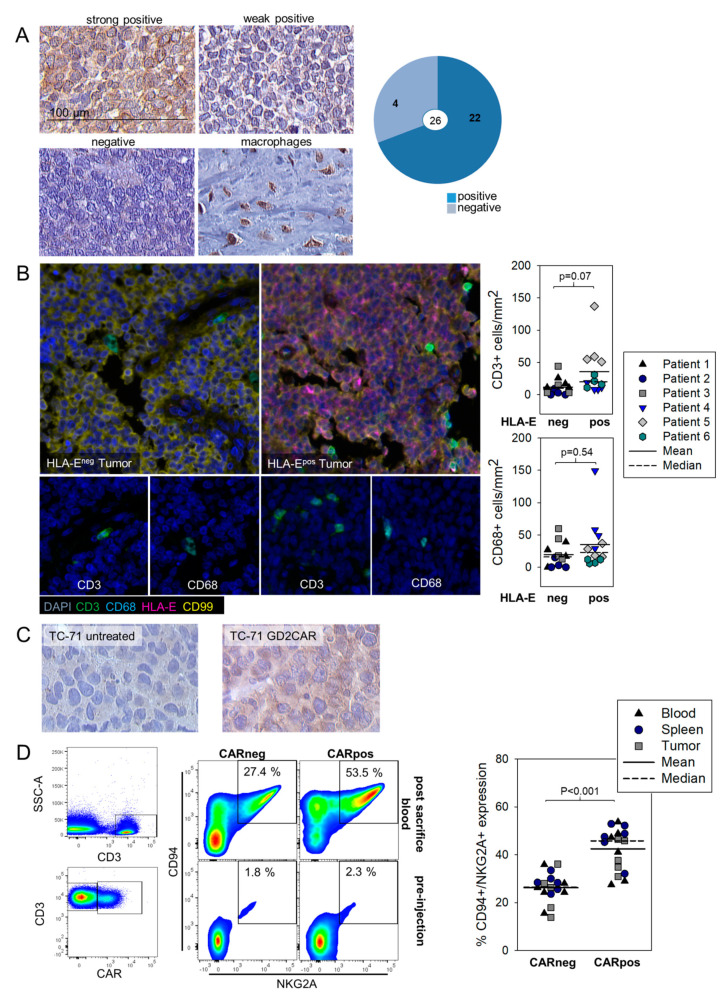
Immune-inhibitory barriers in the tumor microenvironment of solid cancers counteract effective T cell therapies. Based on our finding that Ewing sarcomas (EwS) respond to chimeric antigen receptor (CAR) gene-modified effector cells through upregulation of human leukocyte antigen G (HLA-G), we hypothesized that nonclassical HLA molecules, HLA-G and HLA-E, contribute to immune escape of EwS. Here, we demonstrate that HLA-G isotype G1 expression on EwS cells does not directly impair cytolysis by G-specific CAR T cells (CART), whereas HLA-G1 on myeloid bystander cells reduces CART degranulation responses against EwS cells. HLA-E was induced in EwS cells by IFN-γ stimulation in vitro and by G-specific CART treatment in vivo and was detected on tumor cells or infiltrating myeloid cells in a majority of human EwS biopsies. Interaction of HLA-E-positive EwS cells with G-specific CART induced upregulation of HLA-E receptor NKG2A. However, HLA-E expressed by EwS tumor cells or by myeloid bystander cells both failed to reduce antitumor effector functions of CART. We conclude that non-classical HLA molecules are expressed in EwS under inflammatory conditions, but have limited functional impact on antigen-specific T cells, arguing against a relevant therapeutic benefit from combining CART therapy with HLA-G or HLA-E checkpoint blockade in this cancer.
实体癌肿瘤微环境中的免疫抑制屏障会抵消有效的T细胞疗法。基于我们的发现,即尤因肉瘤(EwS)通过上调人类白细胞抗原G(HLA-G)对嵌合抗原受体(CAR)基因修饰的效应细胞产生反应,我们推测非经典HLA分子HLA-G和HLA-E促成了EwS的免疫逃逸。在此,我们证明EwS细胞上的HLA-G同种型G1表达不会直接损害G特异性CAR T细胞(CART)的细胞溶解作用,而髓系旁观者细胞上的HLA-G1会降低CART对EwS细胞的脱颗粒反应。体外IFN-γ刺激和体内G特异性CART治疗可诱导EwS细胞表达HLA-E,并且在大多数人类EwS活检组织的肿瘤细胞或浸润性髓系细胞中均可检测到HLA-E。HLA-E阳性EwS细胞与G特异性CART相互作用会诱导HLA-E受体NKG2A上调。然而,EwS肿瘤细胞或髓系旁观者细胞表达的HLA-E均未能降低CART的抗肿瘤效应功能。我们得出结论,在炎症条件下,非经典HLA分子在EwS中表达,但对抗原特异性T细胞的功能影响有限,这表明在这种癌症中,将CART疗法与HLA-G或HLA-E检查点阻断联合使用并无相关治疗益处。