Department of Biotechnology and Food Microbiology, Wrocław University of Environmental and Life Sciences, 51-630 Wrocław, Poland.
Centre of Biological Engineering, University of Minho, 4710-057 Braga, Portugal.
Molecules. 2021 Jun 8;26(12):3488. doi: 10.3390/molecules26123488.
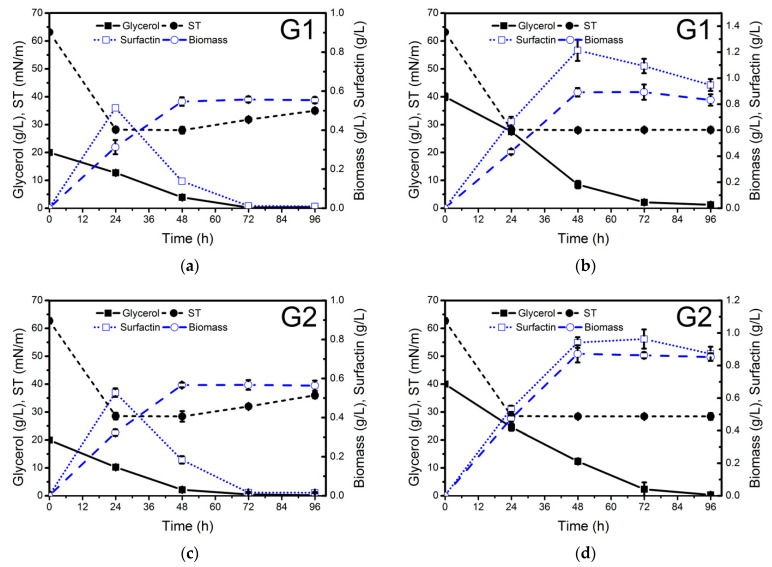
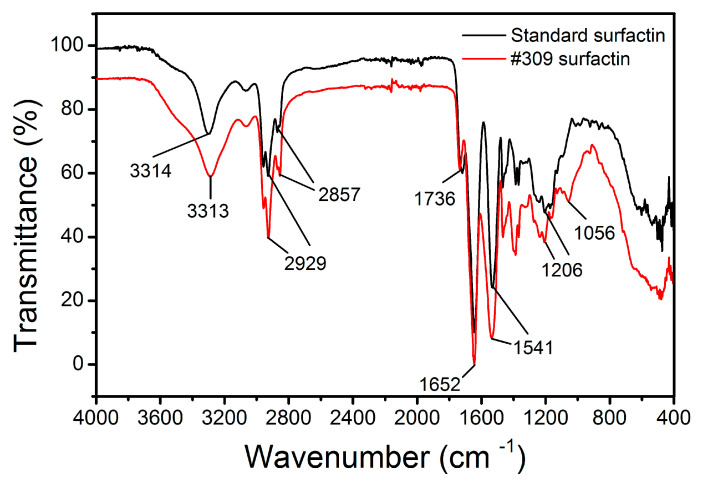
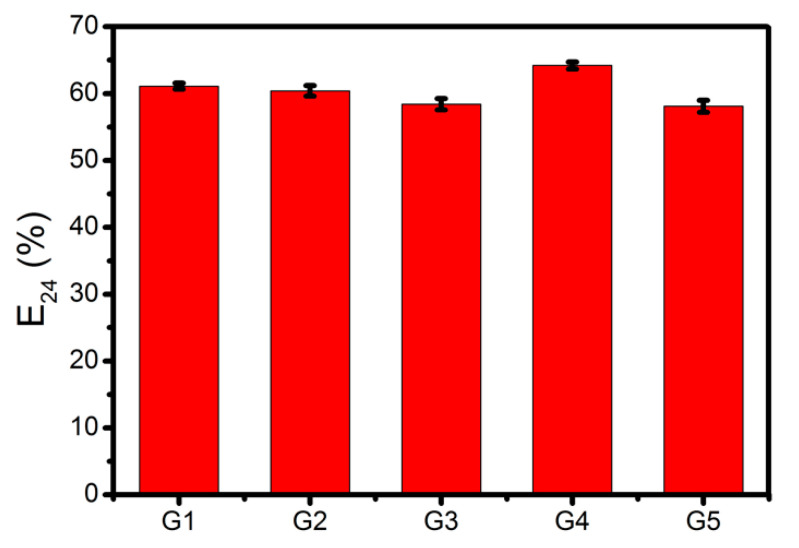
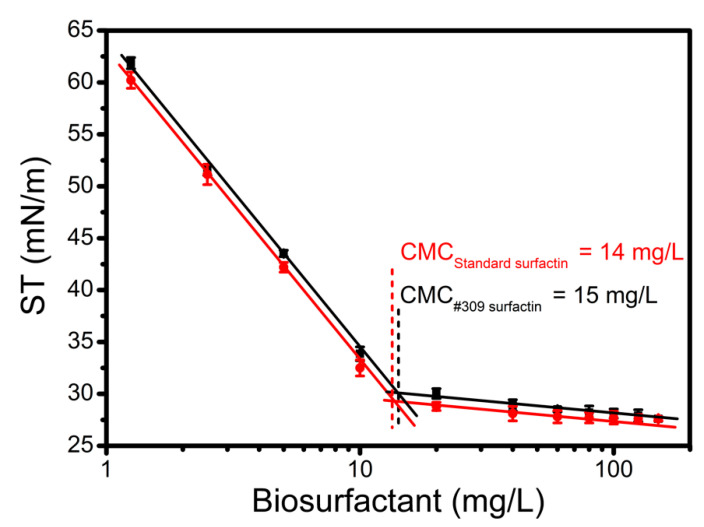
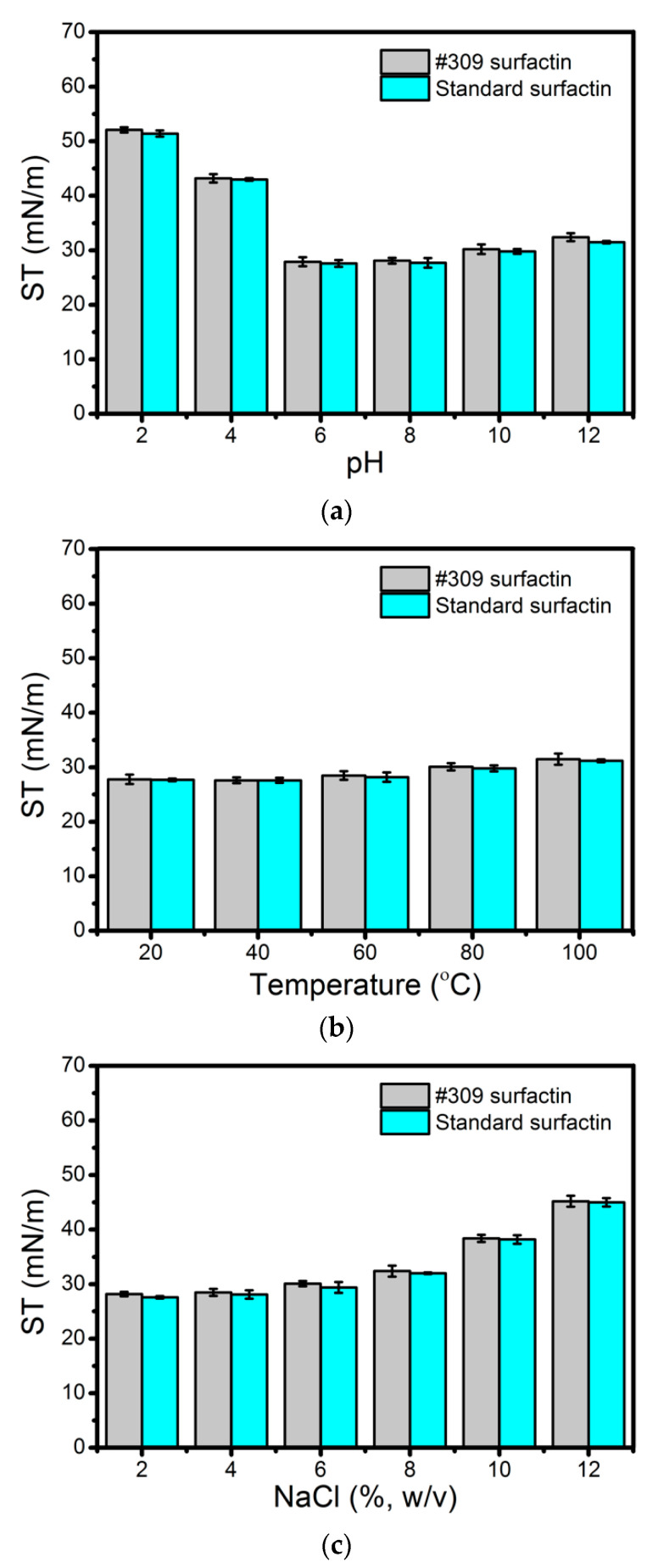
Most biosurfactants are obtained using costly culture media and purification processes, which limits their wider industrial use. Sustainability of their production processes can be achieved, in part, by using cheap substrates found among agricultural and food wastes or byproducts. In the present study, crude glycerol, a raw material obtained from several industrial processes, was evaluated as a potential low-cost carbon source to reduce the costs of surfactin production by #309. The culture medium containing soap-derived waste glycerol led to the best surfactin production, reaching about 2.8 g/L. To the best of our knowledge, this is the first report describing surfactin production by using stearin and soap wastes as carbon sources. A complete chemical characterization of surfactin analogs produced from the different waste glycerol samples was performed by liquid chromatography-mass spectrometry (LC-MS) and Fourier transform infrared spectroscopy (FTIR). Furthermore, the surfactin produced in the study exhibited good stability in a wide range of pH, salinity and temperatures, suggesting its potential for several applications in biotechnology.
大多数生物表面活性剂都是使用昂贵的培养基和纯化工艺获得的,这限制了它们更广泛的工业用途。通过使用农业和食品废物或副产品中发现的廉价底物,可以在一定程度上实现其生产工艺的可持续性。在本研究中,粗甘油作为一种从多种工业过程中获得的原材料,被评估为一种潜在的低成本碳源,可以将表面活性剂的生产成本降低 309%。含有肥皂衍生废甘油的培养基导致表面活性剂产量达到最佳,约为 2.8 g/L。据我们所知,这是首次报道使用硬脂和肥皂废物作为碳源生产表面活性剂。通过液相色谱-质谱联用仪(LC-MS)和傅里叶变换红外光谱(FTIR)对不同废甘油样品生产的表面活性剂类似物进行了全面的化学表征。此外,研究中生产的表面活性剂在广泛的 pH 值、盐度和温度范围内表现出良好的稳定性,这表明其在生物技术的多个应用中具有潜力。