Palladino Raffaele, Ceriotti Daniele, De Ambrosi Damiano, De Vito Marta, Farsoni Marco, Seminara Giuseppina, Barone-Adesi Francesco
Department of Public Health, University "Federico II" of Naples, 80131 Napoli, Italy.
Department of Primary Care and Public Health, Imperial College, London W68RP, UK.
Vaccines (Basel). 2021 Jun 8;9(6):618. doi: 10.3390/vaccines9060618.
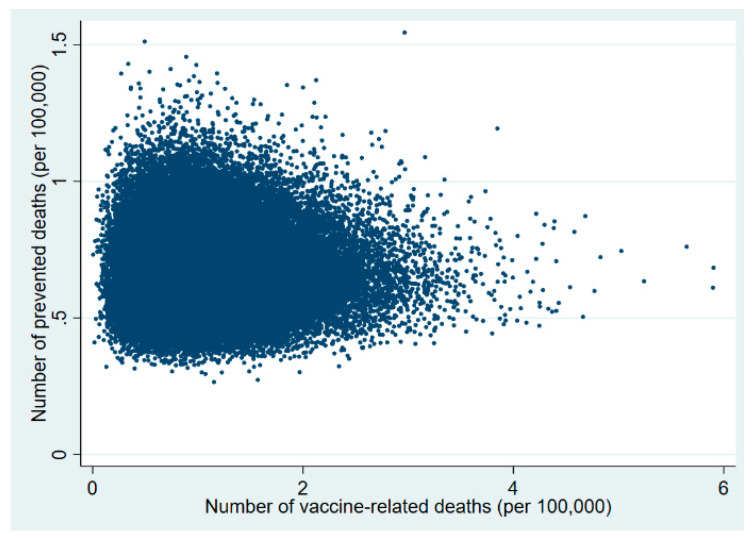
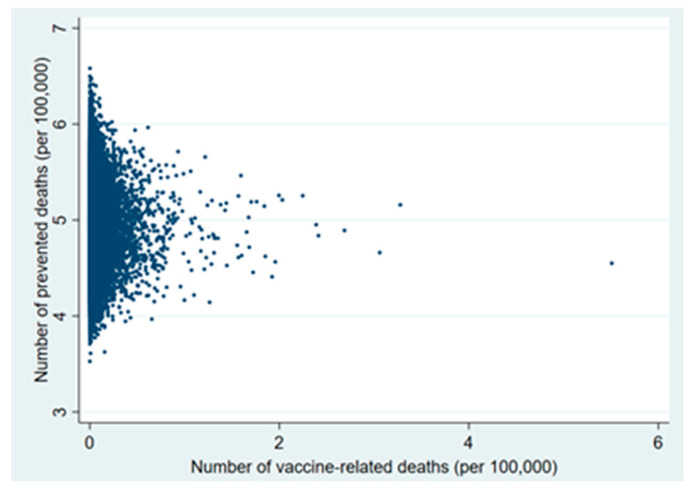
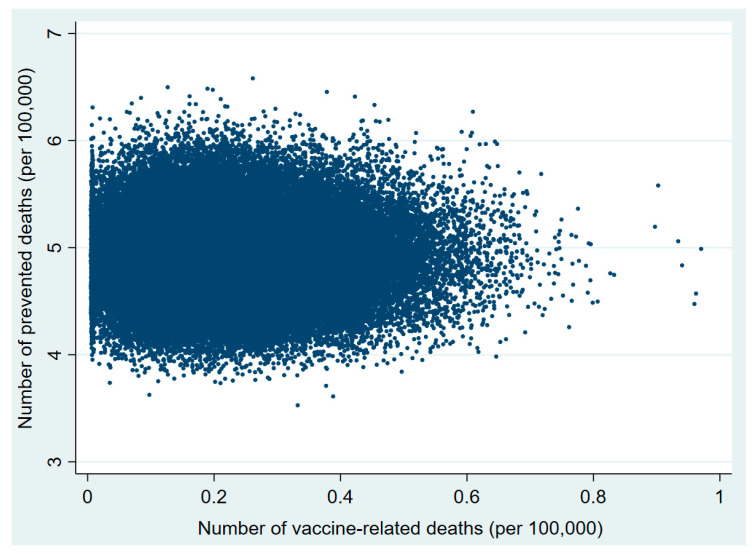
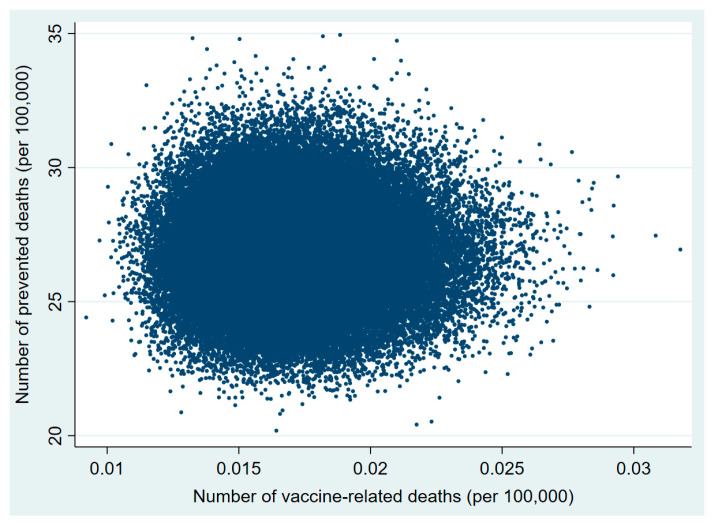
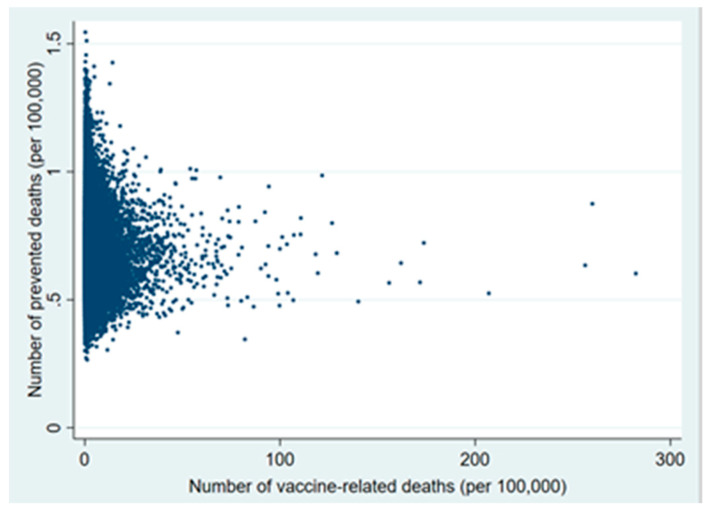
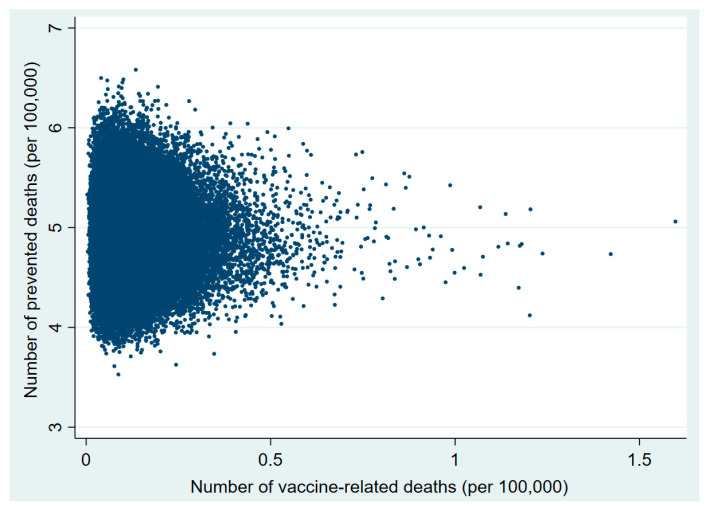
The Oxford-AstraZeneca ChAdOx1 nCoV-19 is a vaccine against the COVID-19 infection that was granted a conditional marketing authorization by the European Commission in January 2021. However, following a report from the Pharmacovigilance Risk Assessment Committee (PRAC) of European Medicines Agency, which reported an association with thrombo-embolic events (TEE), in particular disseminated intravascular coagulation (DIC) and cerebral venous sinus thrombosis (CVST), many European countries either limited it to individuals older than 55-60 years or suspended its use. We used publicly available data to carry out a quantitative benefit-risk analysis of the vaccine among people under 60 in Italy. Specifically, we used data from PRAC, Eudravigilance and ECDC to estimate the excess number of deaths for TEE, DIC and CVST expected in vaccine users, stratified by age groups. We then used data from the National Institute of Health to calculate age-specific COVID-19 mortality rates in Italy. Preventable deaths were calculated assuming a 72% vaccine efficacy over an eight-month period. Finally, the benefit-risk ratio of ChAdOx1 nCoV-19 vaccination was calculated as the ratio of preventable COVID-19 deaths to vaccine-related deaths, using Monte-Carlo simulations. We found that among subjects aged 20-29 years the benefit-risk (B-R) ratio was not clearly favorable (0.70; 95% Uncertainty Interval (UI): 0.27-2.11). However, in the other age groups the benefits of vaccination largely exceeded the risks (for age 30-49, B-R ratio: 22.9: 95%UI: 10.1-186.4). For age 50-59, B-R ratio: 1577.1: 95%UI: 1176.9-2121.5). Although many countries have limited the use of the ChAdOx1 nCoV-19 vaccine, the benefits of using this vaccine clearly outweigh the risks in people older than 30 years. Study limitations included risk of underreporting and that we did not provide age-specific estimates. The use of this vaccine should be a strategic and fundamental part of the immunization campaign considering its safety and efficacy in preventing COVID-19 and its complications.
牛津-阿斯利康ChAdOx1 nCoV-19疫苗是一种针对新型冠状病毒肺炎感染的疫苗,于2021年1月获得欧盟委员会有条件上市许可。然而,欧洲药品管理局药物警戒风险评估委员会(PRAC)发布报告称,该疫苗与血栓栓塞事件(TEE)有关,尤其是弥散性血管内凝血(DIC)和脑静脉窦血栓形成(CVST),许多欧洲国家因此要么将其使用限制在55至60岁以上人群,要么暂停使用。我们利用公开数据对意大利60岁以下人群的该疫苗进行了定量效益风险分析。具体而言,我们使用了PRAC、欧洲药品不良反应数据库(Eudravigilance)和欧洲疾病预防控制中心(ECDC)的数据,按年龄组分层估算疫苗接种者中TEE、DIC和CVST预期的额外死亡人数。然后,我们使用了国立卫生研究院的数据来计算意大利特定年龄的新型冠状病毒肺炎死亡率。假设疫苗在8个月期间的效力为72%,计算可预防的死亡人数。最后,通过蒙特卡洛模拟,将ChAdOx1 nCoV-19疫苗接种的效益风险比计算为可预防的新型冠状病毒肺炎死亡人数与疫苗相关死亡人数的比值。我们发现,在20至29岁的人群中,效益风险(B-R)比并不明显有利(0.70;95%不确定区间(UI):0.27 - 2.11)。然而,在其他年龄组中,接种疫苗的益处大大超过风险(30至49岁,B-R比:22.9;95%UI:10.1 - 186.4)。对于50至59岁,B-R比:1577.1;95%UI:1176.9 - 2121.5)。尽管许多国家限制了ChAdOx1 nCoV-19疫苗的使用,但对于30岁以上人群,使用该疫苗的益处显然大于风险。研究局限性包括报告不足的风险,以及我们未提供特定年龄的估计值。考虑到该疫苗在预防新型冠状病毒肺炎及其并发症方面的安全性和有效性,其使用应成为免疫接种计划的战略和基础组成部分。