Hanna Reem, Dalvi Snehal, Bensadoun René Jean, Benedicenti Stefano
Department of Surgical Sciences and Integrated Diagnostics, Laser Therapy Centre, University of Genoa, Viale Benedetto XV 6, 16132 Genoa, Italy.
Department of Oral Surgery, Dental Institute, King's College Hospital NHS Foundation Trust, London SE5 9RS, UK.
Antioxidants (Basel). 2021 Jun 25;10(7):1028. doi: 10.3390/antiox10071028.
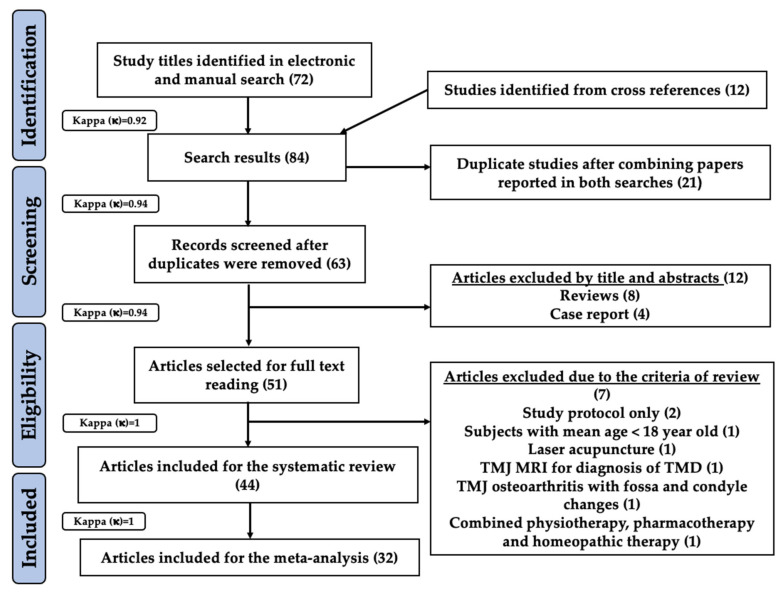
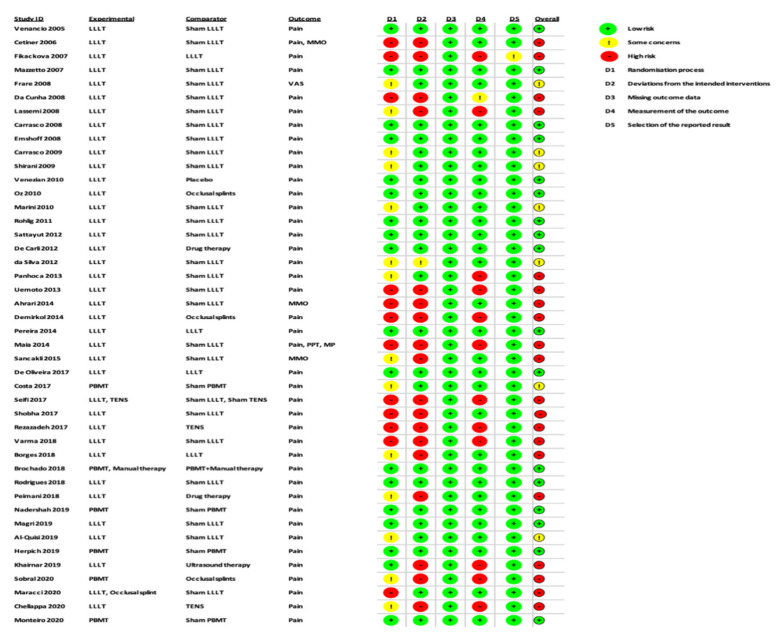
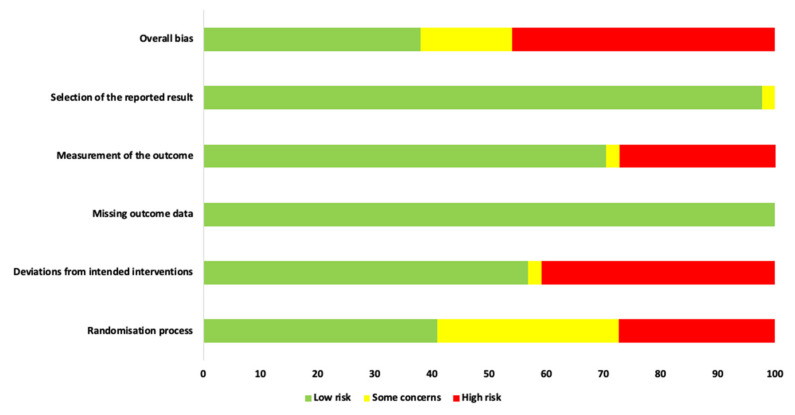
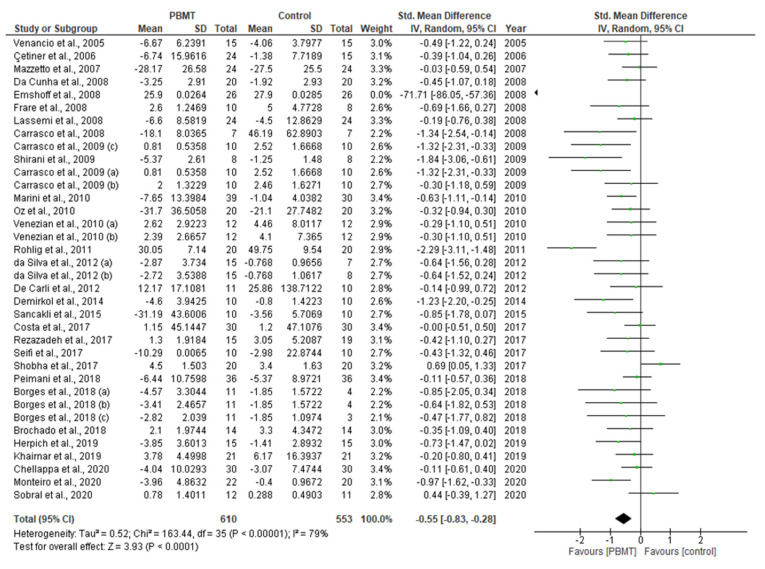
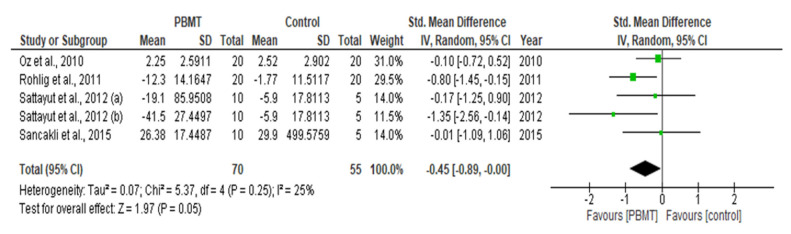
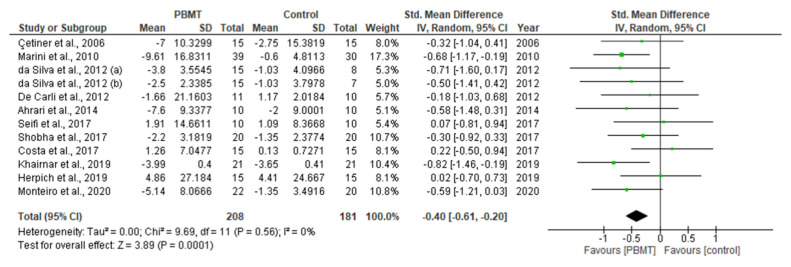
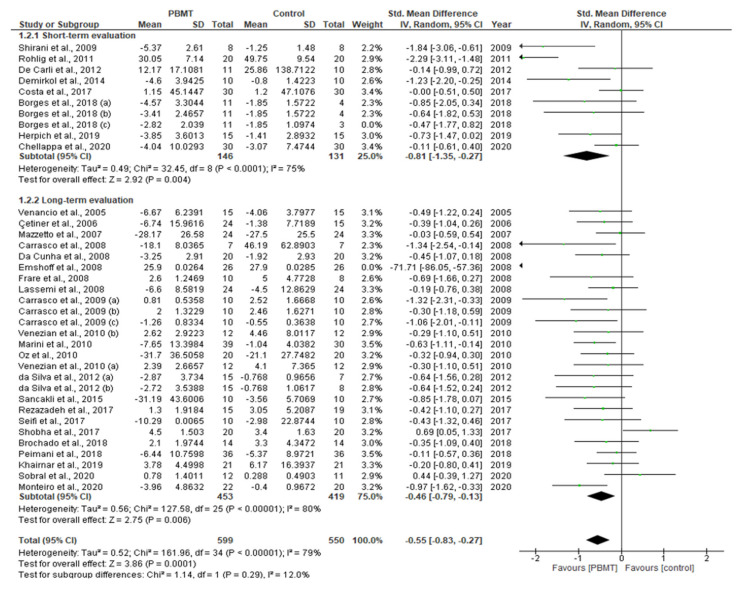
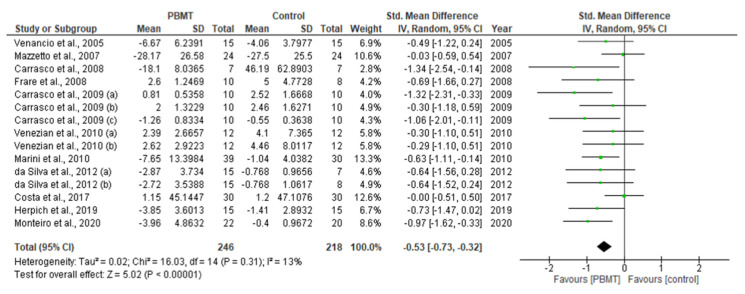
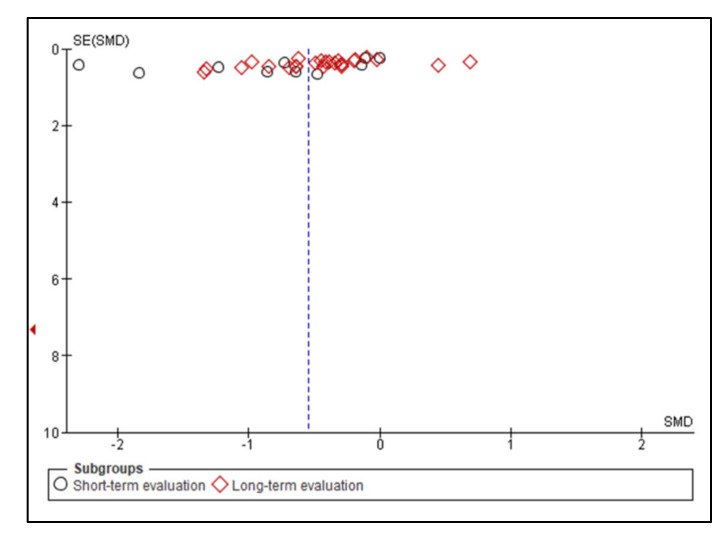
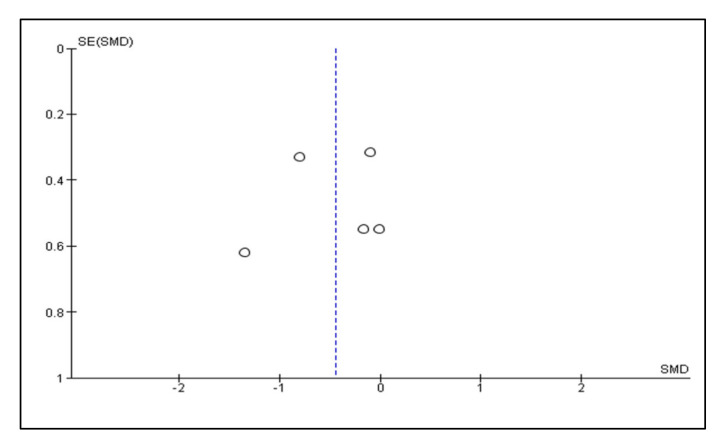
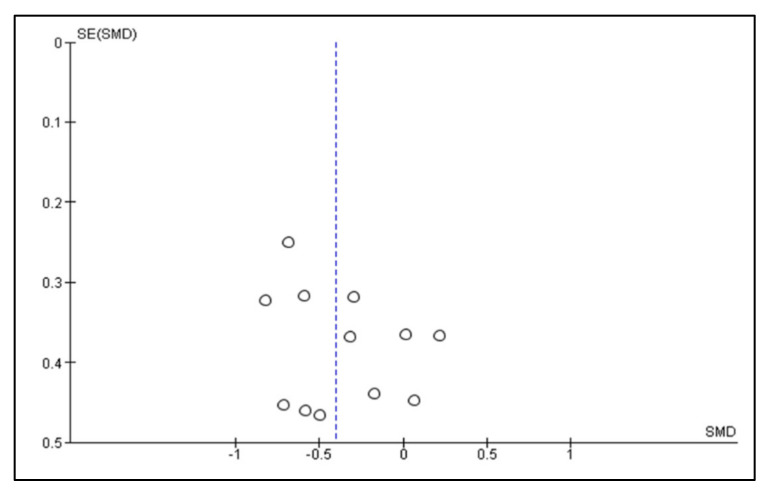
This systematic review and meta-analysis (PROSPERO registration; ref CRD 42020198921) aimed to govern photobiomodulation therapy (PBMT) efficacy in temporomandibular disorder (TMD). PRISMA guidelines and Cochrane Collaboration recommendations were followed. Differences in pain reduction assessment by qualitative measurement with visual analogue scale pain (VAS), pressure threshold (PPT) and maximum mouth opening (MMO) were calculated with 95% confidence intervals and pooled in a random effects model with a subgroup analysis, evaluating the role of follow-up duration. Heterogeneity was analysed using Q and I tests. Publication bias was assessed by visual examination of funnel plot symmetry. Qualitative analysis revealed 46% of the 44 included studies showed a high risk of bias. Meta-analysis on 32 out of 44 studies revealed statistically significant intergroup differences (SSID) for VAS (SMD = -0.55; 95% CI = -0.82 to -0.27; Z = 3.90 ( < 0.001)), PPT (SMD = -0.45; 95% CI = -0.89 to 0.00; Z = 1.97 ( = 0.05)) and MMO (SMD = -0.45; 95% CI = -0.89 to 0.00; Z = 1.97 ( = 0.05)), favouring PBMT compared to control treatment strategies. Sensitivity analysis revealed SSID (SMD = -0.53; 95% CI = -0.73 to -0.32; Z = 5.02 ( < 0.0001)) with low heterogeneity (Τ = 0.02; χ = 16.03 ( = 0.31); I = 13%). Hence, this review, for first time, proposed suggested recommendations for PBMT protocols and methodology for future extensive TMD research.
本系统评价和荟萃分析(PROSPERO注册编号:CRD 42020198921)旨在评估光生物调节疗法(PBMT)治疗颞下颌关节紊乱病(TMD)的疗效。遵循PRISMA指南和Cochrane协作网的建议。采用视觉模拟评分法(VAS)、压力阈值(PPT)和最大开口度(MMO)进行定性测量,计算疼痛减轻评估的差异,并以95%置信区间进行汇总,纳入随机效应模型并进行亚组分析,评估随访时间的作用。使用Q检验和I²检验分析异质性。通过漏斗图对称性的视觉检查评估发表偏倚。定性分析显示,纳入的44项研究中有46%存在高偏倚风险。对44项研究中的32项进行的荟萃分析显示,VAS(标准化均数差[SMD]=-0.55;95%置信区间=-0.82至-0.27;Z=3.90(P<0.001))、PPT(SMD=-0.45;95%置信区间=-0.89至0.00;Z=1.97(P=0.05))和MMO(SMD=-0.45;95%置信区间=-0.89至0.00;Z=1.97(P=0.05))存在统计学显著的组间差异(SSID),与对照治疗策略相比,PBMT更具优势。敏感性分析显示SSID(SMD=-0.53;95%置信区间=-0.73至-0.32;Z=5.02(P<0.0001)),异质性较低(Τ²=0.02;χ²=16.03(P=0.31);I²=13%)。因此,本综述首次为PBMT方案和方法提出了建议,以供未来广泛的TMD研究参考。