Ehsan Muhammad Ali, Khan Safyan Akram, Rehman Abdul
Center of Research Excellence in Nanotechnology (CENT), King Fahd University of Petroleum & Minerals, Dhahran 31261, Saudi Arabia.
Department of Chemistry, King Fahd University of Petroleum and Minerals, Dhahran 31261, Saudi Arabia.
Diagnostics (Basel). 2021 Jun 3;11(6):1030. doi: 10.3390/diagnostics11061030.
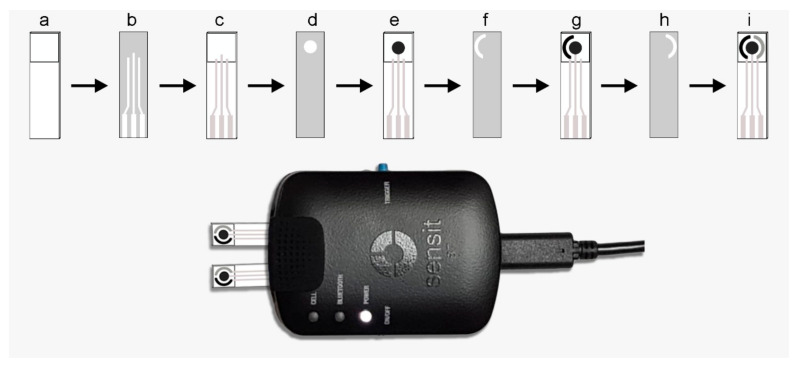
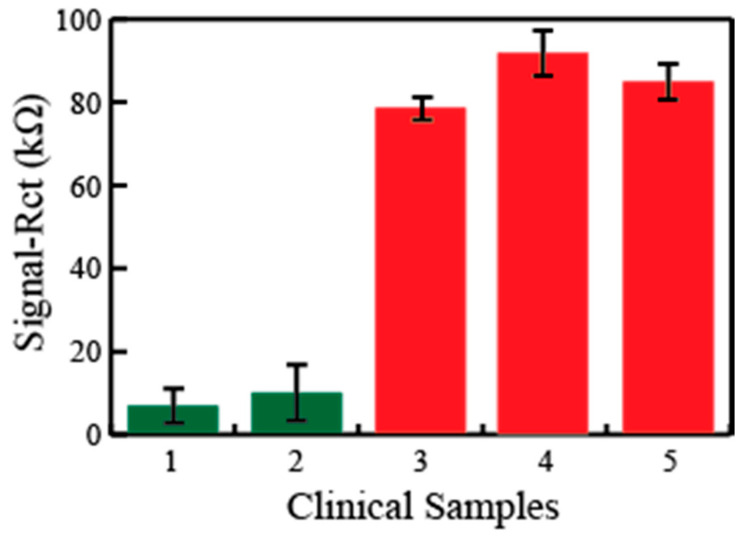
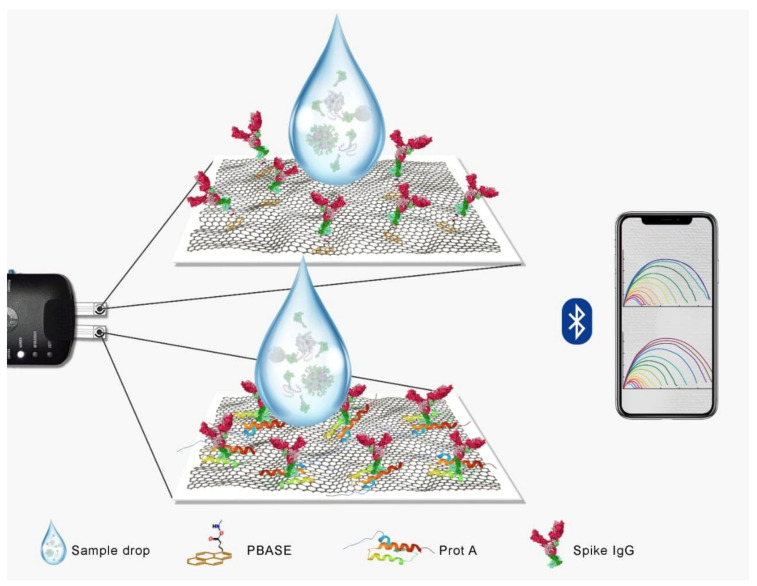
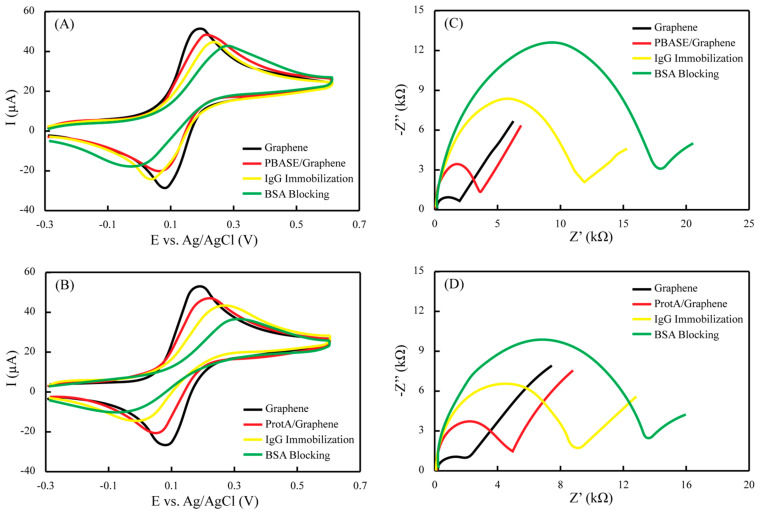
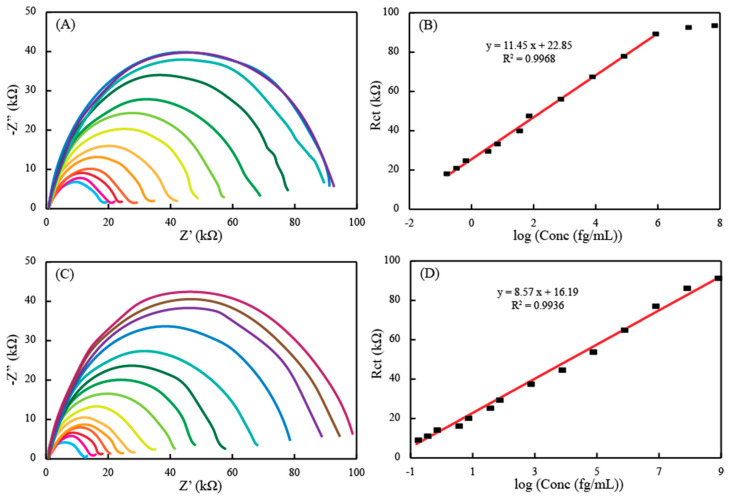
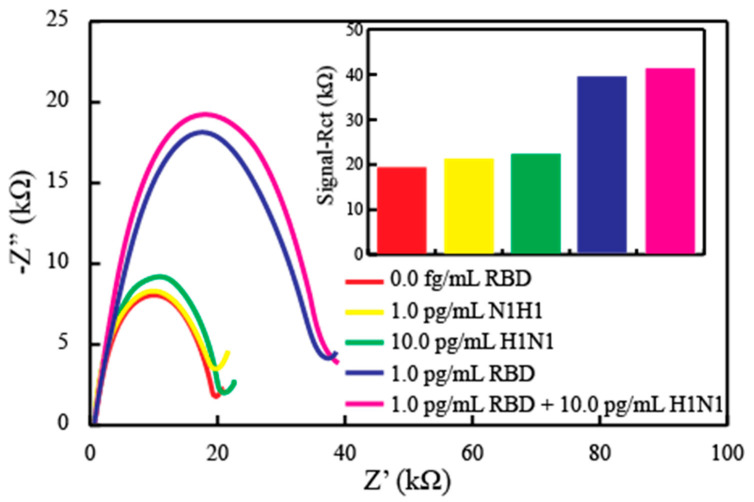
Severe acute respiratory syndrome (SARS-CoV-2), the causative agent of the global pandemic, which has resulted in more than one million deaths with tens of millions reported cases, requires a fast, accurate, and portable testing mechanism operable in the field environment. Electrochemical sensors, based on paper substrates with portable electrochemical devices, can prove an excellent alternative in mitigating the economic and public health effects of the disease. Herein, we present an impedance biosensor for the detection of the SARS-CoV-2 spike protein utilizing the IgG anti-SARS-CoV-2 spike antibody. This label-free platform utilizing screen-printed electrodes works on the principle of redox reaction impedance of a probe and can detect antigen spikes directly in nasopharyngeal fluid as well as virus samples collected in the universal transport medium (UTM). High conductivity graphene/carbon ink is used for this purpose so as to have a small background impedance that leads to a wider dynamic range of detection. Antibody immobilization onto the electrode surface was conducted through a chemical entity or a biological entity to see their effect; where a biological immobilization can enhance the antibody loading and thereby the sensitivity. In both cases, we were able to have a very low limit of quantification (i.e., 0.25 fg/mL), however, the linear range was 3 orders of magnitude wider for the biological entity-based immobilization. The specificity of the sensor was also tested against high concentrations of H1N1 flu antigens with no appreciable response. The most optimized sensors are used to identify negative and positive COVID-19 samples with great accuracy and precision.
严重急性呼吸综合征冠状病毒2(SARS-CoV-2)是全球大流行的病原体,已导致超过100万人死亡,报告病例数以千万计,这需要一种能够在野外环境中快速、准确且便携的检测机制。基于纸质基底和便携式电化学装置的电化学传感器,在减轻该疾病对经济和公共健康的影响方面可证明是一种极佳的选择。在此,我们展示了一种利用抗SARS-CoV-2刺突蛋白IgG抗体检测SARS-CoV-2刺突蛋白的阻抗生物传感器。这个利用丝网印刷电极的无标记平台基于探针的氧化还原反应阻抗原理工作,能够直接在鼻咽液以及收集于通用转运培养基(UTM)中的病毒样本中检测抗原刺突。为此使用了高导电性的石墨烯/碳墨水,以便具有较小的背景阻抗,从而实现更宽的检测动态范围。通过化学实体或生物实体将抗体固定在电极表面,以观察其效果;其中生物固定化可以增加抗体负载量,从而提高灵敏度。在这两种情况下,我们都能够实现非常低的定量限(即0.25 fg/mL),然而,基于生物实体固定化的线性范围宽3个数量级。还针对高浓度的H1N1流感抗原测试了传感器的特异性,未观察到明显响应。最优化的传感器用于以极高的准确性和精密度识别新冠病毒阴性和阳性样本。