MacCurtain Benjamin M, Quirke Ned P, Thorpe Stephen D, Gallagher Tom K
Department of Hepatobiliary and Transplant Surgery, St Vincent's University Hospital, D04 T6F4 Dublin, Ireland.
UCD School of Medicine, University College Dublin, D04 V1W8 Dublin, Ireland.
J Clin Med. 2021 Jun 19;10(12):2711. doi: 10.3390/jcm10122711.
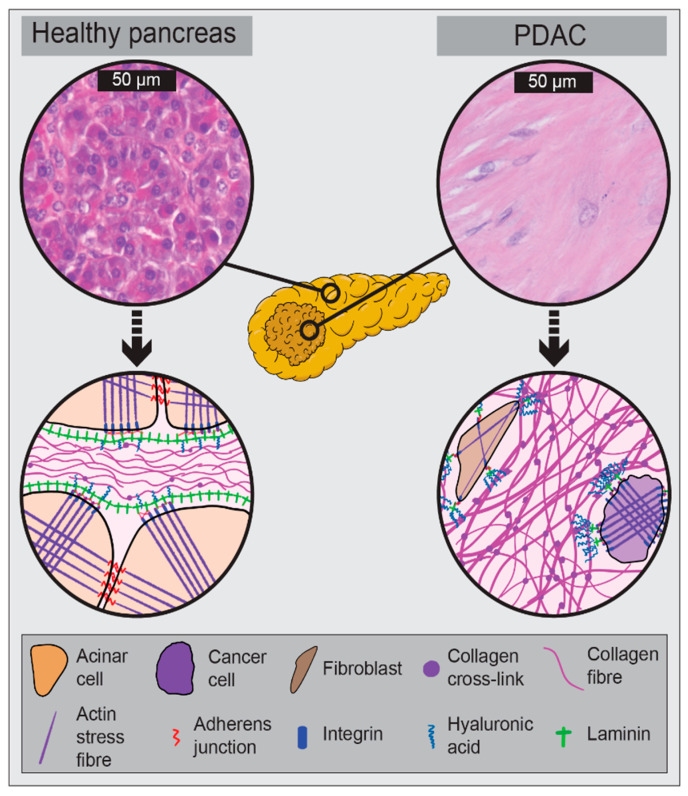
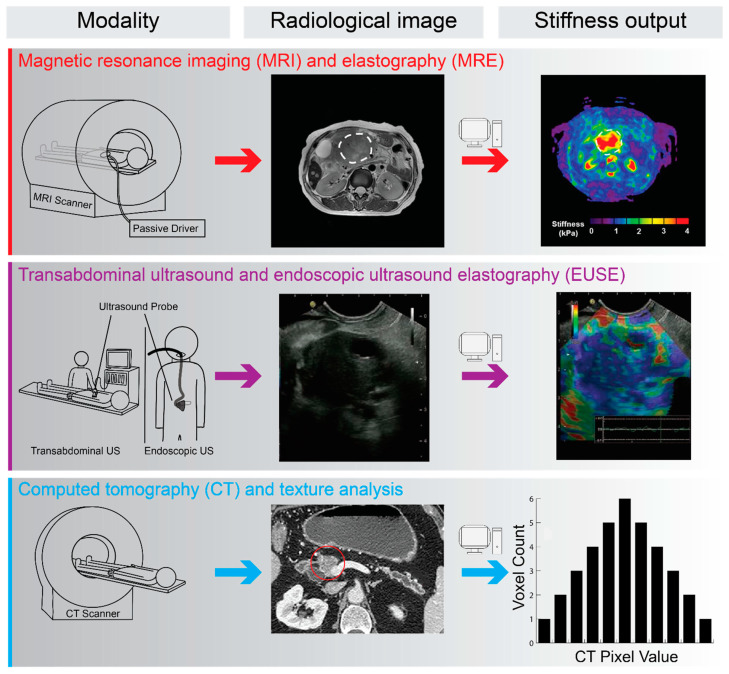
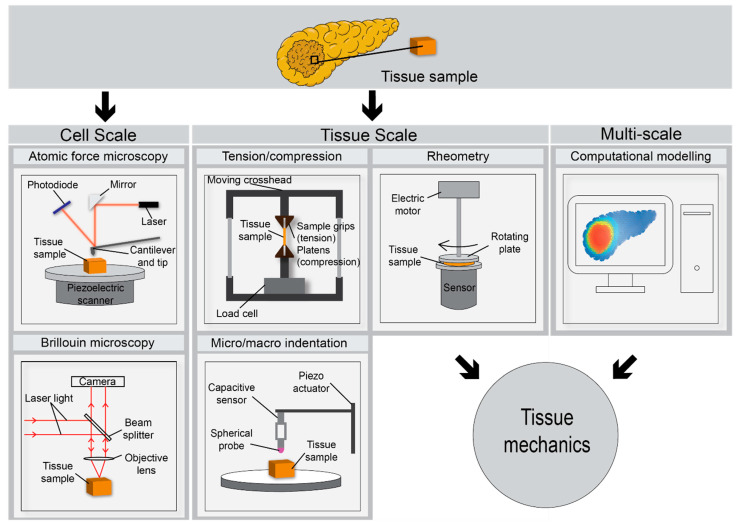
Pancreatic ductal adenocarcinoma (PDAC) is the most common form of pancreatic cancer and carries a dismal prognosis. Resectable patients are treated predominantly with surgery while borderline resectable patients may receive neoadjuvant treatment (NAT) to downstage their disease prior to possible resection. PDAC tissue is stiffer than healthy pancreas, and tissue stiffness is associated with cancer progression. Another feature of PDAC is increased tissue heterogeneity. We postulate that tumour stiffness and heterogeneity may be used alongside currently employed diagnostics to better predict prognosis and response to treatment. In this review we summarise the biomechanical changes observed in PDAC, explore the factors behind these changes and describe the clinical consequences. We identify methods available for assessing PDAC biomechanics ex vivo and in vivo, outlining the relative merits of each. Finally, we discuss the potential use of radiological imaging for prognostic use.
胰腺导管腺癌(PDAC)是胰腺癌最常见的形式,预后较差。可切除的患者主要接受手术治疗,而临界可切除的患者可能接受新辅助治疗(NAT),以便在可能的切除术前降低疾病分期。PDAC组织比健康胰腺更硬,组织硬度与癌症进展相关。PDAC的另一个特征是组织异质性增加。我们推测肿瘤硬度和异质性可与目前使用的诊断方法一起用于更好地预测预后和治疗反应。在这篇综述中,我们总结了在PDAC中观察到的生物力学变化,探讨了这些变化背后的因素,并描述了临床后果。我们确定了可用于在体外和体内评估PDAC生物力学的方法,概述了每种方法的相对优点。最后,我们讨论了放射成像在预后方面的潜在用途。