Van Gerrewey Thijs, El-Nakhel Christophe, De Pascale Stefania, De Paepe Jolien, Clauwaert Peter, Kerckhof Frederiek-Maarten, Boon Nico, Geelen Danny
Horticell Lab, Department of Plants and Crops, Ghent University, Coupure Links 653, B-9000 Gent, Belgium.
Center for Microbial Ecology and Technology (CMET), Ghent University, Coupure Links 653, B-9000 Gent, Belgium.
Microorganisms. 2021 Jun 18;9(6):1326. doi: 10.3390/microorganisms9061326.
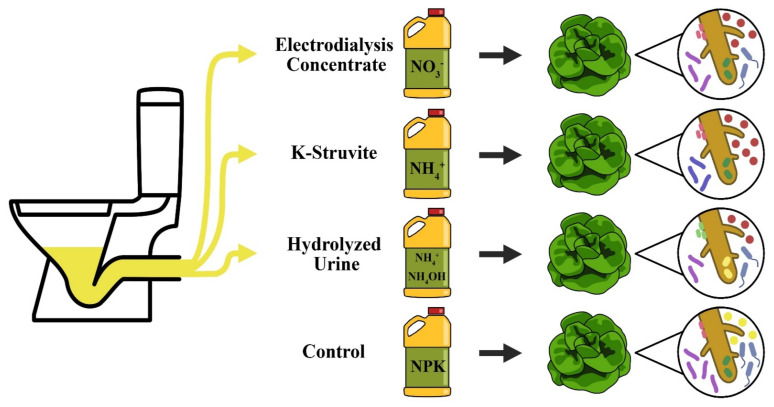
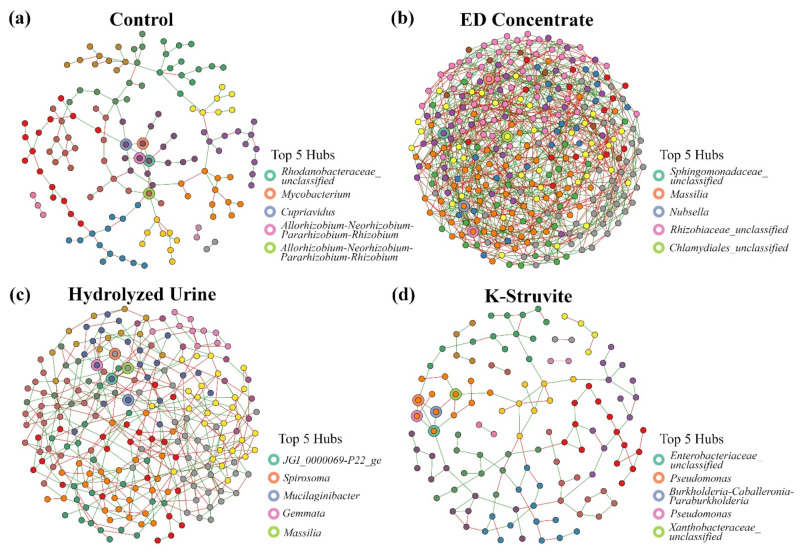
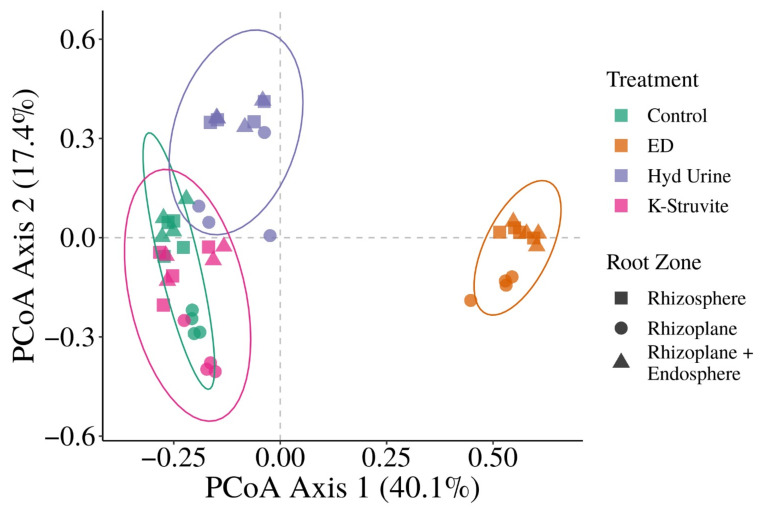
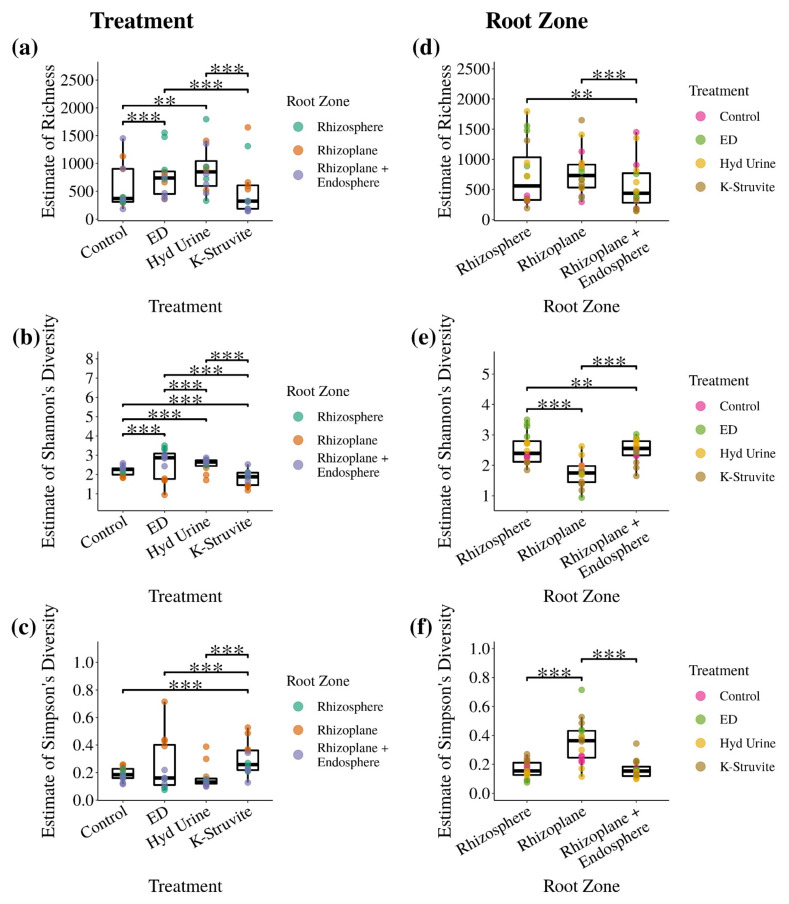
Recovery of nutrients from source-separated urine can truncate our dependency on synthetic fertilizers, contributing to more sustainable food production. Urine-derived fertilizers have been successfully applied in soilless cultures. However, little is known about the adaptation of the plant to the nutrient environment. This study investigated the impact of urine-derived fertilizers on plant performance and the root-associated bacterial community of hydroponically grown lettuce ( L.). Shoot biomass, chlorophyll, phenolic, antioxidant, and mineral content were associated with shifts in the root-associated bacterial community structures. K-struvite, a high-performing urine-derived fertilizer, supported root-associated bacterial communities that overlapped most strongly with control NPK fertilizer. Contrarily, lettuce performed poorly with electrodialysis (ED) concentrate and hydrolyzed urine and hosted distinct root-associated bacterial communities. Comparing the identified operational taxonomic units (OTU) across the fertilizer conditions revealed strong correlations between specific bacterial genera and the plant physiological characteristics, salinity, and NO/NH ratio. The root-associated bacterial community networks of K-struvite and NPK control fertilized plants displayed fewer nodes and node edges, suggesting that good plant growth performance does not require highly complex ecological interactions in hydroponic growth conditions.
从源分离尿液中回收养分可以减少我们对合成肥料的依赖,有助于实现更可持续的粮食生产。尿液衍生肥料已成功应用于无土栽培。然而,关于植物对养分环境的适应性却知之甚少。本研究调查了尿液衍生肥料对水培生菜(L.)生长性能和根系相关细菌群落的影响。地上部生物量、叶绿素、酚类、抗氧化剂和矿物质含量与根系相关细菌群落结构的变化有关。磷酸镁铵(K-鸟粪石)是一种高性能的尿液衍生肥料,它支持的根系相关细菌群落与对照NPK肥料的重叠程度最高。相反,生菜在电渗析(ED)浓缩液和水解尿液中生长不佳,且拥有不同的根系相关细菌群落。比较不同肥料条件下鉴定出的操作分类单元(OTU)发现,特定细菌属与植物生理特征、盐度和NO/NH比例之间存在很强的相关性。磷酸镁铵和NPK对照施肥植物的根系相关细菌群落网络显示出较少的节点和节点边缘,这表明在水培生长条件下,良好的植物生长性能并不需要高度复杂的生态相互作用。