Rajaratnam Nina, Ditlevsen Nadja E, Sloth Jenni K, Bæk Rikke, Jørgensen Malene M, Christiansen Ole B
Department of Obstetrics and Gynecology, Aalborg University Hospital, 9000 Aalborg, Denmark.
Department of Clinical Immunology, Aalborg University Hospital, 9000 Aalborg, Denmark.
J Clin Med. 2021 Jun 9;10(12):2549. doi: 10.3390/jcm10122549.
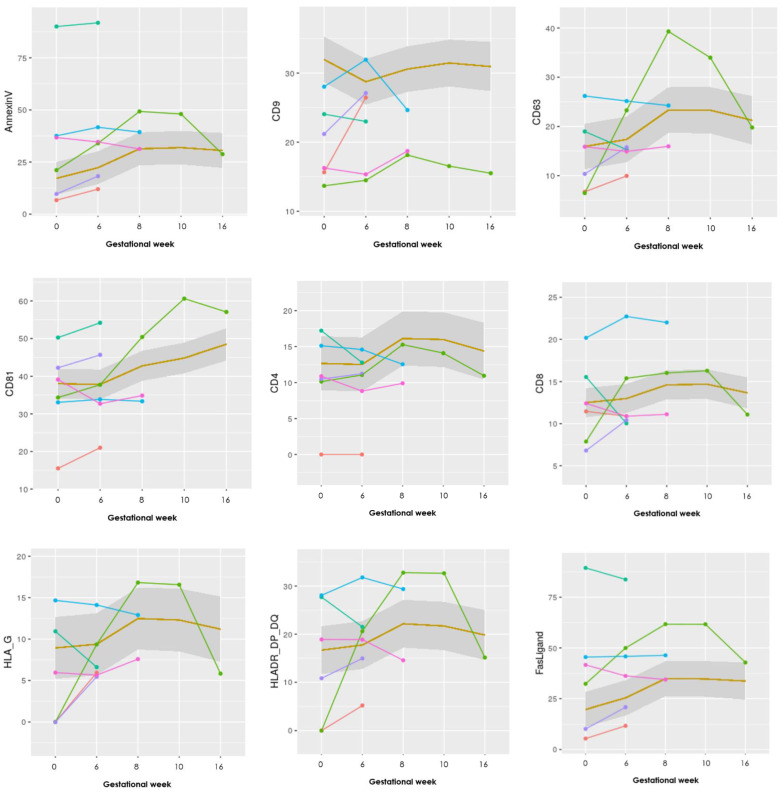
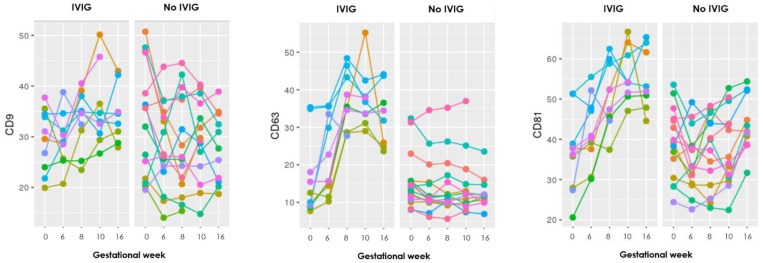
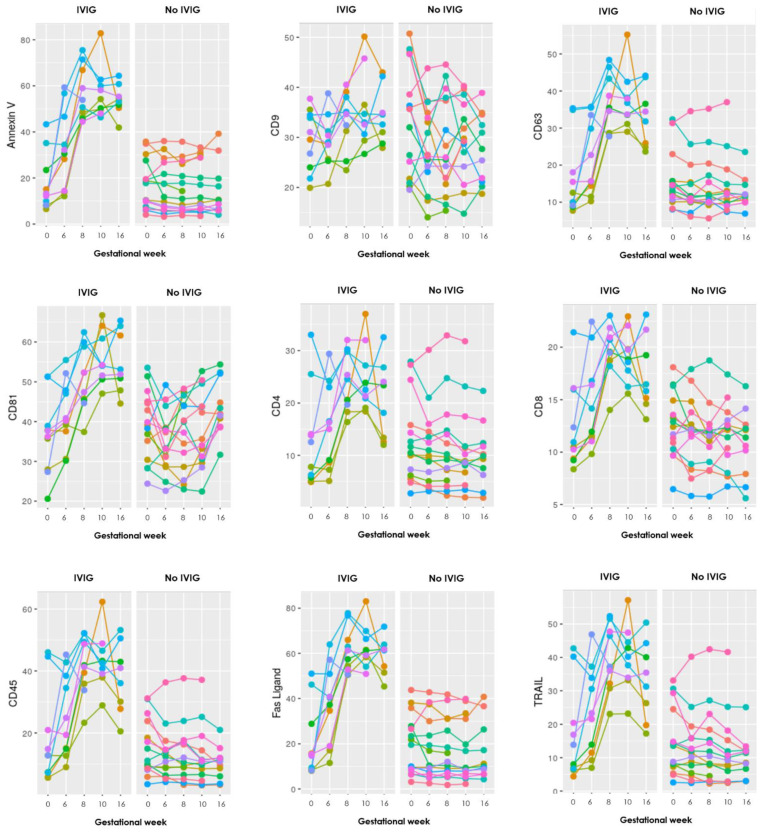
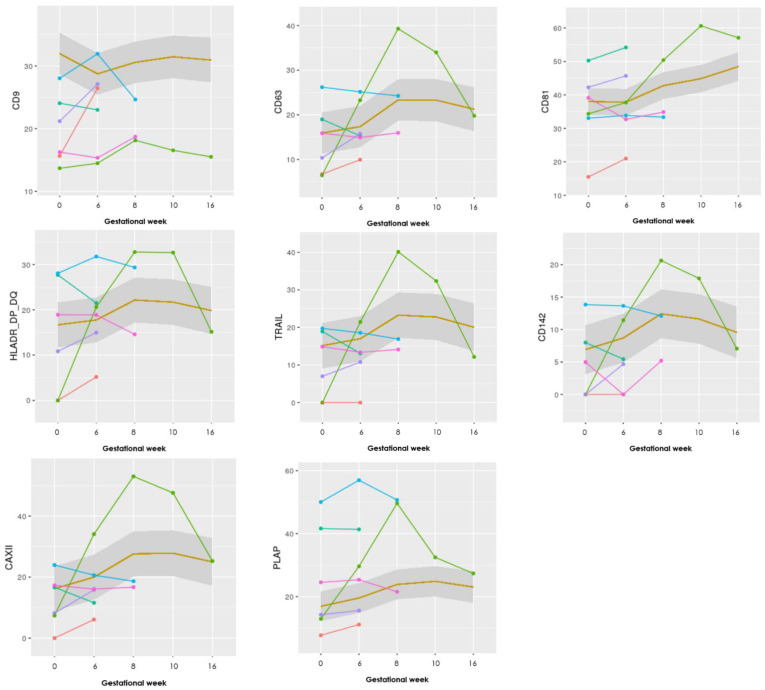
Recurrent pregnancy loss (RPL) has an estimated incidence of 1-3% of all couples. The etiology is considered to be multifactorial. Extracellular vesicles (EVs) take part in numerous different physiological processes and their contents show the originating cell and pathophysiological states in different diseases. In pregnancy disorders, changes can be seen in the composition, bioactivity and concentration of placental and non-placental EVs. RPL patients have an increased risk of pregnancy complications. The aim of this prospective study was to examine whether measuring different specific EV markers in plasma before and during pregnancy could be used as predictors of pregnancy loss (PL) in women with RPL. Thirty-one RPL patients were included in this study; 25 had a live birth (LB group) and six had a new PL (PL group). Five blood samples were obtained, one before achieved pregnancy and the others in gestational week 6, 8, 10 and 16. Moreover, some of the patients received intravenous immunoglobulin (IVIG) infusions as part of treatment, and it was also examined whether this treatment influenced the EV levels. Seventeen EV markers specific for the immune system, coagulation, placenta and hypoxia were analyzed in the samples with EV Array, a method able to capture small EVs by using an antibody panel targeting membrane proteins. Comparing the LB and PL groups, one EV marker, CD9, showed a significant increase from before pregnancy to gestational week 6 in the PL group. The changes in the other 16 markers were nonsignificant. One case of late-onset PL showed steeply increasing levels, with sudden decrease after gestational week 10 in nine of 17 markers. Moreover, there was an overall increase of all 17 markers after IVIG treatment in the LB group, which was significant in 15 of the markers. Whether increases in EVs positive for CD9 characterize RPL patients who subsequently miscarry should be investigated in future larger studies.
复发性流产(RPL)在所有夫妇中的发生率估计为1%-3%。其病因被认为是多因素的。细胞外囊泡(EVs)参与众多不同的生理过程,其内容物显示了不同疾病中的起源细胞和病理生理状态。在妊娠疾病中,胎盘和非胎盘来源的EVs在组成、生物活性和浓度方面会出现变化。RPL患者发生妊娠并发症的风险增加。这项前瞻性研究的目的是检验在妊娠前和妊娠期间测量血浆中不同的特定EV标志物是否可作为RPL女性妊娠丢失(PL)的预测指标。本研究纳入了31例RPL患者;其中25例活产(LB组),6例再次发生PL(PL组)。采集了5份血样,1份在妊娠前,其他分别在妊娠第6、8、10和16周。此外,部分患者接受静脉注射免疫球蛋白(IVIG)输注作为治疗的一部分,还研究了这种治疗是否会影响EV水平。使用EV Array分析了针对免疫系统、凝血、胎盘和缺氧的17种特异性EV标志物,该方法能够通过使用靶向膜蛋白的抗体组捕获小EVs。比较LB组和PL组,一种EV标志物CD9在PL组中从妊娠前到妊娠第6周有显著增加。其他16种标志物的变化不显著。1例晚期PL患者显示17种标志物中有9种在妊娠第10周后水平急剧上升,随后突然下降。此外,LB组IVIG治疗后所有17种标志物总体升高,其中15种标志物升高显著。CD9阳性的EVs增加是否表征随后发生流产的RPL患者,应在未来更大规模的研究中进行调查。