Kung Woon-Man, Yuan Sheng-Po, Lin Muh-Shi, Wu Chieh-Chen, Islam Md Mohaimenul, Atique Suleman, Touray Musa, Huang Chu-Ya, Wang Yao-Chin
Department of Exercise and Health Promotion, College of Kinesiology and Health, Chinese Culture University, Taipei 11114, Taiwan.
Graduate Institute of Biomedical Informatics, College of Medical Science and Technology, Taipei Medical University, Taipei 11031, Taiwan.
Brain Sci. 2021 Jun 11;11(6):777. doi: 10.3390/brainsci11060777.
Cognitive impairment is one of the most common, burdensome, and costly disorders in the elderly worldwide. The magnitude of the association between anemia and overall cognitive impairment (OCI) has not been established.
We aimed to update and expand previous evidence of the association between anemia and the risk of OCI.
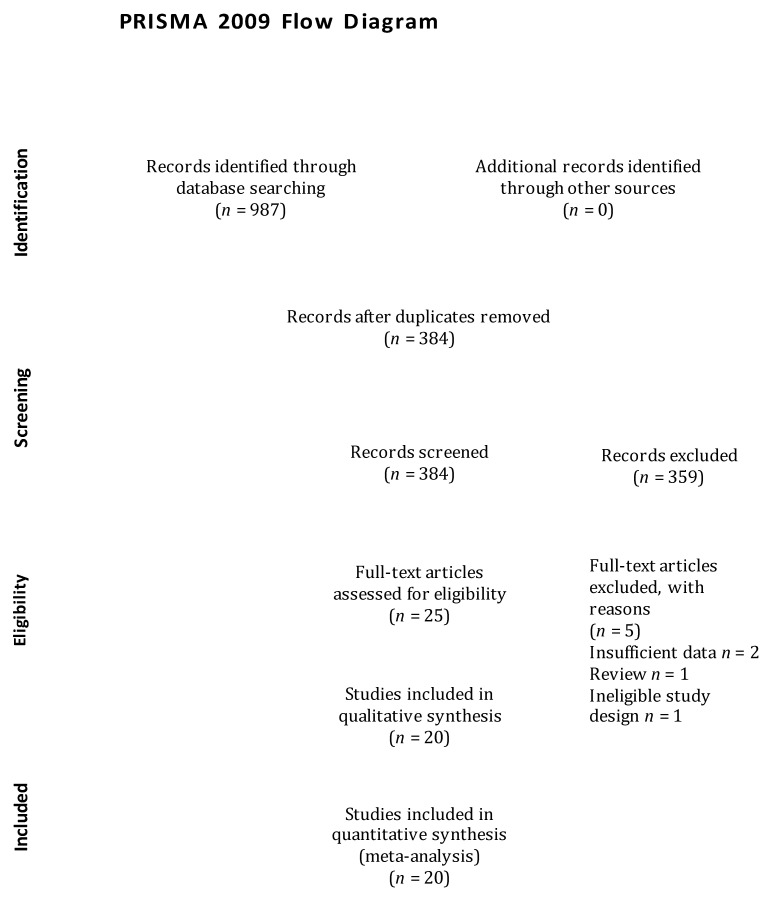
We conducted an updated systematic review and meta-analysis. We searched electronic databases, including EMBASE, PubMed, and Web of Science for published observational studies and clinical trials between 1 January 1990 and 1 June 2020. We excluded articles that were in the form of a review, letter to editors, short reports, and studies with less than 50 participants. The Preferred Reporting Items for Systematic Reviews and Meta-analyses (PRISMA) guidelines were followed. We estimated summary risk ratios (RRs) with random effects.
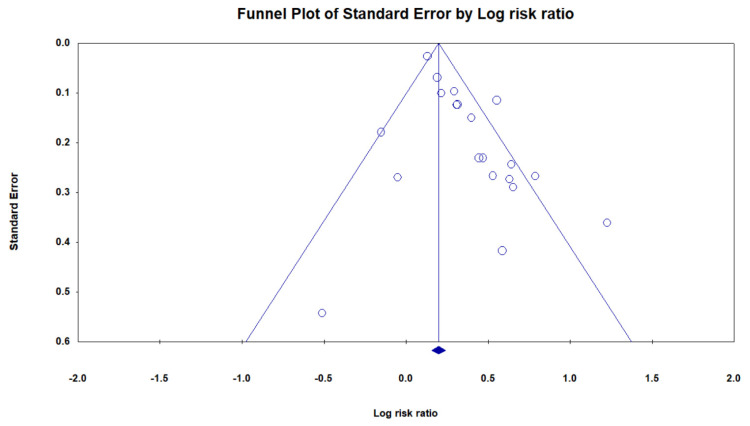
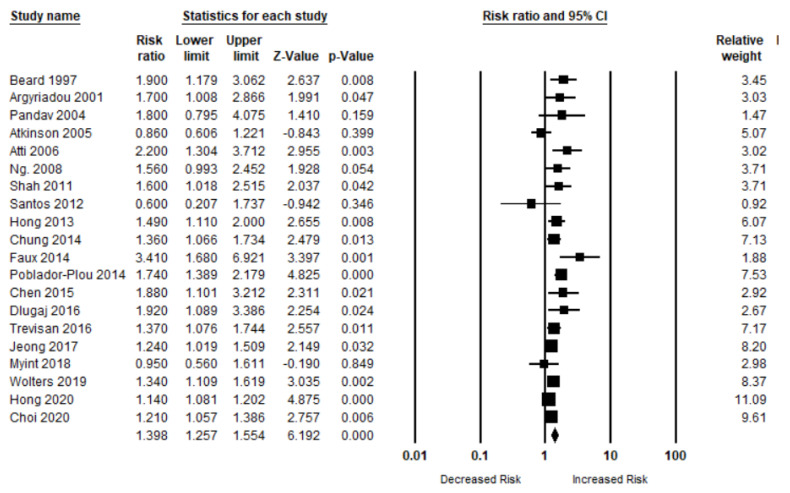
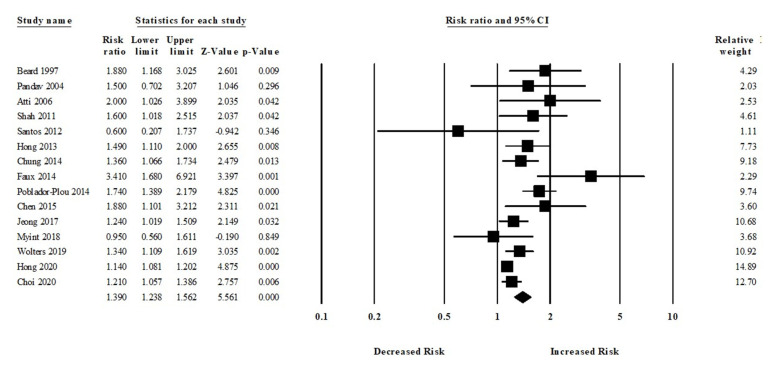
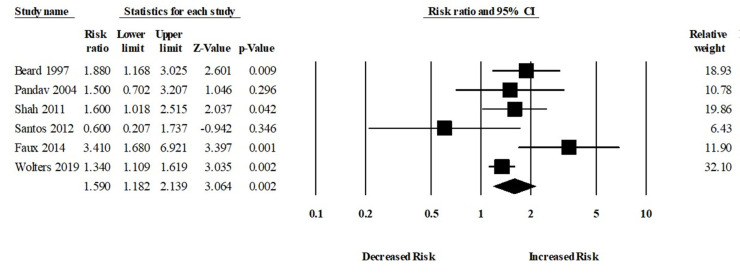
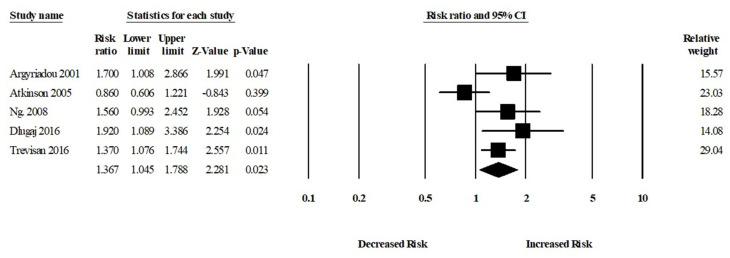
A total of 20 studies, involving 6558 OCI patients were included. Anemia was significantly associated with an increased risk of OCI (adjusted RR (aRR) 1.39 (95% CI, 1.25-1.55; < 0.001)). In subgroup analysis, anemia was also associated with an increased risk of all-cause dementia (adjusted RR (aRR), 1.39 (95% CI, 1.23-1.56; < 0.001)), Alzheimer's disease [aRR, 1.59 (95% CI, 1.18-2.13; = 0.002)], and mild cognitive impairment (aRR, 1.36 (95% CI, 1.04-1.78; = 0.02)).
This updated meta-analysis shows that patients with anemia appear to have a nearly 1.39-fold risk of developing OCI than those without anemia. The magnitude of this risk underscores the importance of improving anemia patients' health outcomes, particularly in elderly patients.
认知障碍是全球老年人中最常见、负担最重且成本最高的疾病之一。贫血与整体认知障碍(OCI)之间关联的程度尚未确定。
我们旨在更新和扩展先前关于贫血与OCI风险之间关联的证据。
我们进行了一项更新的系统评价和荟萃分析。我们检索了电子数据库,包括EMBASE、PubMed和Web of Science,以查找1990年1月1日至2020年6月1日期间发表的观察性研究和临床试验。我们排除了综述、给编辑的信、简短报告以及参与者少于50人的研究形式的文章。遵循系统评价和荟萃分析的首选报告项目(PRISMA)指南。我们采用随机效应估计汇总风险比(RRs)。
共纳入20项研究,涉及6558例OCI患者。贫血与OCI风险增加显著相关(调整后RR(aRR)为1.39(95%CI,1.25 - 1.55;P < 0.001))。在亚组分析中,贫血还与全因痴呆风险增加相关(调整后RR(aRR)为1.39(95%CI,1.23 - 1.56;P < 0.001))、阿尔茨海默病(aRR为1.59(95%CI,1.18 - 2.13;P = 0.002))以及轻度认知障碍(aRR为1.36(95%CI,1.04 - 1.78;P = 0.02))。
这项更新的荟萃分析表明,贫血患者发生OCI的风险似乎是无贫血患者的近1.39倍。这种风险的程度凸显了改善贫血患者健康结局的重要性,尤其是老年患者。